Iraqi Kurds mark Nowruz, celebrating light over darkness
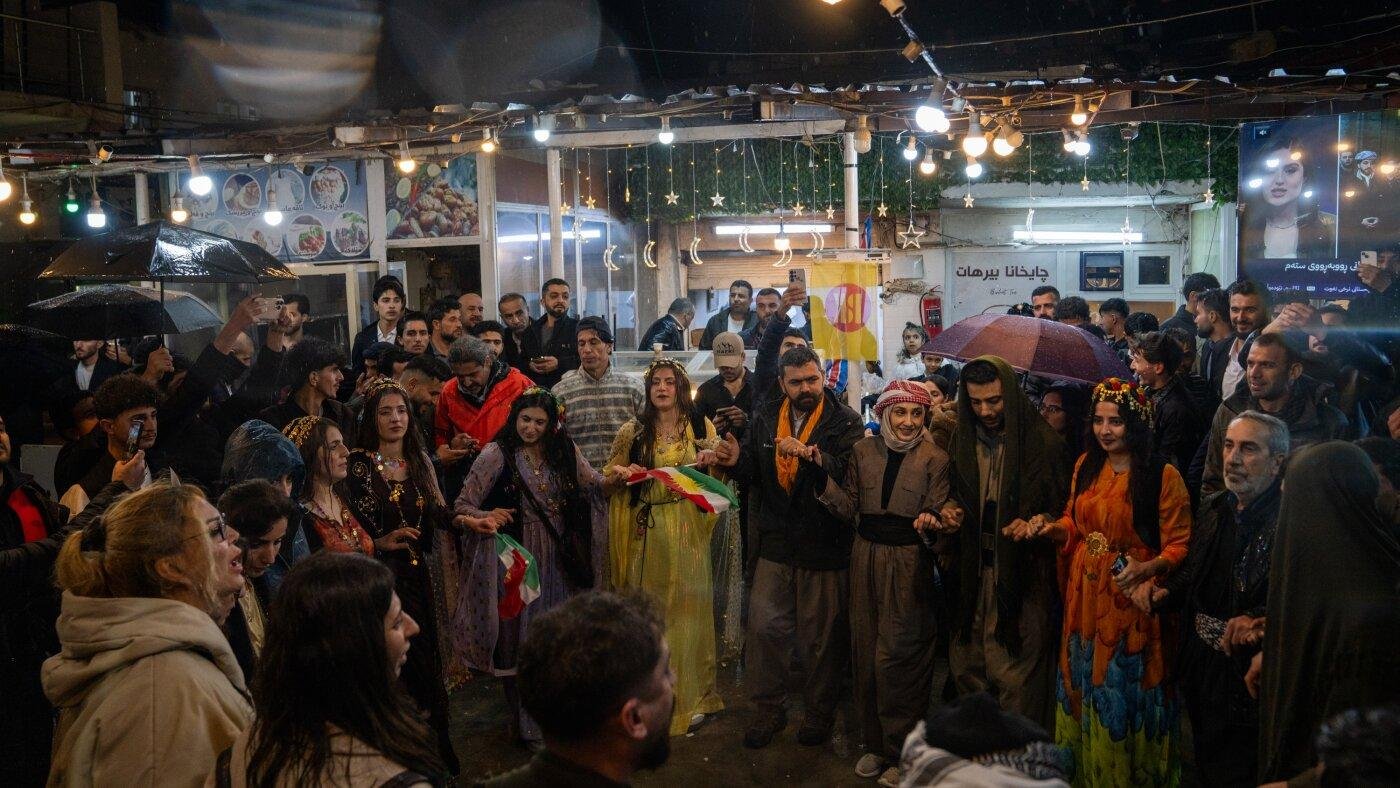
Iraqi Kurds mark Nowruz, celebrating light over darkness

Girls sit on a wall to get a good vantage point of people walking up the mountains with flaming torches and fireworks for Nowruz in Akre, the Kurdish region of Iraq on Friday. Claire Harbage/NPR hide caption
toggle caption
Claire Harbage/NPR
AKRE, Kurdistan Region of Iraq — For many people, the vernal equinox — which marked the beginning of spring Friday — is just another date on the calendar. But in Iran, it's celebrated as the Persian new year, known as Nowruz. In the Kurdish regions of the Middle East, Nowruz celebrations are a fundamental expression of Kurdish identity.
Today there are more than 30 million Kurds in a contiguous area in Iraq, Iran, Syria and Turkey divided by external borders and historic internal differences. The ancient town of Akre, nestled against craggy mountains in the Kurdistan Region of Iraq, has been the focal point for Nowruz celebrations for decades.

Dusk falls over Akre on Nowruz, a celebration of spring and renewal, and people gather in a central plaza. Claire Harbage/NPR hide caption
toggle caption
Claire Harbage/NPR

Ismail Mohammad, 28, holds a Kurdish flag and a drum as people pass by at the Nowruz festivities. Claire Harbage/NPR hide caption
toggle caption
Claire Harbage/NPR
Here, Kurds gather to light flaming torches at sunset, carrying them up the mountainside to symbolize the victory of light over darkness. The women wear flowing, sparkly Kurdish dresses that look as if they came out of a medieval painting. Many of the men are dressed in traditional baggy trousers with woven cummerbunds — cotton sashes worn around their waists.
On Friday, hundreds of Kurds carried flames in a procession up the mountain under purple-black storm clouds, leaving the burning burlap torches lighting the darkness next to a giant Kurdish flag unfurled by the path.

People stand under a tent on a hilltop to avoid the pouring rain while waiting for the Nowruz festivities. Claire Harbage/NPR hide caption
toggle caption
Claire Harbage/NPR

Traditionally, people in Akre carry flaming torches up the mountain to light a large fire on top. But this year's festivities were more subdued compared to past years because of the ongoing war in Iran and heavy rain. Claire Harbage/NPR hide caption
toggle caption
Claire Harbage/NPR
The torches reference a story in Kurdish mythology in which a courageous blacksmith assembles an army of villagers and kills a murderous king — signaling with the mountain-top flames that the Kurds are free.
This year, they also spelled out in flames the numbers two and one — referencing a saying that "two plus two equals one" — meaning the Kurdish regions across four different countries together form one united Kurdistan.

Women pose for photos dressed in traditional Kurdish clothing. Claire Harbage/NPR hide caption
toggle caption
Claire Harbage/NPR

People walk through the center of Akre with flaming torches for Nowruz. Claire Harbage/NPR hide caption
toggle caption
Claire Harbage/NPR
Traditionally chilly relations between the government of Iraq's Kurdistan region and leaders of Syria's Kurdish-led region have thawed significantly in recent months. In January, Iraqi Kurdish officials offered political support and humanitarian aid after Syrian government forces advanced on Kurdish held territory across the border.
The ongoing war in the Middle East, which has sent Iranian drones and missiles flying over the Kurdish region as they target U.S. sites, has kept many people away from celebrations this year. But many Syrian Kurds — as well as Kurds from Iran and Turkey — braved the risk of rockets and torrential rain to come to Akre to participate in this key expression of Kurdish identity.

Arasta Soleiman, 27, is from the Kurdish region of Iran. She joins other Kurds in Akre to celebrate Nowruz. Claire Harbage/NPR hide caption
toggle caption
Claire Harbage/NPR

Women wear Kurdish headdresses on Friday while gathering in the city's plaza. Claire Harbage/NPR hide caption
toggle caption
Claire Harbage/NPR

Avjin Yazgan, 21, stands with her mother Pelda Yazgan, 43, are visit Akre to celebrate the holiday. Claire Harbage/NPR hide caption
toggle caption
Claire Harbage/NPR

A group of people dance in the center of Akre in celebration of Nowruz.
Sponsorizzato
Sponsorizzato
Sponsorizzato
Sponsorizzato
Pubblicità
Categorie
Leggi tutto
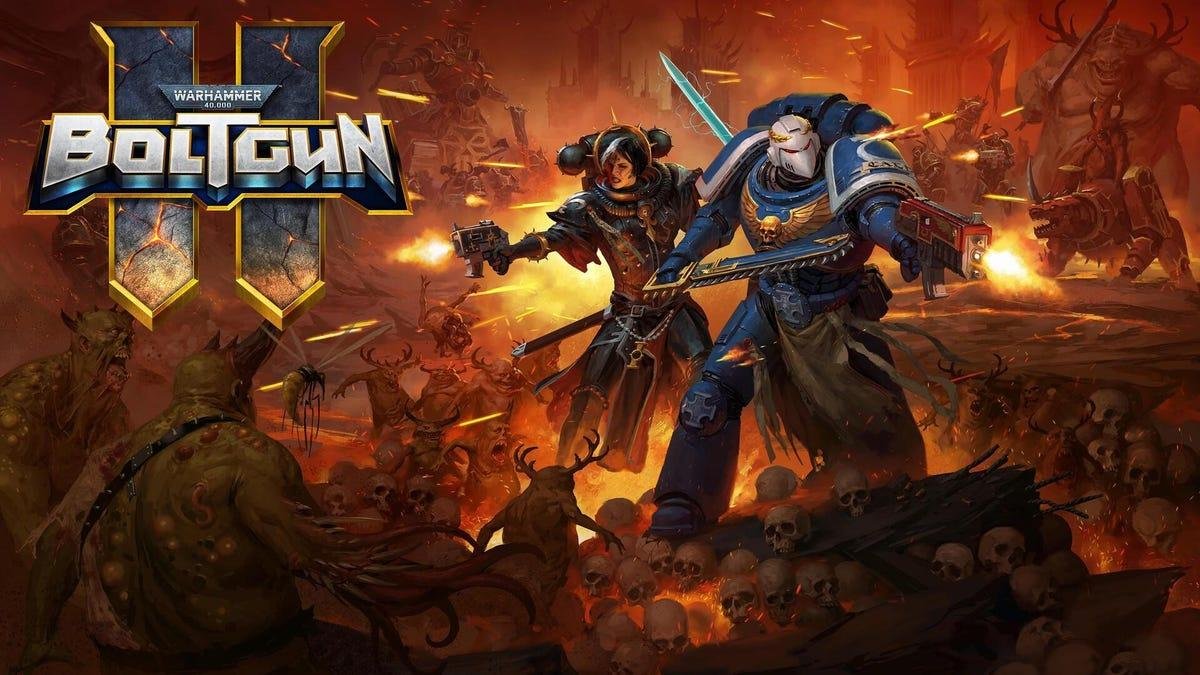
Warhammer 40,000 Boltgun 2 Preview: More Action, but Still a Doom CloneIn the grimdark world of Warhammer 40,000, genetically altered space marines and fanatical Sisters of Battle fight a multi-front war against aliens and demon gods. There is no "good guy," there are no saviors and everyone is expendable, according to the grand calculus of the Imperium of Man. Entire planets can be snuffed out...
Diablo 4 Season 11: Best Paladin Leveling Build After years of speculation, the Paladin has finally arrived in Diablo 4, descending onto Diablo 4 Items the battlefields of Sanctuary in Season 11: Season of Divine Intervention. With powerful Auras, devastating Holy damage, and strong defensive tools, Paladin is already shaping up to be one of the strongest leveling classes in Diablo 4 Season 11....
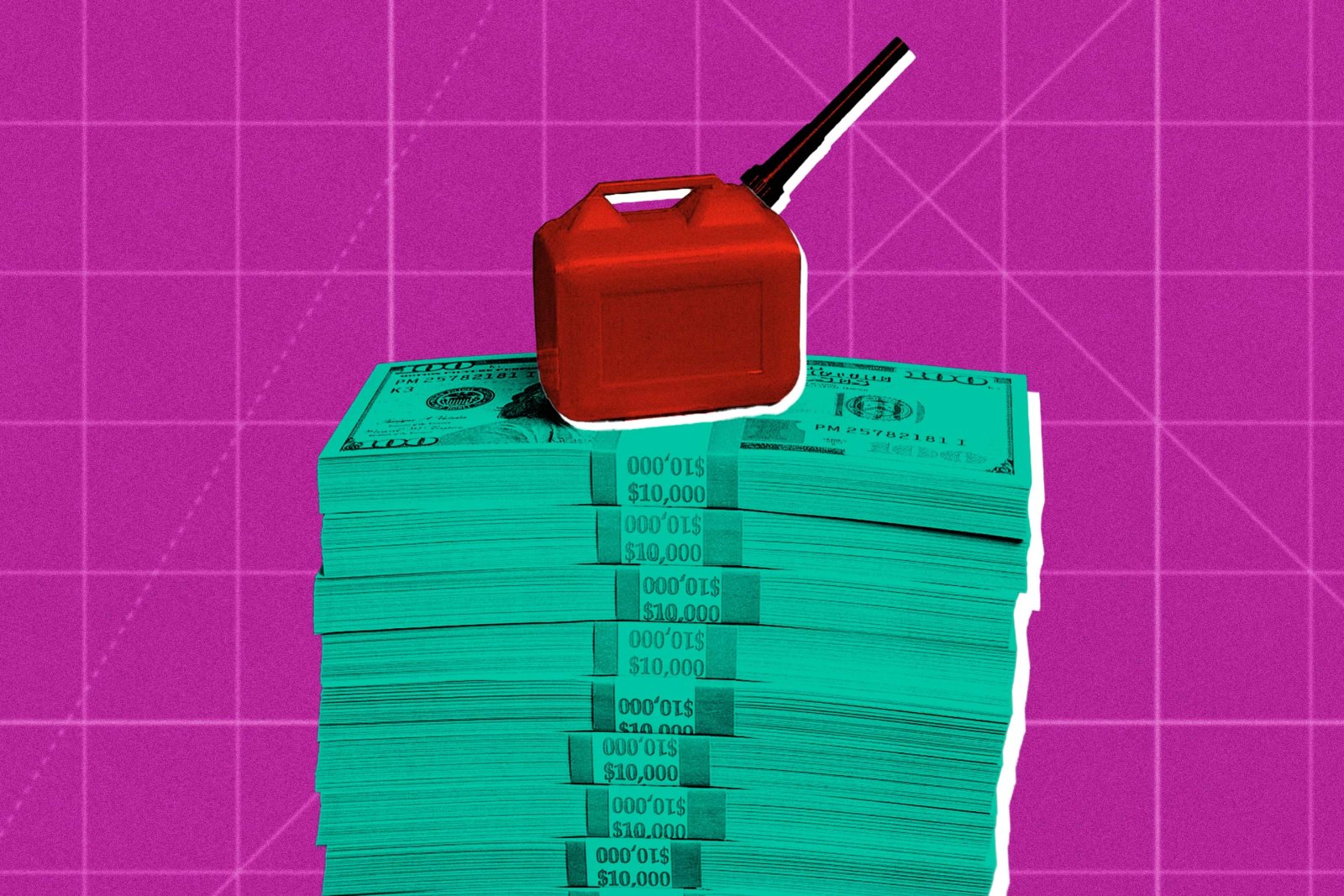
Gas Prices Rose 40% Since the Iran War Began. They Won't Fall Nearly as Fast We research all brands listed and may earn a fee from our partners. Research and financial considerations may influence how brands are displayed. Not all brands are included. Learn more. At the eleventh hour, the Pakistani government helped broker a two-week...
Huge crowds throng Madrid streets as Pope holds open-air massEPA/ShutterstockPope Leo held the service on the second day of his official visit to SpainMore than a million people lined the streets of Madrid on Sunday as Pope Leo XIV held an open-air mass in the Spanish capital, the Vatican said.Crowds descended on the city as the pontiff arrived for the service on the second day of his official...
The MacBook Neo is ‘the most repairable MacBook’ in years, according to iFixit Image Credits:Apple 11:36 AM PDT · March 16, 2026 Apple’s new MacBook Neo isn’t just the most affordable MacBook by far — it’s also the most repairable MacBook in “about fourteen years,” according to an in-depth teardown by the how-to website iFixit. The “big story,” in iFixit’s...