

Marshals is the first network TV series to expand the Yellowstone canon, airing new episodes each week on CBS on Sundays, and streaming the following day on Paramount Plus. The show follows Kayce Dutton (Luke Grimes), who aims to start a new life by joining the US Marshals. He may be driven to enforce justice in his hometown, but demons from his past haunt him as he moves forward with this new endeavor.
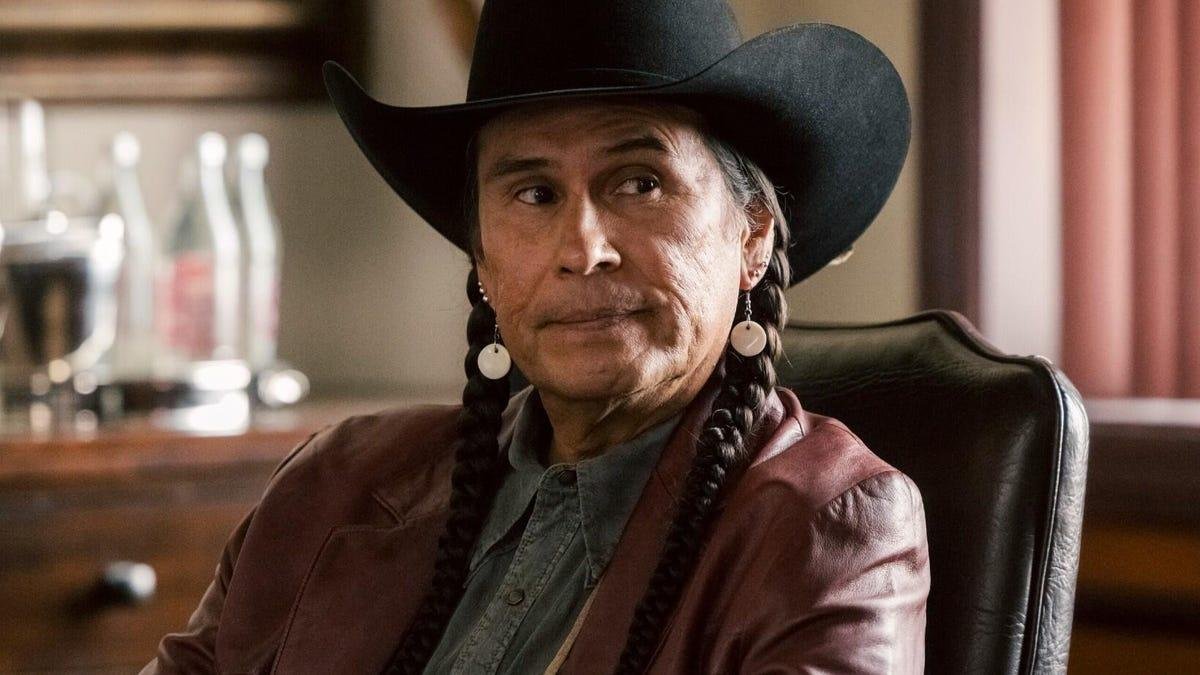
Grimes is one of a few faces familiar to audiences, as he starred in Taylor Sheridan's flagship series. Bridging the story universe beneath the veneer of a weekly crime procedural are Native American actors Gil Birmingham, who plays Chief Thomas Rainwater; Mo Brings Plenty, who plays his right-hand man, Mo; and Brecken Merrill, who plays Kayce's son, Tate Dutton.
Throughout the first few episodes, a throughline narrative about the people of the Broken Rock reservation -- the tainted water on their property, and the mining company seeking access to the land -- has added familiar stakes to the series. This conflict acts as a bridge to the Yellowstone story and propels things into high-stakes territory.
What do I mean by that? Well, instead of waxing poetic about what I think this fictional storyline may represent to those who live on a reservation, I got firsthand insight from someone with a strong connection to Yellowstone, the Marshals and Native American heritage: Mo Brings Plenty.
Mo is part of the Oglala Lakota Nation and served as the American Indian Affairs coordinator on Yellowstone -- a role he continues today on Marshals. He joined me on Zoom to discuss the series, how it relates to the real challenges his community faces daily and why Native representation matters -- even when it's in a CBS procedural.
Mo Brings Plenty and Gil Birmingham star in Marshals.
Sonja Flemming/CBSHow has the relationship between Mo, Rainwater and Kayce Dutton evolved from the beginning of Yellowstone to where we are now? Is it safe to say that they're all pretty much, whether it's spoken or not, on the same page with how they are viewing this conflict?
Brings Plenty: The relationship between the Duttons and the reservation dates back to 1883. Kayce married a woman from the Broken Rock Reservation. That was Monica. In that marriage, and them having a child together, and now, with Monica's absence because of her passing due to cancer, Kayce feels he has to step in and fill that void now for his son. And so our relationship and bond have become even stronger, especially with Rainwater adopting Kayce, taking him in as a brother.
Mo and Casey have always been seen as warriors. So they always had that brotherhood. They have an unspoken language, and they know it. Kayce still runs his cows there in East camp. And so, when it comes to the water, there was a scene where Rainwater had a moment on Kayce's porch, was offered some water, and he said, "One day that's going to be worse than moonshine." I think it was just about protection, again, of a vital source that all humans and life need.
Let's talk about the water. The conflict between the Broken Rock reservation and the mining company isn't going away. And this is all happening while people have gotten sick and died due to chemicals in the drinking water. How does this storyline convey the struggles and reality of life on the res?
Brings Plenty: What it means is this: There are already health issues on a reservation, and our health care system is pretty overwhelmed. We don't have services that help assist us in prevention. Everything is OK. We have an ER room that's always open, and so it's always after the fact. It's an environmental issue pertaining to us as people.
We, as a reservation, do get federal funding, but you're only given so many dollars a year, and what you do with those dollars matters, and they count. If you have other health issues that are now affecting people, such as drinking water, how are we going to get another source of water? How can another source provide good water for the people? But we didn't have the funds to do that. And so that's why the standoff happened, and why it's something that's near and dear to Kayce's heart and mind as well.
Brecken Merrill stars in Marshals.
Sonja Flemming/CBSIt's no secret that Native and Indigenous stories are pretty lacking on network TV. Considering that Marshals is a CBS show, what do you want to bring to the series to honor Yellowstone and your heritage?
What I hope to bring is the fact that we are very much just like everyone else in society, you know? And we have our goods, our ups and our downs. We are ranchers. We're very much part of the Western heritage as well. I have a ranch right now, and we have cows and horses. When people think about a cowboy, they don't usually think of anything outside of a Caucasian individual. But you know, we come in all different shapes, sizes and races. I grew up on a reservation, and I worked as a ranch hand, rode horses pretty much my whole life and thought I could ride and be a rodeo cowboy, as well. We're still a part of that.
From that perspective, what are you hoping the CBS audience will take away specifically from the Broken Rock storyline within Marshals?
The Broken Rock Reservation is a made-up reservation, but we've incorporated a lot of the culture into it. Not every tribe speaks the same language, not every tribe does the same thing. Our ceremonies are different. Our processes of grieving and loss are different. And even for me, I wear two braids every single day of my life because that's part of my cultural identity, and it's a way to honor the life-givers, which we call women: our mothers, our grandmothers and our sisters. So you have many different tribes in this country, and we all do things differently. There are only a very few things that are universal.
Like water.
That's right, absolutely. That's where it comes back to. It's such a big thing for me because we're taxpayers, too. We pay taxes just like everyone else, so these different [government] departments should be able to step up and do something for us as well, help us out when we need it.