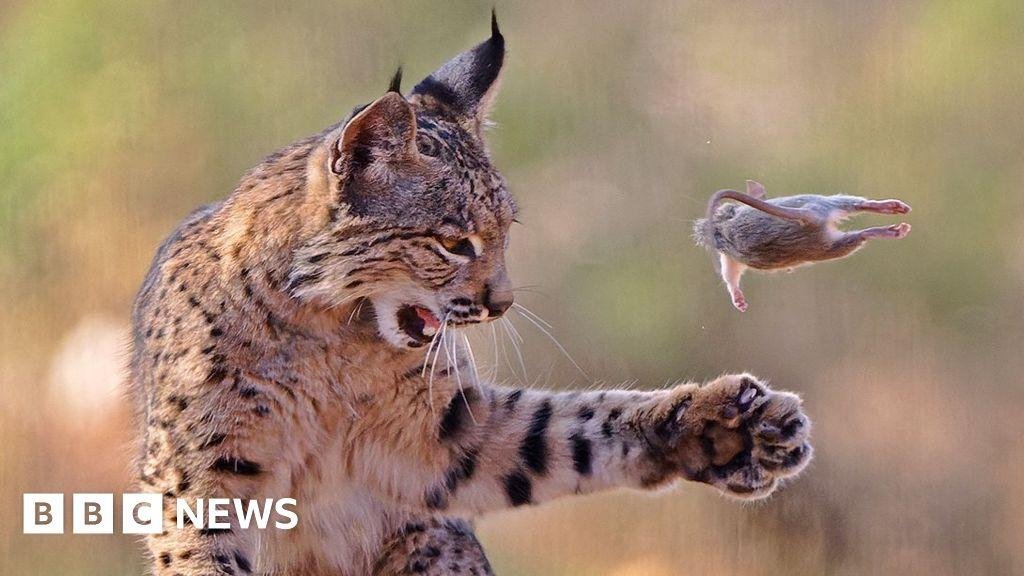
In pictures: Playful lynx snatches top prize in photo competition
Maddie MolloyBBC Climate & Science reporter

 Josef Stefan / Wildlife Photographer of the Year
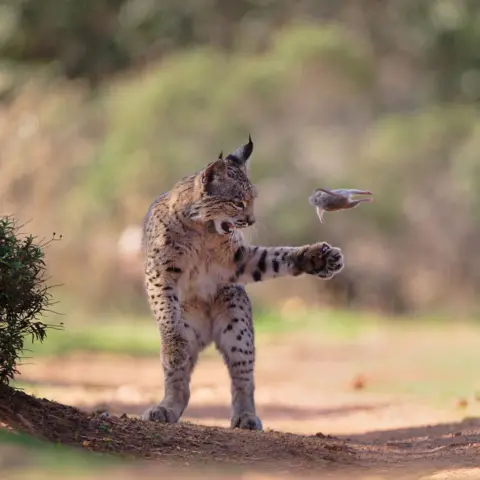
A young Iberian lynx caught mid play has won the Wildlife Photographer of the Year People's Choice Award 2026.
The striking image, titled Flying Rodent, was taken by Austrian photographer Josef Stefan during a two-week stay in Torre de Juan Abad, in Spain's Ciudad Real province.
He had spent several days in a hide when the young lynx suddenly appeared with its prey and began repeatedly throwing it into the air and catching it again.
For nearly 20 minutes, the lynx remained absorbed in the behaviour, at times standing on its "hind legs with its gaze fixed on the rodent", he said. "To me, it looked as if the rodent could fly."
The moment ended when the animal lost interest, carrying its prey behind a bush to eat it.
The Iberian lynx is one of the world's rarest wildcats and was on the brink of extinction in the early 2000s, with fewer than 100 individuals remaining.
Thanks to long-term conservation and reintroduction efforts, the population has recovered to more than 2,000, though it still remains at risk as a vulnerable species under International Union for Conservation of Nature classification.
The other 24 nominated images for this year's Wildlife Photographer of the Year People's Choice Award, which you can see below, received a record-breaking 85,917 votes from wildlife photography and nature fans worldwide.
In addition to the winning image, four other finalists were highly commended.
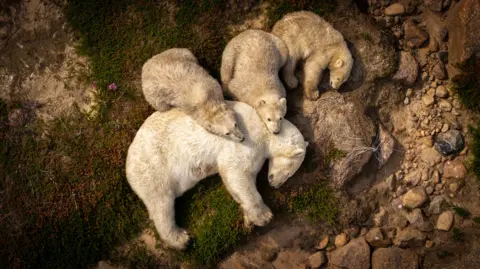
Finalist: Family Rest by Christopher Paetkau (Canada)
 Christopher Paetkau / Wildlife Photographer of the Year
A mother polar bear and her three cubs pause after a long journey along the Hudson Bay coast.
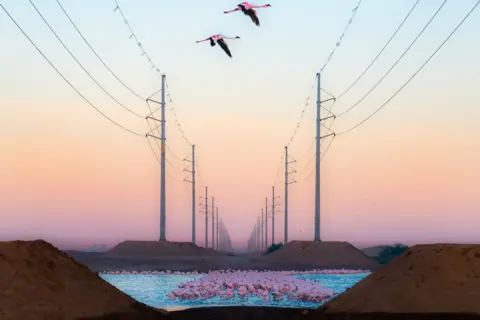
Finalist: Beauty Against the Beast by Alexandre Brisson (Switzerland)
 Alexandre Brisson/Wildlife Photographer of the Year
At a sanctuary in Walvis Bay, Namibia, a group of lesser flamingos gather beneath a stretch of power lines at sunset.
When two birds finally lifted off, their movement cut across the industrial scene.
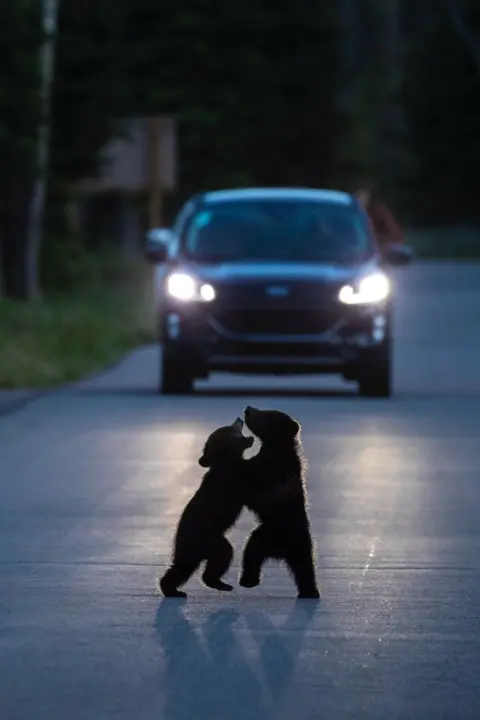
Finalist: Dancing in the Headlights, by Will Nicholls (UK)
 Will Nicholls/Wildlife Photographer of the Year
In Jasper National Park in Canada, two bear cubs were spotted play-fighting in the middle of a road.
Cubs are not often seen, as mothers usually keep them out of sight.
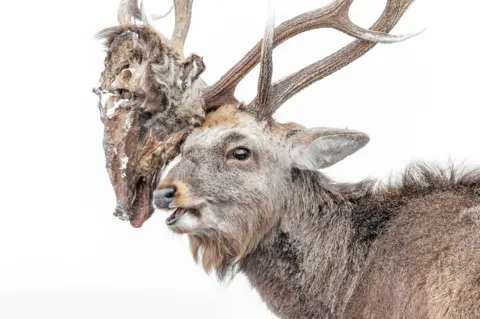
Finalist: Never-ending Struggle by Kohei Nagira (Japan)
 Kohei Nagira/Wildlife Photographer of the Year
On Japan's Notsuke Peninsula, a sika deer was seen carrying the head of a rival after a fight.
A fisherman reported it had dragged the body for days before the head came free.
The deer continued to survive alone through the winter months.
Other incredible images that were in the running
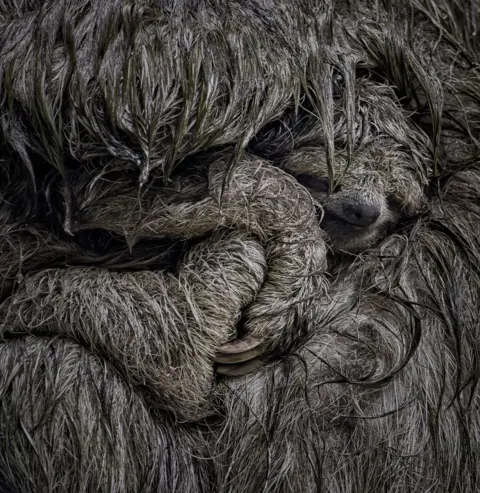
Hold Me Tightly by Dvir Barkay (USA)
 Dvir Barkay/Wildlife Photographer of the Year
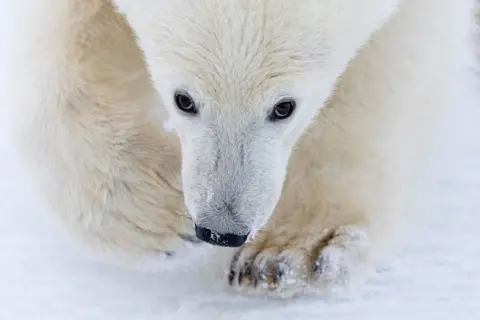
The Final Portrait, by Nima Sarikhani (UK)
 Nima Sarikhani/Wildlife Photographer of the Year
A polar bear cub travels the icy Svalbard coast with its mother. Soon after, people drove them from nearby huts; the mother was later found dead and the cub was shot after showing aggression, meaning this is likely the final image of them.
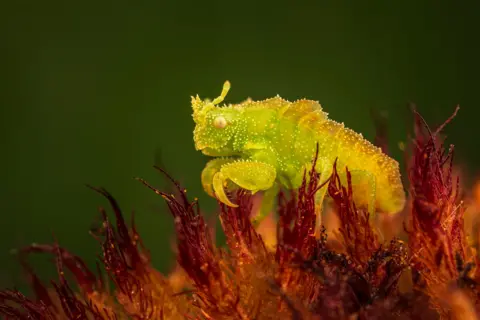
Ready to Pounce, by Joseph Ferraro (USA)
 Joseph Ferraro/Wildlife Photographer of the Year
Hidden in plain sight, an ambush bug nymph waits motionless inside a flower in Michigan. It can stay still for hours, striking only when prey wanders too close. In an instant, venom does the rest.
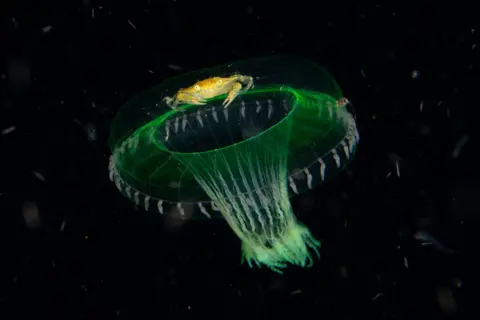
Along for the Ride, by Chris Gug (USA)
 Chris Gug/Wildlife Photographer of the Year
In Indonesia's Lembeh Strait at night, a tiny crab clings to a drifting jellyfish. No-one knows if it was travelling, hiding, or hunting from its living raft.
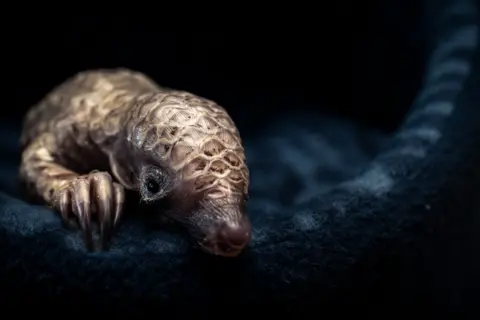
A Fragile Future, by Lance van de Vyver (South Africa)
 Lance van de Vyver/Wildlife Photographer of the Year
At a South African rescue centre, a pangolin pup rests wrapped in a blanket. Pangolin's are among the world's most trafficked animals. Its mother had survived poaching long enough to give birth but died soon after.
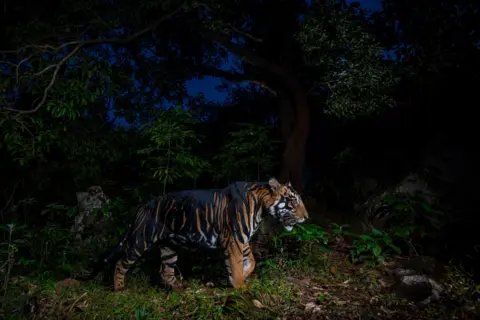
Dark Knight, by Prasenjeet Yadav (India)
 Prasenjeet Yadav/Wildlife Photographer of the Year
In Similipal Tiger Reserve, a tiger with rare and unusually wide dark stripes, known as T12, moves through the forest like a shadow. T12 has pseudo-melanism and was once the reserve's only male. Now he has fathered new generations.
Into the Furnace, by Mogens Trolle (Denmark)
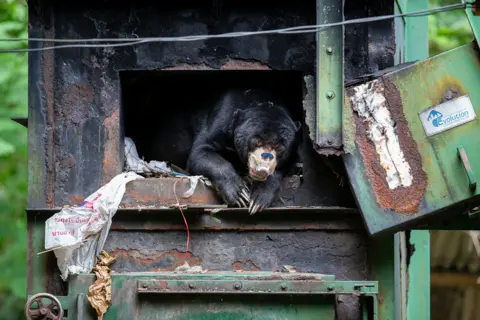 Mogens Trolle/Wildlife Photographer of the Year
A sun bear shelters from the rain in Thailand's Kaeng Krachan National Park as a butterfly briefly rests on its snout. These bears increasingly appear near campsites in search of easy meals.
Portrait of Extinction, by Adam Oswell (Australia)
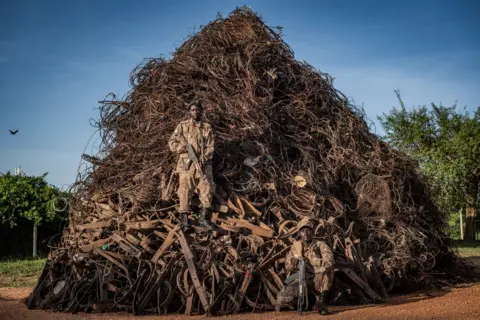 Adam Oswell / Wildlife Photographer of the Year
Rangers guard a mountain of confiscated snares in Murchison Falls National Park, Uganda. The pile represents just one year of traps taken from the bush.
Uniqueness, by Daniela Anger (Germany)
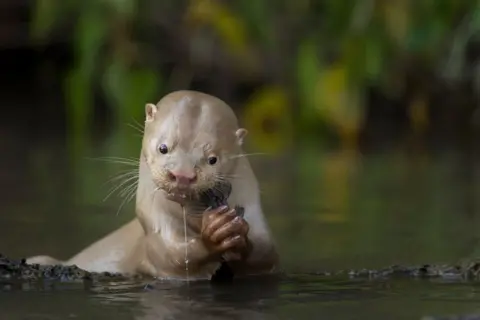 Daniela Anger / Wildlife Photographer of the Year
In Brazil's southern Pantanal, a rare pale giant otter feeds on a catfish. Its white fur is caused by leucism, which may make it more vulnerable, yet it repeatedly returned to the same branch, seemingly unconcerned by observers.
Above and Below by Charles Davis (Australia)
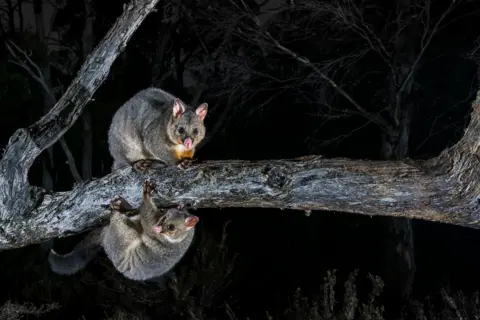 Charles Davis/Wildlife Photographer of the Year
A camera trap in Tasmania originally set to photograph quolls captured a possum mother and joey passing nightly to forage. One evening, the joey turned playful, mimicking every move of its mother.
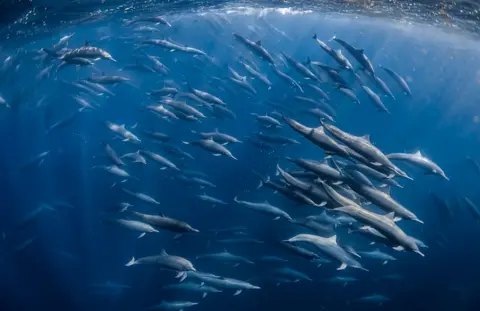
Swirling Superpod by Cecile Gabillon (France)
 Cecile Gabillon / Wildlife Photographer of the Year
Free-diving off Costa Rica, Gabillon found herself in a vast superpod of spinner dolphins herding lanternfish. Such huge gatherings are becoming rarer as overfishing and pollution increase.
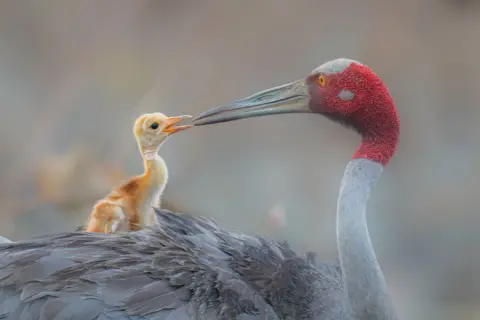
Beak-to-Beak by Ponlawat Thaipinnarong (Thailand)
 Ponlawat Thaipinnarong/Wildlife Photographer of the Year
In the rice paddies of Buri Ram, Thailand, a sarus crane gently cleans its one-week-old chick before lingering in a quiet beak-to-beak moment.
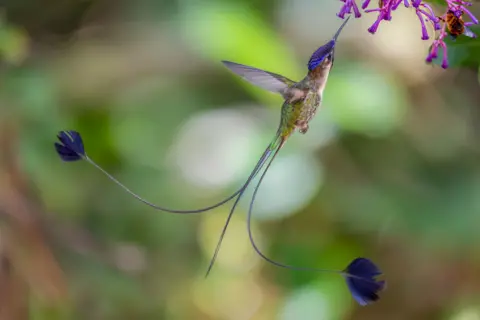
Marvellous Spatuletail by Dustin Chen (UK)
 Dustin Chen/Wildlife Photographer of the Year
At Huembo Lodge in Peru, a male marvellous spatuletail hummingbird fans its extraordinary tail as it feeds on flowers. The bird uses this ornate tail to attract mates, yet its forest habitat has been eroded by population growth, farming, and logging, leaving it confined to a small area of the northern Andes.
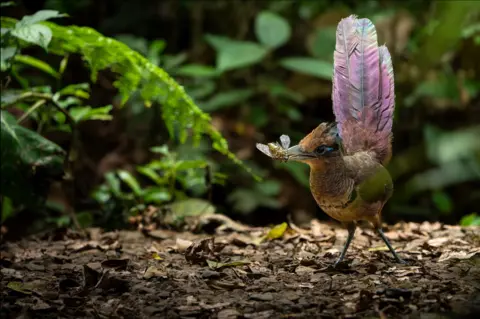
A Fleeting Moment by Lior Berman (Costa Rica)
 Lior Berman/Wildlife Photographer of the Year
In Costa Rica, a rufous-vented ground cuckoo snatches a cicada fleeing an army ant swarm. This elusive, iridescent predator relies on split-second timing and is rarely seen, let alone photographed.
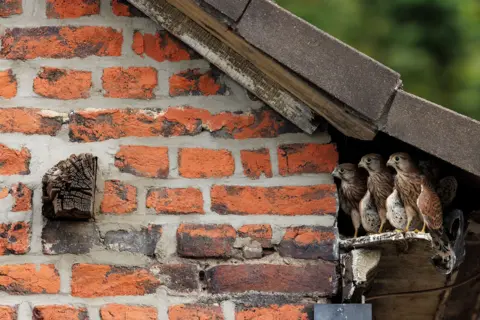
A Leap into Adulthood by Peter Lindel (Germany)
 Peter Lindel/Wildlife Photographer of the Year
From his living room in Dortmund, Lindel watched young kestrels hesitate before leaping from their nest to a beam just 80 centimetres away. It took nearly a week for them to jump, then another week exploring before they left.
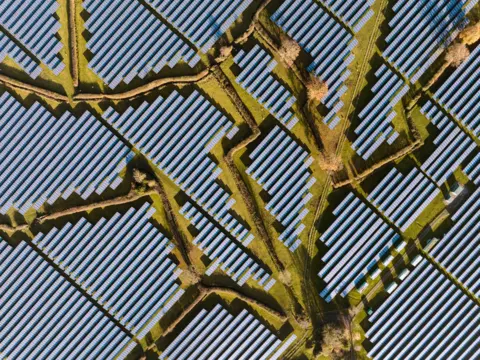
Solar Waves by Francesco Russo (UK/Italy)
 Francesco Russo / Wildlife Photographer of the Year
Rows of solar panels carefully laid around pasture boundaries ripple across fields near the hamlet of Cambridge, England.
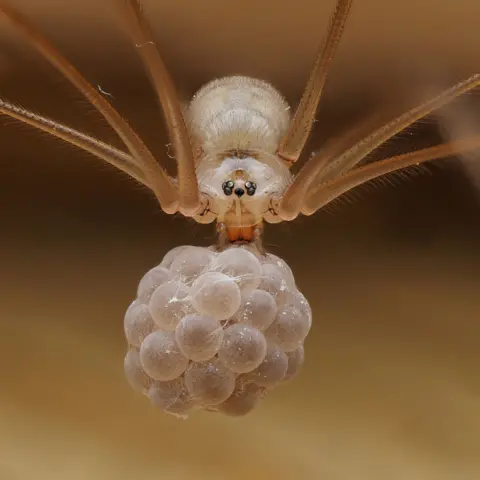
Precious Cargo by Thomas Hunt (UK)
 Thomas Hunt / Wildlife Photographer of the Year
In his sister's room in Southampton, Thomas found a cellar spider carrying a ball of eggs in her jaws. He moved her to the garage, where she guarded the eggs for weeks until they hatched into tiny spiderlings.
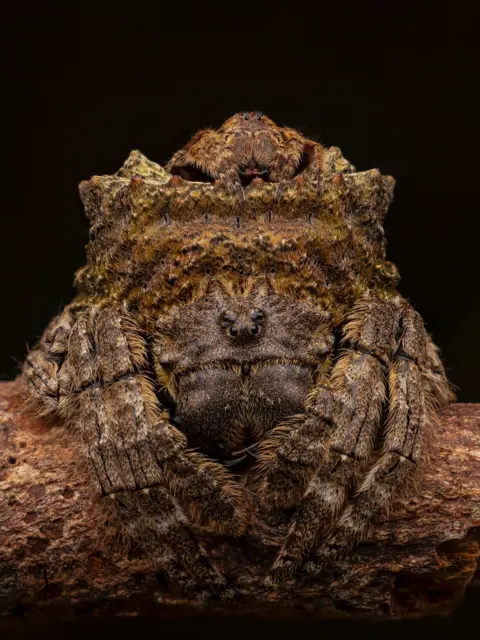
Couple's Camouflage by Artur Tomaszek (Poland)
 Artur Tomaszek / Wildlife Photographer of the Year
On a tree trunk in Thailand's Khao Phra Thaeo Non-Hunting Area, a tiny male broad-headed bark spider rides on the abdomen of a camouflaged female, waiting for her to moult so he can mate. Females are several times larger, and Artur had to find their web at night, then search the bark by day to see them at all.
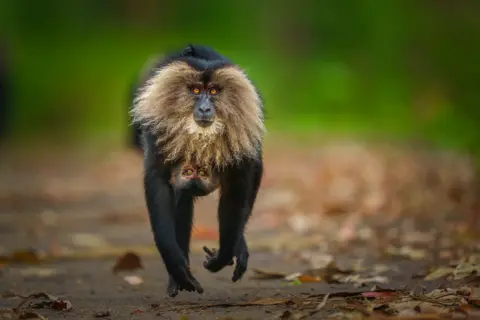
Bond in Motion by Lalith Ekanayake (Sri Lanka)
 Lalith Ekanayake/Wildlife Photographer of the Year
In India's Western Ghats, a lion-tailed macaque races along a path, its infant clinging close and both pairs of eyes fixed ahead. Among the world's most endangered macaques, these forest primates now survive in small, fragmented populations as human activity eats into their habitat.