Arbor Energy just landed a billion-dollar order to bring rocket turbine tech to the power grid
Arbor Energy just landed a billion-dollar order to bring rocket turbine tech to the power grid
Energy startup Arbor Energy on Wednesday said it had sold up to 5 gigawatts worth of its modular turbines to GridMarket, a company that helps arrange power projects for data centers and industrial users.
“Everyone wants more power. They wanted it yesterday,” Brad Hartwig, co-founder and CEO of Arbor, told TechCrunch. “The time frames are compressing and the scale is getting larger.”
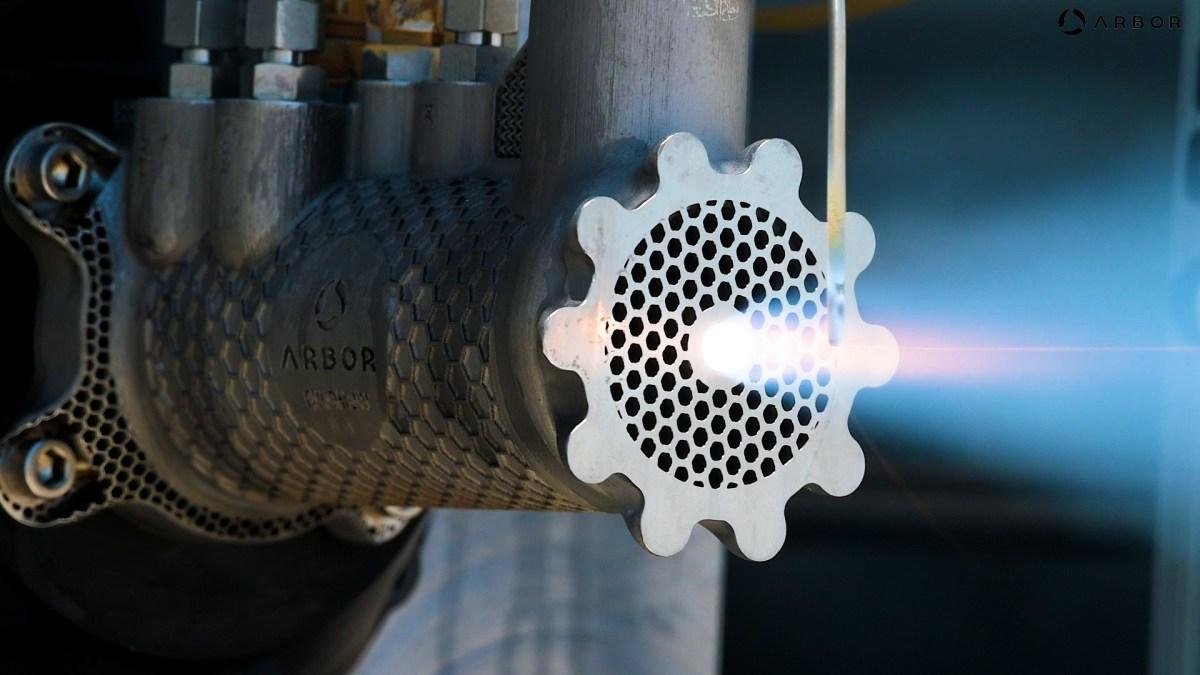
Arbor’s Halcyon turbines are based on rocket turbomachinery, high-performance engine technology originally developed for spaceflight, and its first commercial turbines will be 3D printed and capable of generating 25 megawatts each. GridMarket’s order, if fully fulfilled, represents 200 units.
Neither company disclosed the exact price of the deal, though Hartwig said that Arbor has seen a “willingness to pay of upwards of $100 per megawatt-hour.” A person familiar with the deal told TechCrunch that the total is in the single-digit billions of dollars.
The startup plans to connect its first turbine to the grid in 2028 and ramp production through 2030, at which point it hopes to deliver more than 100 turbines annually. The goal, Hartwig said, is to eventually produce enough for 10 gigawatts of new capacity every year.
Arbor’s initial designs intended for Halcyon to subsist on a vegetarian diet — the power plant would ingest organic material like crop waste and wood scraps from farms and timber operations, which would be turned into syngas — a combustible gas mixture — and burned in the presence of pure oxygen. The result would be pure CO2, which could be captured and stored underground.
Under that process, each Halcyon turbine would generate carbon negative power. The organic matter it consumes would otherwise have decayed, releasing methane and carbon dioxide into the atmosphere.
Techcrunch event
San Francisco, CA | October 13-15, 2026
Since then, Arbor has modified Halcyon to accept natural gas in addition to biomass — making it, in effect, more of an omnivore. The process otherwise remains the same, meaning the CO2 that emerges can still be sequestered.
Because it’s using natural gas, it wouldn’t be carbon negative in that configuration. In fact, because methane leaks from pipes and valves throughout the supply chain, Halcyon turbines running on fossil fuel will still produce some greenhouse gas emissions while also fostering continued demand for natural gas. Hartwig said that the company is working with low-leak natural gas suppliers, and that it’s “economically a benefit to sequester that CO2.”
“We see a long-term path to less than 10 grams of CO2 per kilowatt-hour,” Hartwig said. That’s significantly lower than typical natural gas power plants without carbon capture, which release about 400 grams of CO2 per kilowatt hour.
Arbor hasn’t abandoned its biomass-powered projects, and the sale to GridMarket isn’t restricted to one specific fuel. However, other announced deals built around biomass are considerably smaller than the one signed with GridMarket.
Like many energy startups, Arbor has gotten a meaningful boost from the data center boom. Makers of traditional gas turbines were caught flat-footed, and given the volatility of such markets in the past, they’ve been reticent to significantly increase production. Hartwig said that they’d be hard-pressed to quickly ramp production, even if they wanted to.
“Those supply chains largely all get bottlenecked by blades and vanes for traditional turbines. Those are fairly inelastic supply chains, both in how artisanal the production method is — doing directionally solidified, single-crystal turbine blades — as well as very specialized labor, the workforce behind it,” he said. “If you were to get in line for a turbine today, you’d be waiting until 2032.”
Arbor is betting that its machined and 3D printed parts will help it get to market quicker. “People want power in the next few years and they want a lot of it,” Hartwig said.
Tim De Chant is a senior climate reporter at TechCrunch. He has written for a wide range of publications, including Wired magazine, the Chicago Tribune, Ars Technica, The Wire China, and NOVA Next, where he was founding editor.
De Chant is also a lecturer in MIT’s Graduate Program in Science Writing, and he was awarded a Knight Science Journalism Fellowship at MIT in 2018, during which time he studied climate technologies and explored new business models for journalism. He received his PhD in environmental science, policy, and management from the University of California, Berkeley, and his BA degree in environmental studies, English, and biology from St. Olaf College.
You can contact or verify outreach from Tim by emailing tim.dechant@techcrunch.com.
Προωθημένο
Προωθημένο
Προωθημένο
Προωθημένο
Διαφημίσεις
Κατηγορίες
Διαβάζω περισσότερα
A security lapse at prison payphone service Pay Tel publicly exposed over 300K callers’ driver’s licenses Prison calling service Pay Tel has secured a publicly exposed cloud server storing hundreds of thousands of driver’s licenses and other sensitive information about people who used its services, according to a cybersecurity firm that alerted the company to the security lapse. Security...

Waymo robotaxis are tracking potholes and sharing that data with Waze users Two Alphabet-owned businesses are teaming up to find potholes and share it with cities. Waymo and Waze announced Thursday a data-sharing pilot program that will funnel pothole data collected by robotaxis to a free Waze platform designed for cities. Any city or state, where Waymo operates, will be able to access that...

As Iran regime change hopes fade, Netanyahu faces political testLucy WilliamsonMiddle East correspondent, JerusalemEPAThere is a new and concerted effort from Israel's military and political leaders to frame the achievements of the Iran war as having changed the Middle East, even without the regime change in Tehran that Israel's prime minister has focused on.Benjamin Netanyahu has spent decades...

Today's NYT Strands Hints, Answers and Help for May 16 #804Looking for the most recent Strands answer? Click here for our daily Strands hints, as well as our daily answers and hints for The New York Times Mini Crossword, Wordle, Connections and Connections: Sports Edition puzzles. Today's NYT Strands puzzle is an especially delicious one. Some of the answers are difficult to...

Adobe launches Acrobat Spaces, a free AI-powered study tool for students Adobe Acrobat has largely catered to professionals with its recent AI features. Now, the company is turning its attention to students by making the Acrobat more useful with the launch of a new AI tool called Acrobat Spaces. The tool will allow students to create presentations, flash cards, and quizzes from study materials...