Watch NASA's Artemis II Become the First Human Trip to the Moon in 50 Years
Watch Artemis II Live: When is NASA's Historic Moon Launch?
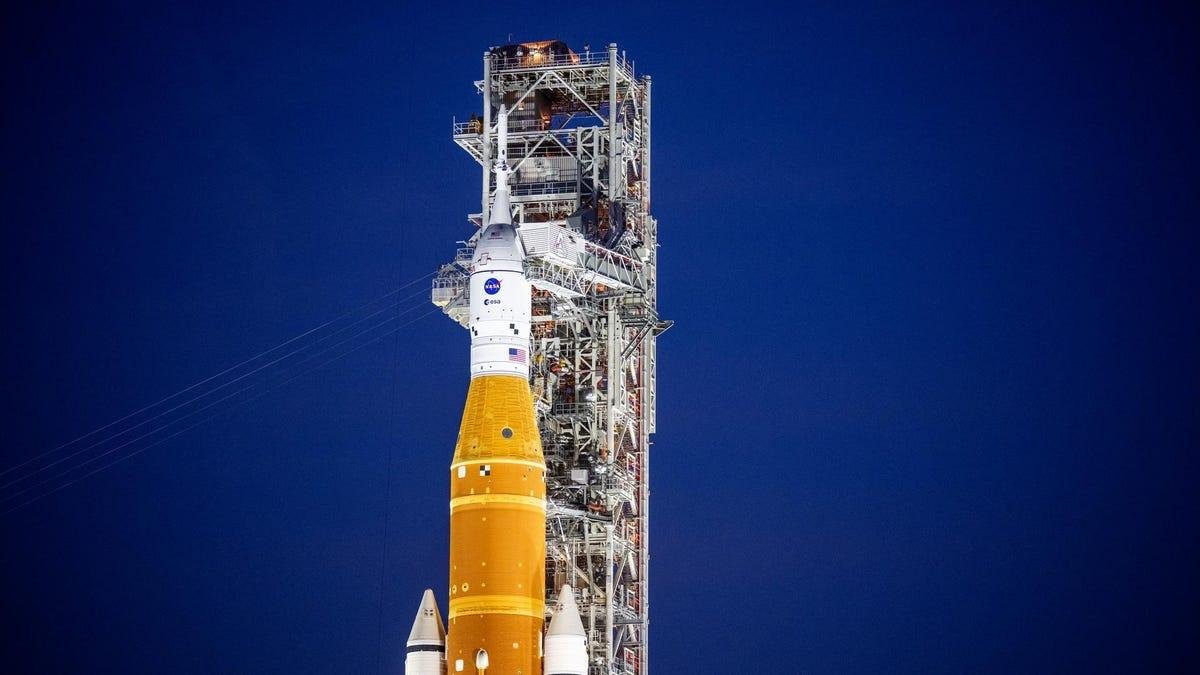
NASA's Artemis II Space Launch System (SLS) rocket and Orion spacecraft and the launch gantry at the Kennedy Space Center in Florida on March 31, 2026.
NASA/Keegan BarberFifty-four years after the last Apollo mission to the moon, NASA's Artemis II mission is set to return. The Space Launch System rocket carrying the Orion spacecraft is scheduled to take off from the Kennedy Space Center in Florida on Wednesday afternoon. The four-person crew, made up of American and Canadian astronauts, will be 250,000 miles from Earth at its farthest point in the journey to orbit the moon. This is everything you need to know about NASA's mission, its dreams for a future lunar base and this new age of space exploration.
Takeoff is scheduled for Wednesday, April 1, at 6:24 p.m. ET / 3:24 p.m. PT from NASA's Kennedy Space Center in Cape Canaveral, Florida. Delays are common during launches, especially due to weather, so we'll keep this story updated if the takeoff time changes.
You can watch the livestream on NASA's YouTube, official website and social media accounts. If you're looking for coverage in Spanish, check out NASA's Spanish YouTube channel.
Here's all the ways you can keep up with the Artemis II mission.
NASAWhat to expect from this mission to the moon
The Artemis II mission is designed to orbit the moon on a 10-day trip. The astronauts will not be touching down on the moon's surface this trip, but they will be testing the system's life support systems for the first time, according to NASA. This mission also sets the stage for future Artemis missions, including Artemis IV, scheduled for 2028, which should put humans back on the moon.
We'll be keeping up-to-date on all the latest Artemis II news, so check back here today and throughout the week for updates.
The deeper meaning of Artemis II
By Jon Skillings
I grew up watching the Apollo moon missions. It was absolutely thrilling -- every liftoff, every step on the lunar surface, every splashdown on the safe return to Earth. Then suddenly it was over, and more than 50 years have elapsed since humans have made that epic journey so far from home. Now the Artemis program has arrived to bring back that sense of awe. Space travel has never been exactly humdrum, but after so many successful space shuttle, Soyuz and SpaceX flights into orbit, and long-term residencies at the International Space Station, it has gotten routine. Artemis II is here to shake things up.
Which got me to thinking about where this is taking us. The Apollo program was the culmination of the first wave of space exploration, an epoch of heroic achievement by scientists, engineers and astronauts alike. The Artemis missions mark the start of a whole new era of space exploitation. It won't be long now before we are tapping into the moon's natural resource, before space mining becomes a career option. Elon Musk, rather than Neil Armstrong, could soon be the face of our lunar endeavors. I hope the sense of wonder and adventure stays with us.
Who's who in the Artemis moon mission
By Katelyn Chedraoui
The Artemis II crew in front of the SLS rocket and Orion spacecraft, en route on the mobile launcher from the Vehicle Assembly Building to Launch Pad 39B at NASA's Kennedy Space Center.
NASA/Joel KowskyThe Artemis II crew (from left): Backup crew members Andre Douglas and Jenni Gibbons, then prime crew members pilot Victor Glover, commander Reid Wiseman and mission specialists Jeremy Hansen and Christina Koch. Hansen is the sole Canadian among the American crew and will be the first of his countrymen to travel to the moon.
Patrocinados
Publicaciones
Publicaciones
Publicaciones
Categorías
Read More
New Hints and Answers for NYT Strands Puzzles
The New York Times Strands puzzles provide a fun challenge for puzzle enthusiasts. To enhance your experience, the NYT offers hints and answers that can help you tackle the puzzles more effectively. Whether you're a beginner or a seasoned puzzler, these resources can guide you through tricky clues and ensure you enjoy solving the puzzles to the fullest. By using the hints and answers, you can...

Pahalgam attack: Indian families cope with unending griefA Kashmir tourist hotspot became a bloodbath. A year on, the pain remains unbearable14 hours agoZoya MateenandKamal Saini and Neetu Singh,BBC Punjabi and BBC HindiTariq Khan/BBC HindiAishanya Dwivedi's husband Shubham was killed in a militant attack in Indian-administered Kashmir last yearOne year after a deadly attack on tourists in...

Sonos finally added Live Activities controls for your iPhone lockscreenAndrew Liszewski is a senior reporter who’s been covering and reviewing the latest gadgets and tech since 2006, but has loved all things electronic since he was a kid.Sonos released an update to its mobile app that finally introduces support for iOS’ Live Activities, giving iPhone users quick access to playback controls on...

Mark Zuckerberg tells staff that AI agents haven’t progressed as quickly as he’d hoped In Brief Posted: 4:38 PM PDT · July 2, 2026 Image Credits:ANDREW CABALLERO-REYNOLDS/AFP / Getty Images Replacing people with AI doesn’t seem to be that easy to do, if Meta can be seen as an example. Reuters reports that at an internal town hall...

US missionary released following kidnap in Niger, Christian group saysAn American missionary has been released after spending more than nine months in captivity, the international Christian organisation he worked for has said.Kevin Rideout - who was kidnapped outside his home in Niger's capital Niamey last year - was "in good health in the care of US officials", SIM International said in a...