Iran's flurry of diplomacy, as Trump insists U.S. has 'the cards'
Iran's flurry of diplomacy, as Trump insists U.S. has 'the cards'

This handout photo released by the Iranian foreign ministry shows Pakistan's Foreign Minister Ishaq Dar (L) greeting his Iranian counterpart Abbas Araghchi upon his arrival in Islamabad on April 24, 2026. /Iranian Foreign Ministry/AFP via Getty Images/AFP hide caption
toggle caption
/Iranian Foreign Ministry/AFP via Getty Images/AFP
Iran's foreign minister arrived in Russia on Monday, after a whirlwind weekend of diplomacy, seeking to gain political leverage and foreign backing as peace talks with the U.S. remain on hold.
But missing from this flurry of diplomacy is any sign of a meeting between Washington and Tehran.
Abbas Araghchi was in Islamabad last week but left on Saturday, prompting President Trump to cancel the U.S. negotiating team's own planned travel to the Pakistani capital.
Araghchi went instead to Oman – which is situated directly across the Strait of Hormuz from Iran – and met Sultan Haitham bin Tariq Al and his Omani counterpart.
"Important discussions on bilateral matters and regional developments. As only Hormuz littoral states, our focus included ways to ensure safe transit that is to benefit of all dear neighbors and the world," Araghchi said on X. "Our neighbors are our priority."
For his part, Oman Foreign Minister Sayyid Badr bin Hamad Al Busaidi said he had "a fruitful discussion on the Strait of Hormuz…. As two coastal states, we feel our shared responsibility toward the international community and the urgent humanitarian need to release the sailors who have been detained for a long time."
"This requires intensive diplomatic efforts and practical solutions to ensure permanent freedom of navigation," he added.
Araghchi also spoke by phone with the foreign ministers of Saudi Arabia, Qatar and Egypt.
From Oman, he ping-ponged back to Pakistan on Sunday, and on Monday Araghchi arrived in Russia, one of Iran's major allies.
In St. Petersburg he is expected to meet with President Vladimir Putin and plans to "discuss war-related developments and coordinate positions," he said, according to the state-affiliated Tasnim news agency.

In this picture obtained from Iran's ISNA news agency on April 24, 2026, Iranians are seen at Suru Beach in Bandar Abbas along the Strait of Hormuz. Razieh Poudat/AFP via Getty Images hide caption
toggle caption
Razieh Poudat/AFP via Getty Images
Who has 'the cards'?
While in Pakistan, Iranian media reported Araghchi gave Pakistani mediators a list of "red lines" for negotiations, including on nuclear issues and the Strait of Hormuz.
Trump has repeatedly said the complete eradication of Iran's atomic program is the key U.S. demand.
Over the weekend, Trump said: "We have all the cards. If they want to talk, they can come to us, or they can call us."
Iran's parliamentary speaker and lead negotiator took to social media to challenge Trump's comments.
"They brag about the cards. Let's see," Mohammad Baqer Qalibaf said on X. He then presented a complicated supply and demand equation that he intended to show the economic challenges faced by the U.S.

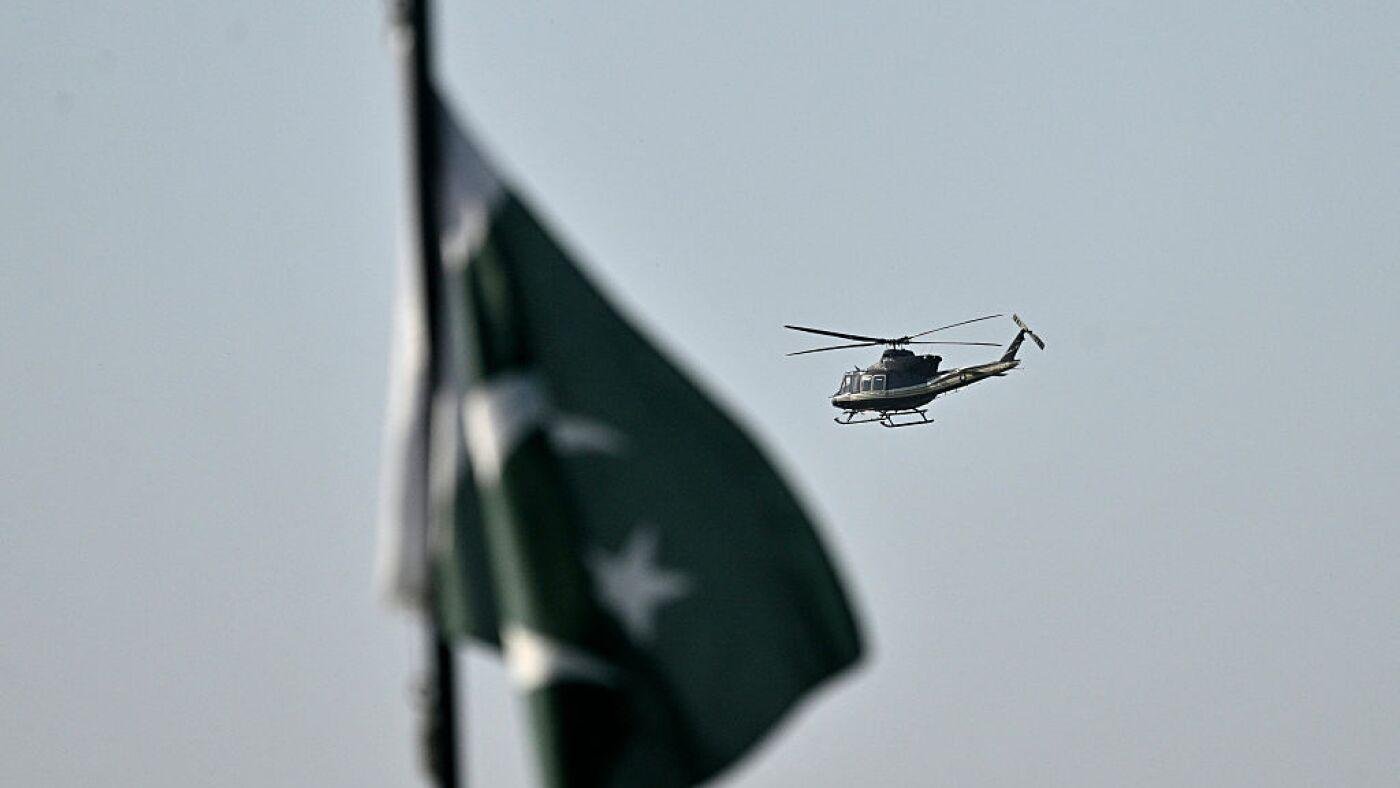
A helicopter flies over the Red Zone area of Islamabad on April 25, 2026. Asif Hassan/AFP via Getty Images hide caption
toggle caption
Asif Hassan/AFP via Getty Images
But Iran is also facing the consequences of the U.S. Naval Blockade on its ports. Trump told Fox News on Sunday Iran has just three days of storage left before its oil pipelines explode from pressure, since it's running out of ships to store it on.
Asked about that timeline, Amena Bakr, the head of Mideast Energy at research firm Kpler, told NPR that while Iran is running out of storage, it's closer to 20 days at current production levels.
Bakr also said Iran has a southern terminal outside the strait of Hormuz that could be used for re-routing oil, provided they can get their ships there and bypass the U.S. blockade.
Aya Batrawy in Dubai and Kate Bartlett in Johannesburg contributed to this report.
Commandité
Commandité
Commandité
Commandité
Annonces
Catégories
Lire la suite
Posthaste: Increasing cost of living is eroding Canadians' retirement confidenceHigh prices have added to the concerns that their retirement nest egg may not be enough for 74 per cent of Canadians surveyed by Bank of Montreal. Photo by GettyArticle contentTHIS CONTENT IS RESERVED FOR SUBSCRIBERS ONLYSubscribe now to read the latest news in your city and across Canada.Exclusive articles from...

'I don't want to imagine what happened' - Shock and disbelief in area Savannah Guthrie's mother went missingRegan Morrisin Tucson, ArizonaWatch: What we still don’t know about the disappearance of Savannah Guthrie’s motherThe neighbourhood where Nancy Guthrie went missing has breathtaking views of the Santa Catalina mountains and strict limits on outdoor lighting to protect Tucson's standing as...
AI Fall Detection Keeps Grandma Safe, if She's OK With Being WatchedIn the Dutch municipality of Waalre, 10 older adults are now living under the quiet watch of artificial intelligence. Ceiling-mounted sensors from Kepler Vision Technologies scan their homes continuously, feeding an AI trained to distinguish a fall from a sit-down and automatically push a notification to family members or...
The Bachelorette's messy break-up with Taylor Frankie PaulGetty ImagesTikTok and reality star Taylor Frankie Paul was a risky choice to lead ABC's The Bachelorette franchiseTikTok star Taylor Frankie Paul sat uneasily in her chair during a live interview on ABC's Good Morning America this week, caught between trying to promote her turn in the network's new series of The Bachelorette and...

Has Hollywood golden boy Timothée Chalamet lost his shine?Ian YoungsCulture reporterEPATimothée Chalamet spent months as the favourite to win best actor at the Oscars - but no longer isTimothée Chalamet was, until very recently, Hollywood's golden boy and a frontrunner to win an Oscar this weekend - so is the backlash he has faced about more than his views on ballet and opera?When Chalamet...