How Air Duct Cleaning in Salt Lake City Handles Older Fiberglass Ductwork
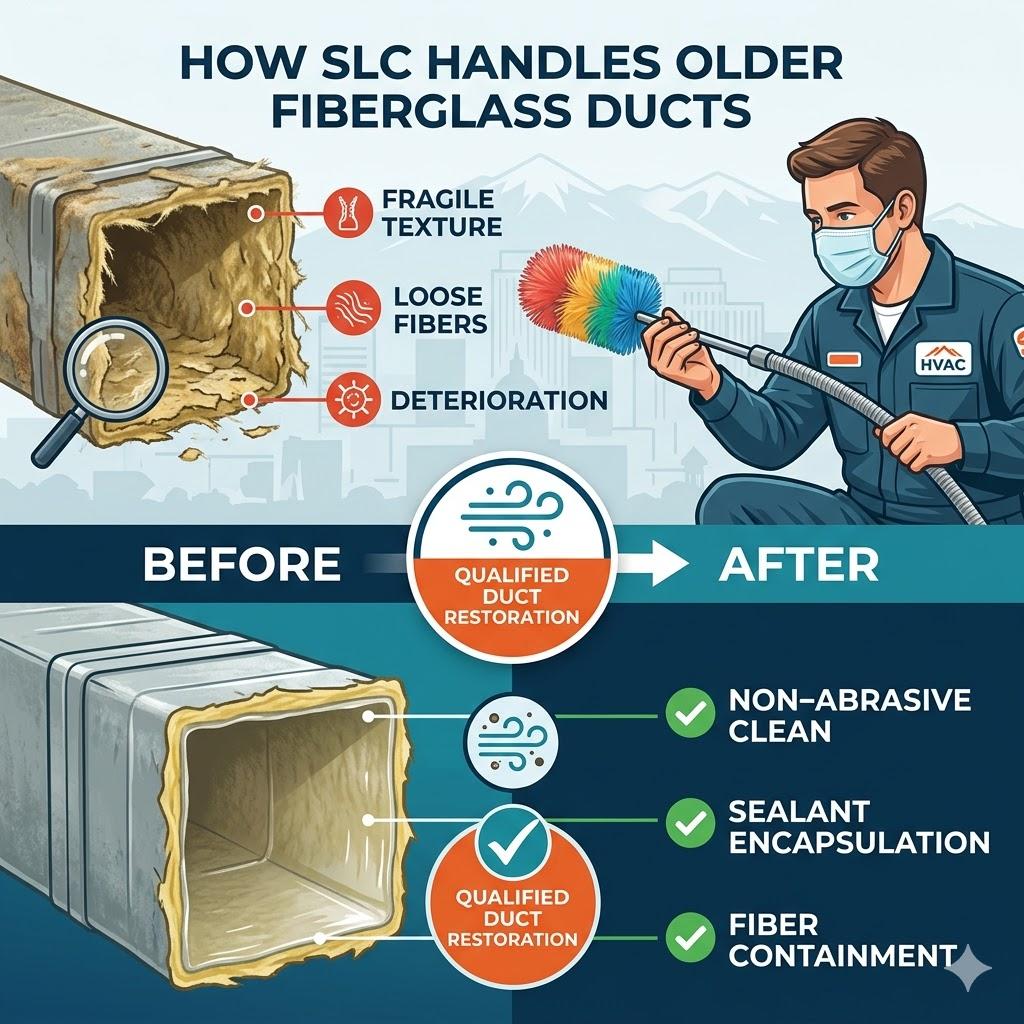
Maintaining an older home in the Salt Lake Valley presents a unique set of challenges. From the historic charm of the Avenues to the mid-century builds in Sugar House, these structures often rely on HVAC systems designed decades ago. One specific component that requires professional oversight is fiberglass ductwork. Often referred to as "duct board," this material was popular in previous eras for its insulation properties and cost-effectiveness. However, as it ages, the cleaning process becomes significantly more complex than cleaning standard galvanized steel.
For homeowners in Utah, understanding the nuances of how modern professionals manage these systems is vital for indoor air quality and structural integrity. This guide explores the technical methodologies, safety protocols, and long-term maintenance strategies used by experts to handle aging fiberglass systems.
The Evolution and Composition of Fiberglass Duct Systems
Before diving into the cleaning process, it is essential to understand what fiberglass ductwork actually is. Unlike metal ducts, which are rigid tubes, fiberglass ductwork is typically constructed from stiffened boards of compressed glass fibers. These fibers are bonded with a resin and often feature a foil laminate on the exterior to serve as a vapor barrier.
According to the technical definitions found on Wikipedia, ducts are conduits or passages used in heating, ventilation, and air conditioning to deliver and remove air. While metal has been the industry standard for centuries, fiberglass gained traction because it provides built-in thermal insulation and acoustic dampening. This means the furnace or air conditioner does not have to work as hard to maintain temperatures, and the sound of rushing air is muffled.
However, the very nature of the material makes it porous. Over twenty or thirty years, the resin holding the glass fibers together can begin to degrade. When this happens, the interior surface—which was once smooth—becomes "fuzzy" or friable. This degradation creates a surface that traps dust, pollen, and moisture far more easily than metal.
The Risk Assessment: Why Fiberglass Requires a Different Touch
In Salt Lake City, the high altitude and seasonal temperature swings can cause building materials to expand and contract. For aging fiberglass, this physical stress leads to surface breakdown. If a standard high-pressure "air whip" or a stiff rotating brush (commonly used in metal ducts) is inserted into an old fiberglass system, it can shred the interior lining.
The Problem of Particulate Release
The primary concern during the cleaning of old fiberglass is the release of glass fibers into the living space. If the material is handled aggressively, microscopic shards of glass can enter the airflow. Once these fibers are airborne, they can cause skin, eye, and respiratory irritation for the occupants. Professional cleaners in the region must utilize a "light touch" methodology to ensure that the cleaning process does not become a source of pollution itself.
Moisture and Microbial Growth
Fiberglass is naturally resistant to mold; however, the dust that collects on its porous surface is not. In the Salt Lake Valley, where summer humidity can occasionally spike or winter condensation can form inside attic-run ducts, this trapped organic dust can become a breeding ground for biological contaminants. Because fiberglass is porous, once mold takes root in the fibers, it is notoriously difficult to remove without damaging the duct itself.
Professional Cleaning Methodologies for Salt Lake City Homes
When a professional team arrives at a Salt Lake City property with older fiberglass ducts, they follow a specialized protocol. This is not a "one-size-fits-all" service. The process is defined by precision and the use of specialized equipment designed to preserve the integrity of the duct board.
1. The Initial Inspection and Material Integrity Test
The first step is always a visual inspection, often involving remote cameras. The technician looks for signs of "pithing" or "delamination." If the fiberglass is so old that it crumbles at a touch, a professional may recommend coating or replacement rather than a deep clean. If the material is still structurally sound, the cleaning proceeds with caution.
2. HEPA-Filtered Negative Pressure
The "gold standard" for cleaning these systems is the use of a high-volume HEPA (High-Efficiency Particulate Air) vacuum system. The vacuum is attached to the main trunk line, creating a vacuum throughout the entire system. This ensures that any dust or fibers loosened during the process are pulled directly into a specialized filtration system rather than blowing out into the bedrooms or kitchen.
3. Non-Abrasive Agitation Tools
Instead of the heavy-duty steel brushes used in commercial metal ducting, technicians use soft-bristled brushes or "air skips." Air skips use controlled bursts of compressed air to lift dust off the surface without digging into the fiber bed. The goal is to remove the "heavy" debris while leaving the resin-bonded surface intact.
4. Antimicrobial Encapsulation
In many older Salt Lake City homes, cleaning is followed by the application of an encapsulant or sealant. This is a specialized coating that is sprayed through the ductwork. Once it dries, it "locks" any remaining loose fibers in place and provides a smooth, semi-permeable surface that is more resistant to future dust accumulation.
Current Trends and Professional Standards
The HVAC industry is constantly evolving, with new research highlighting the link between duct maintenance and overall health. As noted in recent reports on Google News, there is an increasing focus on "green" cleaning technologies and the impact of indoor environments on long-term respiratory wellness.
Professionalism in this field is paramount. Many property owners turn to business insights from Forbes to understand the value of hiring certified contractors over "budget" services. A professional SEO and marketing expert in the home services niche would tell you that the cheapest quote often leads to the most expensive repairs. This is especially true for fiberglass; a technician who does not understand the material can cause thousands of dollars in damage in a single afternoon.
In surrounding areas, such as when performing air duct cleaning tooele, technicians must be equally vigilant about the specific soil and dust types prevalent in the Great Basin, which can be particularly alkaline and abrasive to fiberglass resins.
When to Clean vs. When to Replace
A common question for Salt Lake City residents is whether their old fiberglass ducts can even be saved. There are three main indicators that replacement is better than cleaning:
-
Saturation: If the ducts have been exposed to a major plumbing leak or roof leak, the fiberglass acts like a sponge. It cannot be effectively dried or cleaned once saturated with contaminated water.
-
Odor Retention: Fiberglass can absorb smoke odors or pet smells over decades. If a deep clean and encapsulation do not resolve the scent, the material has likely reached its "saturation point" for volatiles.
-
Severe Delamination: If the interior foil or the resin bond has failed, the duct may collapse under its own weight or the pressure of the HVAC fan.
For most well-maintained homes, however, a professional cleaning every three to five years is sufficient to keep these systems running efficiently.
Conclusion and Call to Action
Older fiberglass ductwork requires a level of expertise that goes beyond the standard tools found in a general handyman's kit. For residents of Salt Lake City, the key to a healthy home lies in recognizing the delicate balance between cleanliness and structural preservation. By employing HEPA-filtered negative pressure, soft-touch agitation, and professional-grade sealants, you can extend the life of your HVAC system and ensure the air your family breathes is free of glass fibers and accumulated allergens.
Sponsorluk
Sponsorluk
Sponsorluk
Sponsorluk
Reklam
Kategoriler
Read More
8 Pantry Items That Home Cooks Are Sleeping on, According to ChefsBusy weeks breed autopilot grocery runs. We grab the same staples, cook the same meals and move on. There's no shame in falling back on the familiar, but a handful of underrated pantry additions can quietly transform the way you cook -- giving worn-out recipes a second wind and sparking new cooking projects worth getting excited...

This Modular Phone Transforms Into a Fully-Fledged CameraI might have been blown away already during Mobile World Congress 2026 by Xiaomi and Leica's incredible Leitzphone that can take pro-level images, but Tecno's concept might take things even further. By using various modules that snap onto a more standard phone body, this concept device can morph into various forms, including a huge...

Google Pixel 10A: Rumors, Release Date, Price - CNET Jeffrey Hazelwood/CNET/GoogleGoogle's Pixel 10A is rumored to debut in the next few weeks, with the lower-cost Android phone possibly arriving within the same window as Samsung's Galaxy S26 line.The less-expensive A series -- historically released in the spring or summer -- has been the subject of several recent rumor stories, including the...

Today's NYT Connections: Sports Edition Hints and Answers for May 19, #603Looking for the most recent regular Connections answers? Click here for today's Connections hints, as well as our daily answers and hints for The New York Times Mini Crossword, Wordle and Strands puzzles. Today's Connections: Sports Edition features kind of a mix of difficulties. If you know your NFL...

Ethos raises $22.75M from a16z for its expert network with voice onboarding When companies are looking for opinions or advice on a project, they tend to go to LinkedIn or use expert networks such as GLG, Third Bridge, or Alphasights. But they often don’t find quality inputs, despite their searches. Today, these sites ask experts to fill in a form based on their job title, which is then used...