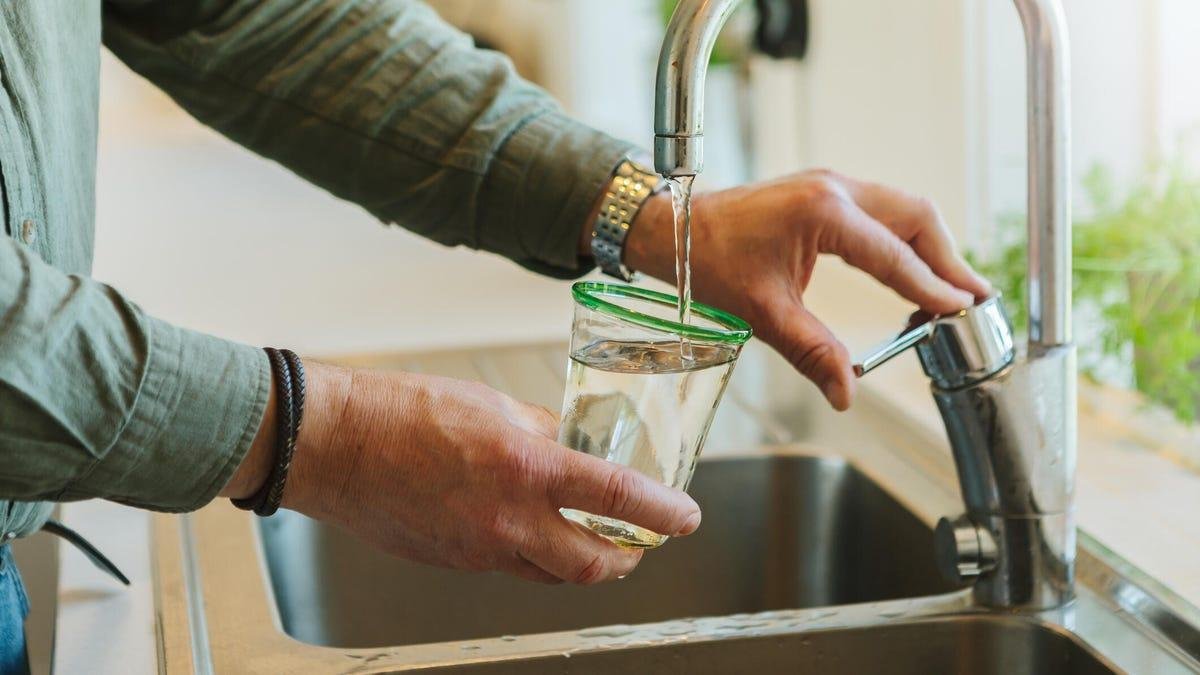
Safe, quality drinking water isn't a given, even in countries with historically reliable systems. Incidents of contaminants leaching into water systems from faulty pipes, bacterial contamination and corporations dumping chemicals into water supplies dot our country's history, and should have everyone thinking seriously about water quality. The source of contamination could be coming from inside the house, too, especially in older homes with lead pipes or asbestos.
Before we dive into common drinking water contaminants, I want to clarify that this list doesn't necessarily indicate unsafe levels of any given contaminant in your area's drinking water. The easiest way to determine what's in your water is to review the annual water quality report from your local water utility. Don't forget to consult the EPA's handy guide to reading them (PDF).
It's essential to review your local water quality report so you can determine if you want to take additional filtration steps at home to further enhance your drinking water.
EPAOne thing you'll notice in these reports is that regulations set an ideal goal, the maximum contaminant level goal, but recognize that water treatment technology can't always deliver, so they provide a realistic standard, the maximum contaminant level.
The biggest myth about tap water, according to an expert
Experts I spoke with identified toxins that could be leaching into your tap water.
Elena Zaretskaya/Getty ImagesAccording to water scientist Dr. Eric Roy, the biggest misnomer about tap water is that just because it looks, smells, and tastes clean, it is clean. Some of the most harmless impurities, namely byproducts of treatment-center disinfectants, are the ones that affect taste and odor the most, while others, including lead, which can greatly affect your health, can't be detected by human senses at all.
The moral of the story? Clean drinking water isn't a given, and relying on your senses and a bit of wishful thinking isn't really a safeguard against potential problems. Learning what's in your water and then treating it appropriately is the most sensible course of action.
Tap Score's lab-testing and evaluation shows you where the issues are in your tap water.
Screenshot by CNETTo arm yourself with useful information, you can have your water tested by a reliable independent water lab, such as Tap Score, for about $300 and get a detailed breakdown of what's in your water and how it could affect your health.
Similarly, you can buy home test kits from Safe Home and Easytest for about $30 or less. Both at-home kits test for lead, bacteria, and excess chlorine. (Most people lack the resources for professional water testing services.) If you use well water, it's a good idea to test it at least once a year.
5 common drinking water contaminants
Pulling back the curtain on what's in your drinking water might encourage you to invest in a water filter. (Even if it's mostly for houseplants, like my Typhoon III reverse osmosis system.)
John Carlsen/CNETI asked Kyle Postmus, senior manager of the Global Water Division at NSF (formerly the National Sanitation Foundation), about pollutants that could bypass the water treatment process. "While municipal water treatment systems are highly effective at removing many contaminants, certain pollutants can still make it through the treatment process." Postmus also points out that location, infrastructure age and source water quality all affect the presence of a pollutant.
He notes that the testing and certification work of organizations like NSF helps ensure the efficacy of the water treatment process. "NSF certifies water treatment products against rigorous standards to ensure they perform as claimed, providing consumers with independent assurance of effectiveness."
1. Lead
Old lead pipes are the most common culprit for the toxic metal leaching into drinking water.
Gina Pricope/Getty ImagesLead typically sneaks in after the treatment process because some cities still use outdated lead pipes, which can increase contamination. For example, the Utah Lead Inventory notes that some cities where I live have documented lead pipes in their water systems. The ideal solution for removing lead is to replace outdated water pipes but the EPA also suggests a few ways to reduce lead contamination:
- Purchase a water filter certified for lead removal, such as our top pick, the Zero Water filter.
- Regularly clean your faucet's aerator to remove sediment.
- Drink only cold water -- hot tap water can hold more lead than cold water.
- Flush your pipes before drinking water if it has been stagnant for an extended period. The easiest way to do this is to take a shower, wash the dishes or do the laundry.
2. Microorganisms
Storms and flooding can cause dangerous microorganisms to enter drinking water supplies.
Melissa Sue Gerrits/Getty ImagesPostmus says that some resistant microorganisms may survive standard treatment. However, a more common source of bacterial contamination is an accidental sewage overflow, sometimes after a heavy storm. In most cases, you can remove this kind of contamination by boiling, filtering or disinfecting your water.
For Legionella, one of the most important steps is to set your water heater to at least 140°F to prevent the bacteria from growing. This also reduces the likelihood of bacterial growth where hot and cold water mix, such as at faucets. (Notably, the CDC says that no single method can control Legionella, so you'll likely need additional disinfectant and flushing steps if it becomes an issue in your home.)
3. Emerging contaminants
Many emerging contaminants originate from the products you use at home and they aren't yet regulated by water treatment standards.
WaterdropEmerging Contaminants are a class of contamination that Postmus says includes pharmaceuticals, personal care products and certain industrial chemicals. Per- and polyfluoroalkyl substances (PFAS) are notable recent examples of emerging contaminants.
These pollutants may not yet be subject to regulation, but the Safe Drinking Water Act requires the EPA to evaluate contaminant candidates every few years. Look for NSF's water filter certification program for emerging contaminants -- NSF/ANSI 401 -- if you want to remove them from your drinking water. Water filter brands like Waterdrop and Aquasana are a good starting point.
4. Volatile organic compounds
You can find VOCs in a ton of products like gasoline, adhesives, solvents and cleaning chemicals.
RorraVolatile organic compounds (VOCs) are a type of chemical that easily dissolves in water -- hence the word volatile -- and are usually the source of the smells (and flavors) we associate with chemicals. The primary source of VOCs, such as trihalomethanes, is the water treatment process itself, as many are minor byproducts of disinfection. Fortunately, a properly functioning water treatment facility uses rigorous testing to ensure that VOCs stay out of your tap. Chemical spills are also common sources of VOCs in drinking water, as they can contaminate groundwater.
Activated carbon filters, such as the AquaTru Carafe reverse osmosis filter or Rorra countertop filter system, are excellent tools for removing VOCs from water.
5. Chlorine and chloramine
Water that is properly treated is safe for humans but those with pets may want to consider a filter that removes trace amounts of chlorine or chloramines.
David Watsky/CNETThese disinfectants (which don't really fall under the VOC umbrella) aren't typically harmful to people in properly treated water, but they're not good for aquatic pets such as fish, turtles, and frogs. If you have these types of pets, it's a good idea to treat the water to remove chloramines.
Reverse osmosis filtration is a mainstay for aquarium enthusiasts but you can also find chloramine removal products at the pet store. For chlorine, simply let it sit out for a few days and it will eventually dissipate from the water.
Water purification at home
It's easy to improve water quality at home with the right kind of water filter.
ZeroWaterPostmus recommends that consumers look for an NSF-certified water filter to address specific contaminants. "NSF-certified water filters are rigorously third-party tested to ensure they work according to the manufacturer's claims and are safe to use and won't leak. For ease, consumers can check NSF's Product Listing Page that lists all NSF-certified water filters."
One reason to check the certification page is to verify the manufacturer's claims and ensure the filter will work as intended. "This is a crucial step when it comes to something as important to your health as your water."
Most of CNET's top-tested countertop water filters, water filter pitchers and filtered water bottles are NSF/ANSI-certified; however, you can also find fridge filters and whole-home filtration systems that meet the same standards.