A tech worker in China is laid off and replaced by AI. Is it legal?
A tech worker in China is laid off and replaced by AI. Is it legal?

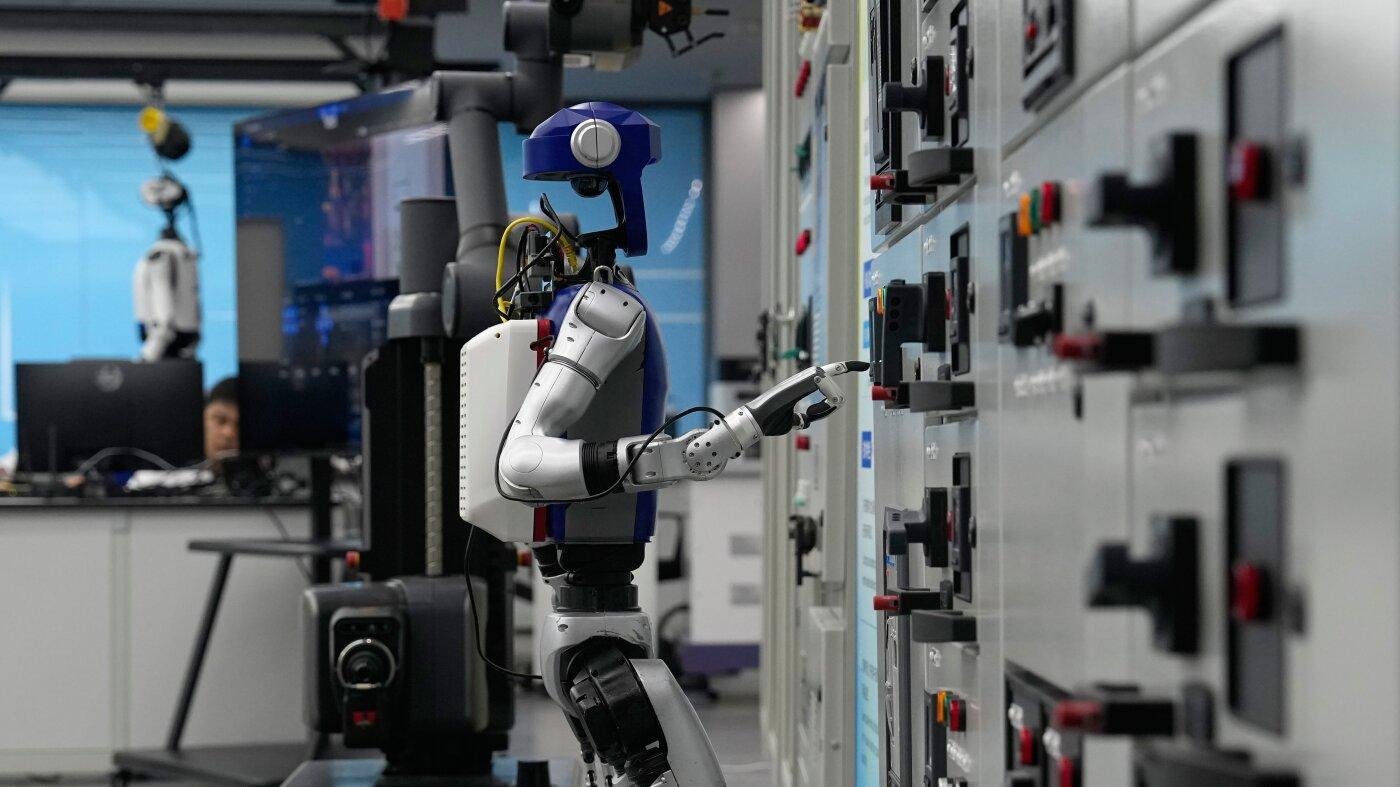
Artificial Intelligence robots demonstrate working on power grid control units during a media organized tour at Guangdong Power Grid Robotics Laboratory in Guangzhou, in southern China's Guangdong province, Thursday, April 16, 2026. Andy Wong/AP hide caption
toggle caption
Andy Wong/AP
A court in eastern China's Hangzhou city, an AI hub, has ruled in favor of a senior tech worker whose company replaced him with artificial intelligence (AI).
The decision is being hailed by legal scholars as a reassuring signal for labor rights protection at a time when the central Chinese leadership is pushing for industries to widely adopt AI technology.
The Hangzhou Intermediate People's Court upheld an earlier decision by a lower-level court that the tech worker's dismissal was unlawful.
"The termination grounds cited by the company did not fall under negative circumstances such as business downsizing or operational difficulties, nor did they meet the legal condition that made it 'impossible to continue the employment contract,'" the court said in a published article.
At the heart of the case is whether a company can use AI replacement as a pretext for laying off human workers.
The worker, identified by the court only by his surname Zhou, was employed at a tech firm in Hangzhou, Zhejiang province, as a quality assurance supervisor. The tech firm was not named by the court. Zhou primarily worked with AI large language models and verified the accuracy of answers they generated for users.
Zhou earned an annual salary of 300,000 yuan ($43,900) before AI took over his job. The company reassigned him, but to a lower-level position with a 40% pay cut.
He refused and the company ended Zhou's contract citing the disruptive impact of AI on the role and reduced staffing needs.
Zhou filed an arbitration claim demanding higher compensation for wrongful termination and won. The company disagreed and filed a lawsuit in 2025. It lost at a district-level court. Now it lost again in the appeal.
Hangzhou court also ruled that it was not reasonable that the alternative position the company offered Zhou came with a substantial salary cut.
A Zhejiang lawyer Wang Xuyang, who is not connected to the Hangzhou case, told state-run news agency Xinhua that AI adoption doesn't automatically justify a company terminating a labor contract to cut costs.
But corporate profits have been squeezed as the Chinese economy remains sluggish. Add to that the rising costs brought on by the Iran war, and businesses will likely be looking for more ways to cut costs.
The case is among several labor disputes arising from AI job replacements across Chinese cities.
Last year, a data mapping worker in Beijing who was replaced by AI and dismissed also won his case through arbitration. The arbitration panel said the tech company's decision to switch to AI was a business choice rather than from an uncontrollable event.
It said by terminating the employee contract, the company was shifting the cost of the technological transformation to the employee, and ruled the dismissal illegal.
Jasmine Ling contributed to this report
Προωθημένο
Προωθημένο
Προωθημένο
Προωθημένο
Διαφημίσεις
Κατηγορίες
Διαβάζω περισσότερα
How plans for Trump International hotel in Belgrade unravelledGuy De LauneyBalkans correspondentGetty ImagesA banner saying "we won't surrender the Generalstab" is held outside the ruins in BelgradeThe Trump International Hotel proposed for the Serbian capital Belgrade was supposed to mark a new chapter in the country's modern history. It would take the place of one of the city's most arresting...

'I can be a proud Hungarian after 16 years'Skip to contentWatch LiveBritish Broadcasting CorporationHomeNewsSportBusinessTechnologyHealthCultureArtsTravelEarthAudioVideoLiveDocumentariesWatch LiveHungarian voters celebrate 'much-needed' changeMore on this story.52 minutes agoViktor OrbanHungary

Four takeaways from Pam Bondi's fiery Epstein testimonyWatch: Spats, theatrics and a walkout - How the Pam Bondi hearing unfoldedUS Attorney General Pam Bondi defended the justice department's handling of the Epstein files and faced a barrage of angry questions on other issues during a fiery congressional hearing on Wednesday.Her testimony before the House of Representatives Judiciary Committee...

Law enforcement shuts down VPN service used by two dozen ransomware gangs An international coalition of law enforcement agencies announced Thursday that they took down a popular virtual private network service used by cybercriminals and arrested its administrator. The FBI said in an alert that First VPN was so popular that “at least” 25 ransomware gangs used the service to hide their...

Get ready for an exciting opportunity in the startup world! Nominations are now open for the TechCrunch Startup Battlefield 200. This event will take place at Disrupt 2026 in October, where selected startups will have the chance to pitch their ideas in
This competition is a fantastic way for emerging companies to gain exposure, connect with investors, and showcase their innovations. Don’t miss this chance to be part of a vibrant community of entrepreneurs and potentially take your startup to the next level. Nominate your startup today and prepare for an inspiring pitch battle!