Love, lies, angry ghosts: Indians are bingeing on two-minute dramas

 Kuku TV
Every week, Neeta Bhojwani spends hours binge-watching dramas about wealthy men pretending to be poor and angry ghosts out for revenge.
The shows run into more than 50 episodes, each under two minutes - micro-dramas, as they are called, are bits of snackable fictional content, designed to be watched on mobile phones during snatched moments in the day. They are hugely popular in China, the US, South Korea and now India.
Bhojwani, a homemaker in western Udaipur city, says she first got hooked on micro-dramas when an ad popped up on her Instagram feed. She now watches them regularly, buying yearly subscriptions on platforms such as Story TV.
"Watching these is such a great way to pass time," the 36-year-old says.
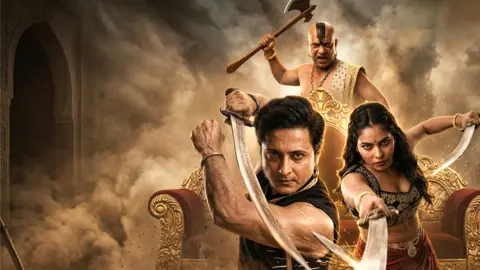
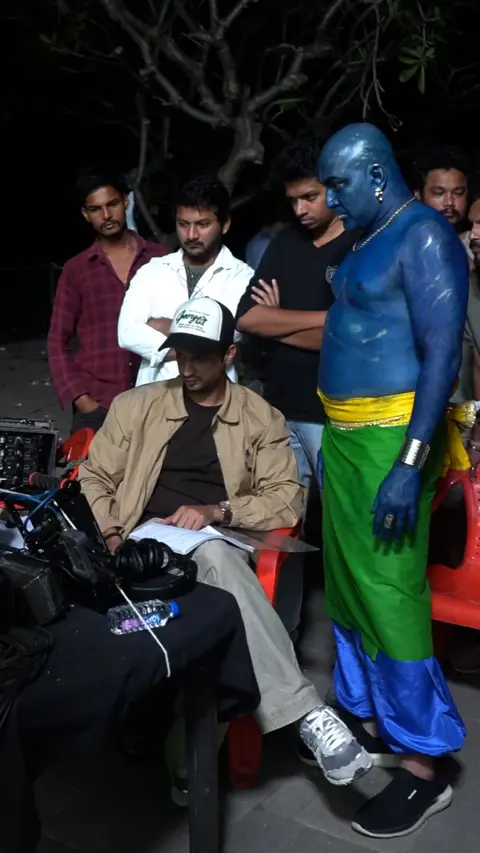
Bhojwani is among millions of Indians across big cities and small towns avidly watching micro-dramas, which mostly have cliched plots and exaggerated acting styles similar to Hindi TV soaps. A typical plot could have a down-on-his-luck young man meeting a friendly genie or a couple from different classes defying all odds and melodrama to marry.
The market for these is booming in India - it's currently worth $300m (£222m) and projected to reach $4.5bn by 2030, according to a report by investment firm Lumikai, which calls micro-dramas the country's "fastest growing entertainment format".
They started picking up steam in India in 2024, with homegrown start-ups such as Kuku and Reelies which found audiences usually through social media advertisements. But until recently, they were still considered a fad, and not part of the mainstream.
 Don Vanzara Showbiz LLP
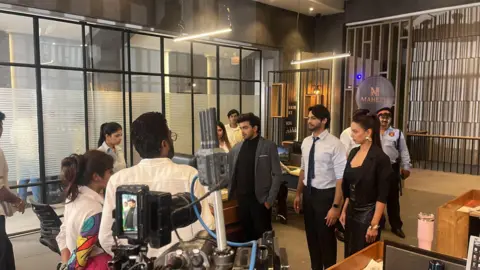
That is changing now, with some of India's biggest producers investing in them. New entrants include India's oldest private TV network Zee Entertainment Enterprises and top TV show maker Balaji Telefilms, which have announced separate partnerships with start-ups to develop micro-dramas.
JioStar, the media company owned by Asia's richest man Mukesh Ambani, launched a micro-drama platform called Tadka in April, which currently has more than 100 shows. The themes range from a coming-of-age tale set in a high school to a love story between a billionaire and a security guard.
Reports say Yash Raj Films, India's oldest film studio, and Red Chillies Entertainment, owned by actor Shahrukh Khan, are also eyeing micro-drama investments. Both companies did not respond to questions from the BBC.
"It is only natural for big media companies to get into this [micro-drama] space. If Disney or Warner Bros can be in anything from films and TV to streaming and theme parks, it makes sense for them or other larger firms to be in micro-dramas too," says Vanita Kohli-Khandekar, media specialist and contributing editor at Business Standard newspaper.
The micro-drama boom comes at a time when Indian film and TV industries, including Bollywood, are dealing with changing audience watch patterns post the Covid pandemic while also competing with a plethora of other entertainment options. As digital advertising gains importance, television advertising revenues are falling, while box-office revenue continues to rise but from a fewer number of blockbuster films.
Micro-dramas originated in China - where they are called Duanju - through apps including Singapore-headquartered DramaBox, and ReelShort, which are together valued at $3-4bn, according to industry estimates. In 2024, micro-drama revenues outperformed the domestic box-office in China, according to reports.
All of this is encouraging Indian companies to eye micro-dramas as a potential growth industry.
 Don Vanzara Showbiz LLP
Kuku, one of the first Indian start-ups to tap into this interest, is generating revenue, said Gagan Goyal, partner at venture capital fund India Quotient, which has invested in it.
"People are paying for the content," said Goyal, but did not share numbers.
Kuku wants to reach the millions of Indians who moved directly from television sets to smartphones for entertainment, skipping personal computers in between.
"We are in the fourth video-content evolution wave since cinema halls were established, which is mobile-first premium content viewing," says Lal Chand Bisu, co-founder and CEO of Kuku.
Currently, a micro-drama running into some 50 episodes is made with a budget of 1-1.5m rupees ($10,878-$16,316).
"It is like creating a dozen 90-120 minute films (the usual length of a full micro-drama) with the budget of one blockbuster movie," Goyal says.
Micro-drama audiences are more likely to find the content through ads on Instagram and Facebook, more than YouTube which is still home to much longer videos.
While this is how audiences enter the picture, keeping them interested is a harder task.
"If a viewer is not entertained in seconds, then they either switch the show or the platform," says Kuku's Bisu.
Research shows many viewers turn to short videos during quick intervals including office lunch breaks and when they travel. That means micro-dramas need to hook viewers in very little time and not offer complicated plot lines.
And even if a viewer does watch an entire show, the next challenge is getting them to stay on the platform and move on to the next drama.
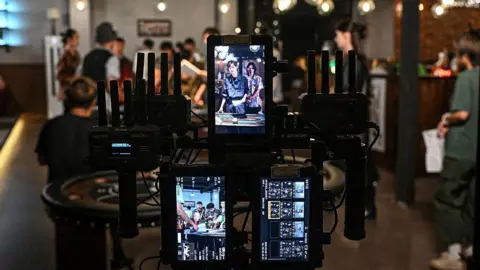
Most platforms try to get around this by creating and showcasing hundreds of shows to binge on.
 AFP via Getty Images
"The high volume helps in reducing drop- offs and targeted social media ads then help bring viewers back," says Sajal Kumar, a screenwriter who leads the content team at Kuku.
Platforms also analyse audience demographic data to create show concepts. To sustain attention, every episode ends on a cliffhanger.
Kuku, which currently produces 150 shows a month, wants to scale this up to 1,000 shows every month over the next two years with the help of AI.
The high volume means that it is common through the industry globally for stories to be copied or remade across languages.
But some say banking on quality may be the way forward.
"Many start-ups in India have created remakes of Chinese and Korean micro-shows to build up their content library. But shows on our platform are completely original and created by a team of in-house writers," says Vicky Bahri, founder and CEO, Klip, based in Mumbai. Bahri believes original concepts would also be useful in creating bankable intellectual property (IP) in future.
So, he says, he has increased show budgets to 2-4m rupees and invests in bringing in known actors. Even Kuku says it is increasing production budgets for micro-shows to 2-2.5m rupees.
Revenue generation is the next hurdle to cross for most players. Klip's Bahri says he is willing to spend up to 2bn rupees in the next few years on developing his platform without making any profit.
"The industry needs to recalibrate and focus on producing high-quality content instead of just focusing on high volume of shows," says Sanket Vanzara, founder of Don Vanzara Productions, which is currently creating a micro-drama for JioStar.
"Quality shows will help retain audiences and actually help in turning micro-dramas into a legitimate entertainment avenue."