

AI tools like chatbots are gaining popularity in health care, but tech companies and health experts have been clear: AI shouldn't be your doctor. It's why ChatGPT will usually tell you to check any health and wellness info it gives you with a human doctor. It's good advice.
But a new OpenAI project is just for health care professionals and is designed to help those human experts keep up with the latest in actual medical science.
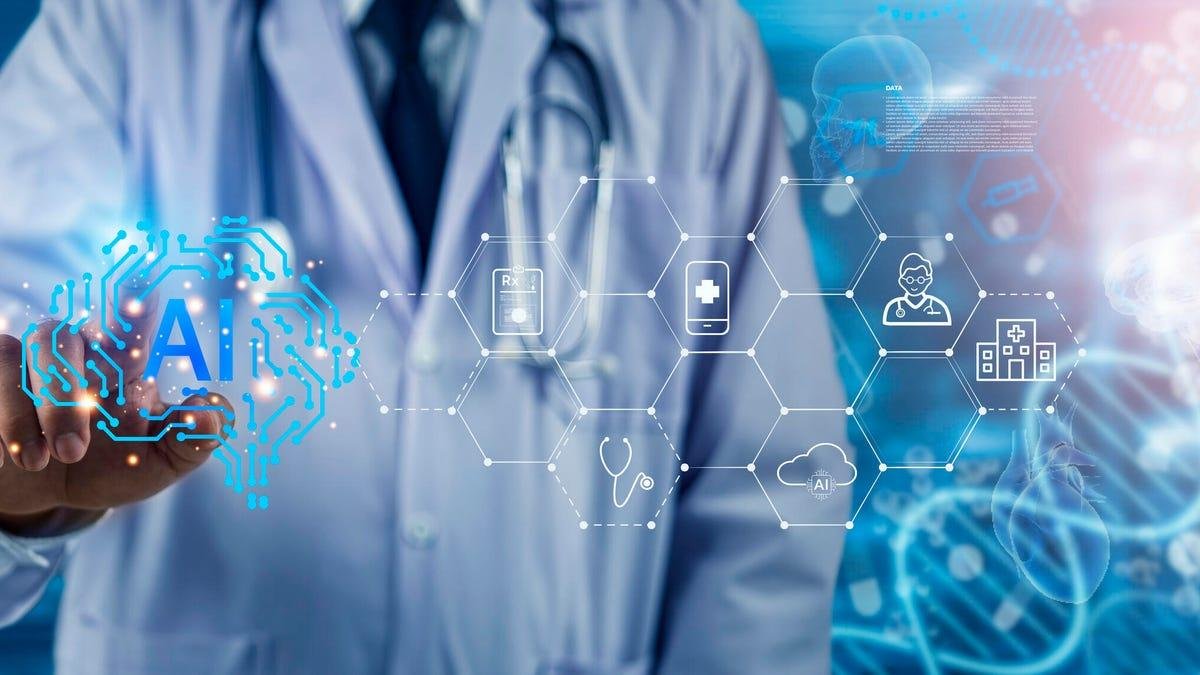
The tool, introduced on April 22, is called ChatGPT for Clinicians. It's a specialized experience designed to help health care providers with the biggest tasks they were already using ChatGPT for. This is different from consumer-facing AI tools, like Microsoft's Copilot Health and OpenAI's ChatGPT Health.
Millions of clinicians were already visiting ChatGPT weekly, Karan Singhal, OpenAI's head of health, told me. So the company decided to build a better version of its popular chatbot to help providers with the tasks they were most commonly using AI for: care consults, documentation and medical research.
"I think the reality for both patients and providers, but especially providers, is that a lot of them are really overburdened," Singhal said. "Anything that you can do to make their jobs a little bit easier for them to focus on patient care goes a long way for both the provider and the patient."
This isn't a new model. It uses OpenAI's GPT-5.4, but it's hoisted into a separate harness, Singhal said. It has a custom-built set of tools around the model to make it better suited to health care-related tasks, similar to how Codex is a kind of harness for developers to access AI to vibe code.
Doctors, nurse practitioners, physician assistants and pharmacists can access ChatGPT for Clinicians for free once they're verified with OpenAI.
One of the biggest challenges of building an AI tool is ensuring it gives accurate responses. This is especially important for medical questions. OpenAI said it worked with thousands of clinicians while building this new tool, including experts from hospitals such as Sloan Kettering. The model pulls answers from "peer-reviewed studies, authoritative public health guidance, and clinical guidelines," the website says. This base builds the "ground truth" of what the model pulls from.
When ChatGPT for Clinicians was evaluated on OpenAI's HealthBench Professional benchmark, it scored 99.6% for accuracy and safety. That means, in the majority of tests in the benchmark, the AI gave responses that a physician would approve.
On the privacy front, ChatGPT for Clinicians can be HIPAA-compliant -- meaning providers can enter into a business associate agreement with OpenAI to protect patients' personal health information. It also has OpenAI's enterprise-grade security tools and doesn't use information shared with it for model training.
AI has a growing role in health care. AI-powered transcription services -- like the kind Dr. Al-Hashimi promotes for charting on the TV show The Pitt -- are among the most common examples. Insurance paperwork, including claim denials, is also becoming increasingly powered by AI. The tech is also becoming more powerful in clinical settings. One recent study found that a medical AI model matched and sometimes outperformed emergency department workers on emergency triage and diagnosis choices.
But AI inherently lacks human judgment, sensitivity and experience, all of which are essential for patient care. There's also a risk that AI models trained on medical literature could replicate the biases that have resulted in decades of worse care for historically marginalized groups.
When it comes to health care and AI, both work only when the providers can be trusted. The value of integrating AI into health care, Singhal said, is that providers can use the AI's vast knowledge base to continue their medical education -- and provide better human-to-human care for their patients.
"Different people have different relationships to how they receive care and how they think about it," Singhal said. "So part of what we do is also not just empower the doctor, but also empower the individual, if they prefer to learn themselves."