Amazon bets Nobel Prize-based dehumidification can cut its energy use
Amazon bets Nobel Prize-based dehumidification can cut its energy use
It’s not just you: restaurants, malls, and offices on steamy summer days really are kept colder than necessary. Air conditioning is as much about dehumidification as it is about cooling, especially in hot, humid climates like the U.S. South, where buildings can be fertile ground for hazardous molds.
“The reason they blast the air conditioner so much is because they’re trying to reduce the humidity,” Sorin Grama, co-founder and CEO of Transaera, told TechCrunch. “In some cases in commercial buildings, the air is so cold that they have to reheat it back up.”
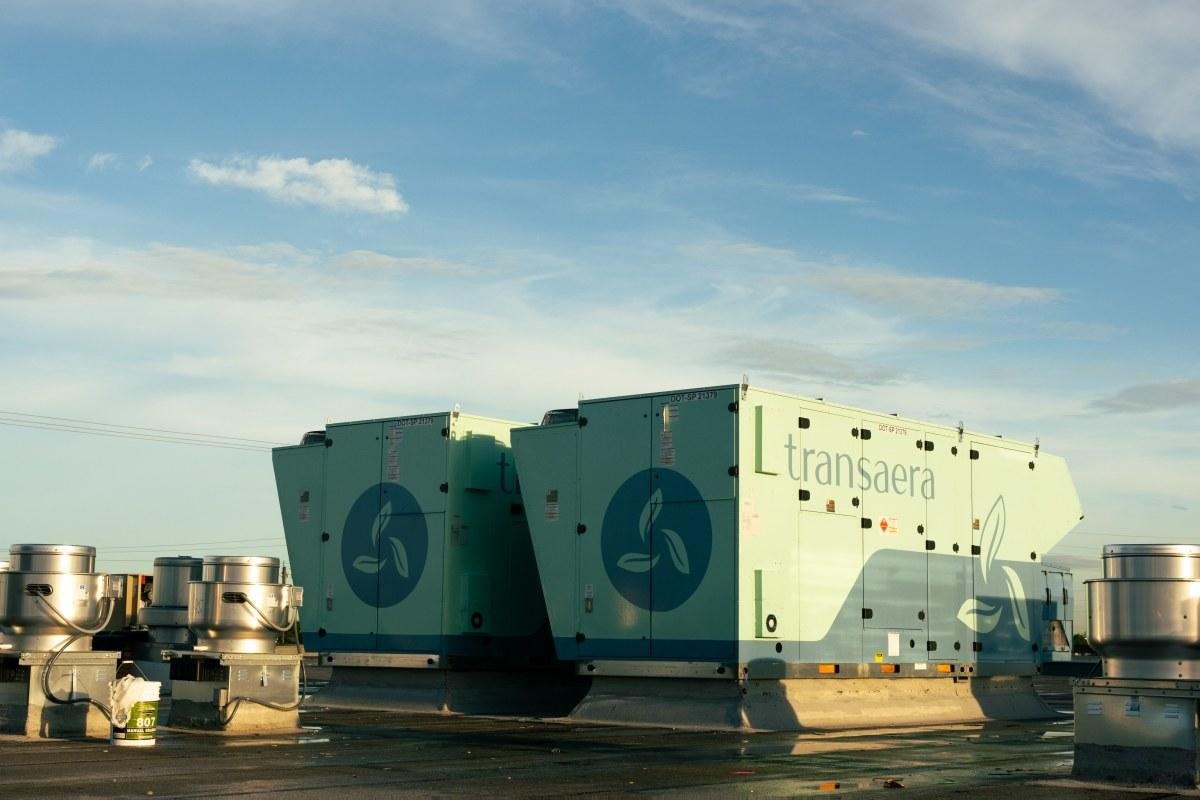
So Transaera has developed a new type of ventilation unit that, the company says, is significantly more efficient than existing dehumidification techniques, saving users energy and money.
Amazon, which has been testing the unit for several months in Houston, recently signed on as a customer. Other companies are following suit, to the point where Transaera now has “nine figures” worth of purchasing targets from customers, Grama said. For Amazon, the purchase reserves capacity over the next three years.
“Amazon is considering this a design solution,” he said. “Once they find a solution that works, they put that into their design standard and replicate it across their building stock.”
The device, known as a dedicated outdoor air system (DOAS), can keep the air inside commercial buildings fresh while also lightening the load on the AC. It can remove 100 pounds of water from the air every hour, meaning the AC doesn’t have to run as hard.
The idea of a DOAS isn’t new, but Transaera says its unit is up to twice as efficient at removing moisture as existing systems.
Techcrunch event
San Francisco, CA | October 13-15, 2026
Transaera’s secret sauce is a desiccant that coats a six-foot wheel which slowly spins inside each of its units. “It’s like silica gel on steroids.” Grama said. The company won’t disclose the specific desiccant, but it’s based on a class of materials that won its discoverers a Nobel Prize in 2025.
As air passes into the unit, the desiccant draws moisture out of the air, which then passes through a heat exchanger before being dispersed into the building. Stale air is drawn out of the building along with heat from the heat exchanger, which flows through the moisture-saturated wheel. The heat from that air releases the moisture from the desiccant so it can be exhausted outside.
Amazon said Transaera’s DOAS units will help the company reduce its energy use and help it on its path toward net-zero carbon emissions by 2040.
Transaera is working with existing manufacturers, including those in the U.S., to build the device. Its proprietary desiccant system slots into industry-standard commercial HVAC units. “It’s a like-for-like replacement of a legacy unit,” Grama said. “I think that’s what’s driving this demand — it’s an easy replacement.”
When you purchase through links in our articles, we may earn a small commission. This doesn’t affect our editorial independence.
Tim De Chant is a senior climate reporter at TechCrunch. He has written for a wide range of publications, including Wired magazine, the Chicago Tribune, Ars Technica, The Wire China, and NOVA Next, where he was founding editor.
De Chant is also a lecturer in MIT’s Graduate Program in Science Writing, and he was awarded a Knight Science Journalism Fellowship at MIT in 2018, during which time he studied climate technologies and explored new business models for journalism. He received his PhD in environmental science, policy, and management from the University of California, Berkeley, and his BA degree in environmental studies, English, and biology from St. Olaf College.
You can contact or verify outreach from Tim by emailing tim.dechant@techcrunch.com.
Προωθημένο
Προωθημένο
Προωθημένο
Προωθημένο
Διαφημίσεις
Κατηγορίες
Διαβάζω περισσότερα
My Expert Advice: Don’t Buy a Router Until We Know More About the FCC's BanKey takeaways:The Federal Communications Commission has banned the sale of new foreign-made routers in the US. The sweeping order applies to virtually every Wi-Fi router currently available in the US market.After speaking with seven industry experts, my advice is to hold off on buying a new router if you can. Under...

Today's NYT Strands Hints, Answers and Help for March 28 #755Looking for the most recent Strands answer? Click here for our daily Strands hints, as well as our daily answers and hints for The New York Times Mini Crossword, Wordle, Connections and Connections: Sports Edition puzzles.Today's NYT Strands puzzle features a fun topic, especially for those of us who love writing. Some...

Pay Attention to the Artemis II Moon Mission. It's Not Just Any SpaceflightTravel to space has become commonplace. Over the last three decades, nearly 300 people have flown to and from the International Space Station, some of them residing there for months at a time. In the last several years, the rocket startup Blue Origin has launched a series of day trips just over the threshold into space...

Today's NYT Mini Crossword Answers for Sunday, April 12Looking for the most recent Mini Crossword answer? Click here for today's Mini Crossword hints, as well as our daily answers and hints for The New York Times Wordle, Strands, Connections and Connections: Sports Edition puzzles.Need some help with today's Mini Crossword? I found 4-Across to be a stumper for a little while, and...

The Motorola Razr Fold Has a UK Price, but Will It Be So Expensive in the US? A direct conversion from pounds to dollars would make the new two-panel folding phone seriously pricey in the US. However, that's not the whole picture. Jeff Carlson Senior Writer Jeff Carlson writes about mobile technology for CNET. He is also the author of dozens of how-to books covering a wide...