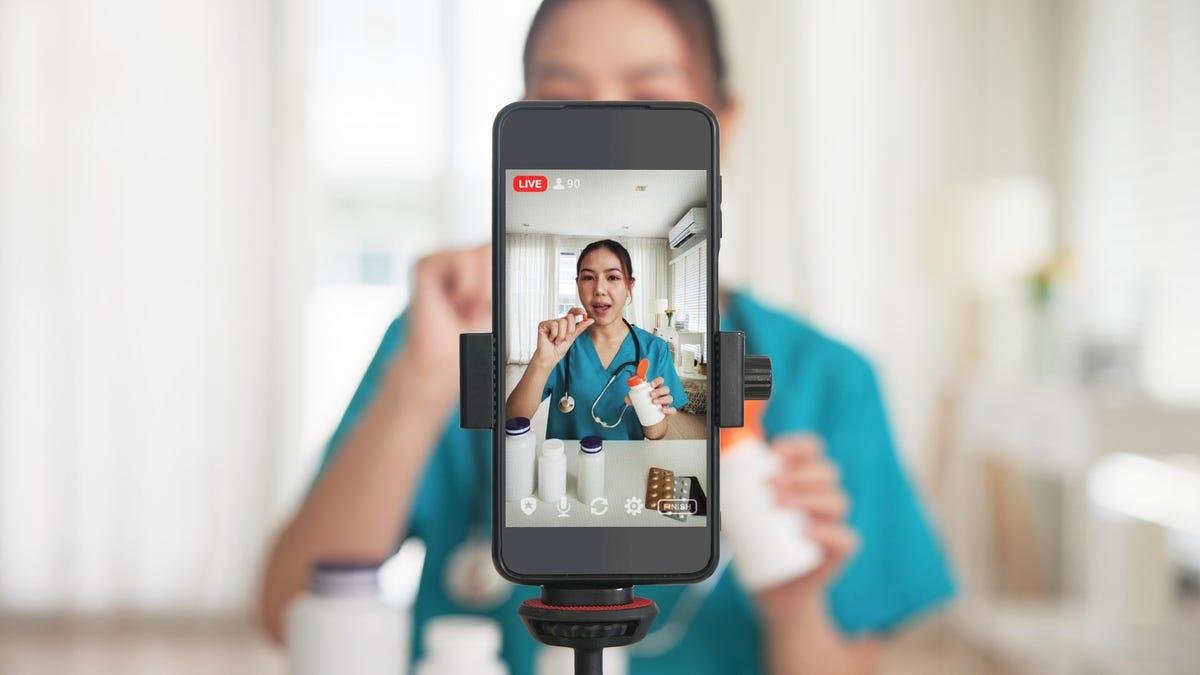
Whether you were searching for it or not, you've probably come across a video on social media this week about a reported hantavirus outbreak on a cruise ship. It may have been someone identifying the people who died on board or others who were sickened -- or it could have been a wellness influencer breaking down what, exactly, hantavirus is.
But how can you trust that those influencers are providing facts? One way is to check their credentials. But many influencers, it turns out, don't really have any.
According to a new analysis by the Pew Research Center, 41% of health and wellness influencers claim they're healthcare professionals, with 17% saying their background is in conventional medicine, 7% in allied health (think physical therapists or physician assistants), 7% in complementary or integrative health (chiropractors or acupuncturists, for example), 7% as dieticians or nutritionists, and 4% in mental health. Pew identified 6,828 influencers with at least 100,000 followers on YouTube, TikTok or Instagram and examined their profiles.
The study also found that these influencers often reach large audiences, with 1 in 10 having more than 1 million followers.
Here's why the combination of wide reach and limited trust could pose a serious problem for followers.
Who's watching?
Because not everyone on the internet is an epidemiologist, misinformation can and does spread, especially when a big health news event like hantavirus comes up. CNET did a deep dive last year into how and why misinformation spreads so rapidly, but who is consuming it?
According to the Pew study, which also included two surveys of US adults, half of US adults under 50 say they take advice from health and wellness influencers or podcasts.
The quality of advice from influencers and podcasts can vary widely. Some influencers are doctors or other professionals who offer vetted, evidence-based advice. Not everyone is. Consider Brian Johnson, known as "The Liver King," who promoted eating raw meat for a healthy lifestyle and muscle-building, only for it to be later discovered that he was taking performance and image-enhancing drugs (steroids). Another example is Dalya Karezi, known as "Dr. Dayla" on social media, who was later convicted of pretending to be a doctor in Australia.
What's more, the Pew study found that while misinformation spreads, so does health anxiety for some groups, particularly young people. Around 36% of adults aged 18 to 29 say that consuming this type of content made them more worried, the study found. Adults above 50 were less susceptible to this.
As with everything you see on the internet, take caution with what you view, because most of the time, you truly don't know who is giving the information -- or where it's coming from.