Osmond ChiaBusiness reporter

 Calbee
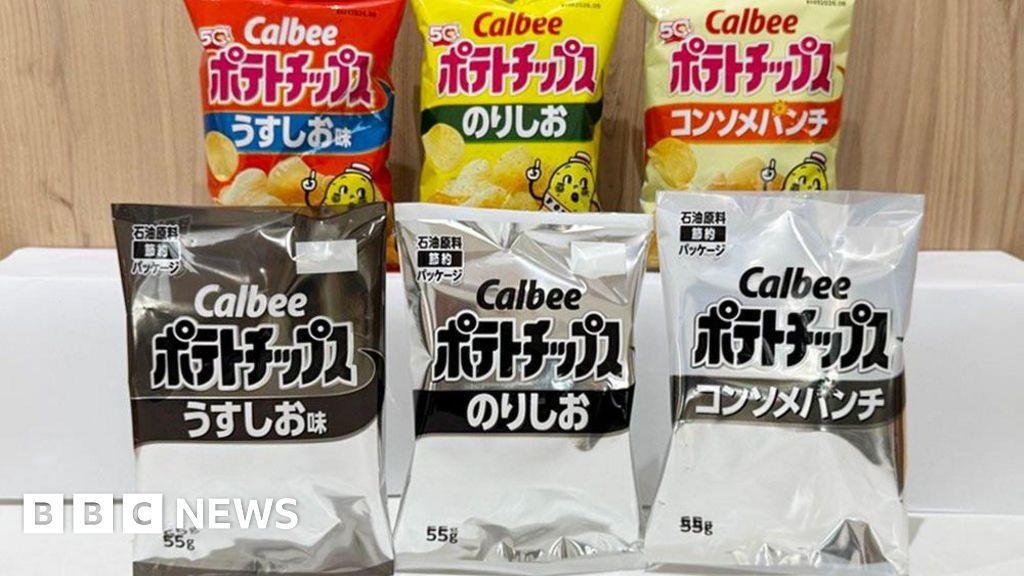
Japanese snack giant Calbee says it will temporarily switch to black and white packaging for some its best-known products as supplies of an ingredient used in ink have been disrupted by the Iran war.
The firm says new-style packets for 14 of its products, including crisps and prawn crackers, will start to appear in shops in Japan from 25 May.
It marks the latest example of how everyday goods are being impacted after Iran effectively closed the key Strait of Hormuz waterway in retaliation for US and Israeli strikes on the country.
In recent weeks, companies around the world have warned that supply disruptions to things like fuel, plastics and helium are pushing up costs for their businesses.
Calbee said in a statement that the design change is a response to "supply instability affecting raw materials amid ongoing tensions in the Middle East."
"This measure is intended to help maintain a stable supply of products," said Calbee.
Oil and gas prices have surged since the conflict started on 28 February as shipments through the Strait of Hormuz halted.
Supplies of naphtha, a byproduct of oil refining used in ink and plastics, have also been hit hard.
Naphtha prices in Asia have almost doubled since the conflict started, pushing up costs for businesses in the region.
Before the war, around 40% of Japan's naphtha was imported from the Middle East, Japan's deputy chief cabinet secretary Kei Sato told reporters on Tuesday.
The government was working to "stabilise and resolve any supply imbalances and bottlenecks", he added.
In April, Japanese Prime Minister Sanae Takaichi said the country was broadening its supply of naphtha to include more sources outside the Middle East, such as the US.
Asian countries have been hit particularly hard by disruptions to shipping through the Gulf as they are heavily reliant on the Middle East for energy and other oil-related products.
On 1 May, Japanese foodmaker Mizkan, which makes a popular fermented soybean snack, suspended sales of some of its products and raised prices for others due to a shortage of polystyrene containers.
Meanwhile, car makers like Toyota and Hyundai have said their profits have been hit due to higher costs of materials and lower sales.
Last week, UK-based fashion chain Next raised its prices by up to 8% in some countries outside Europe due to higher fuel prices and disruption to global supply chains.