Solar to dominate energy by 2035, but AI data centers will keep fossil fuels in business
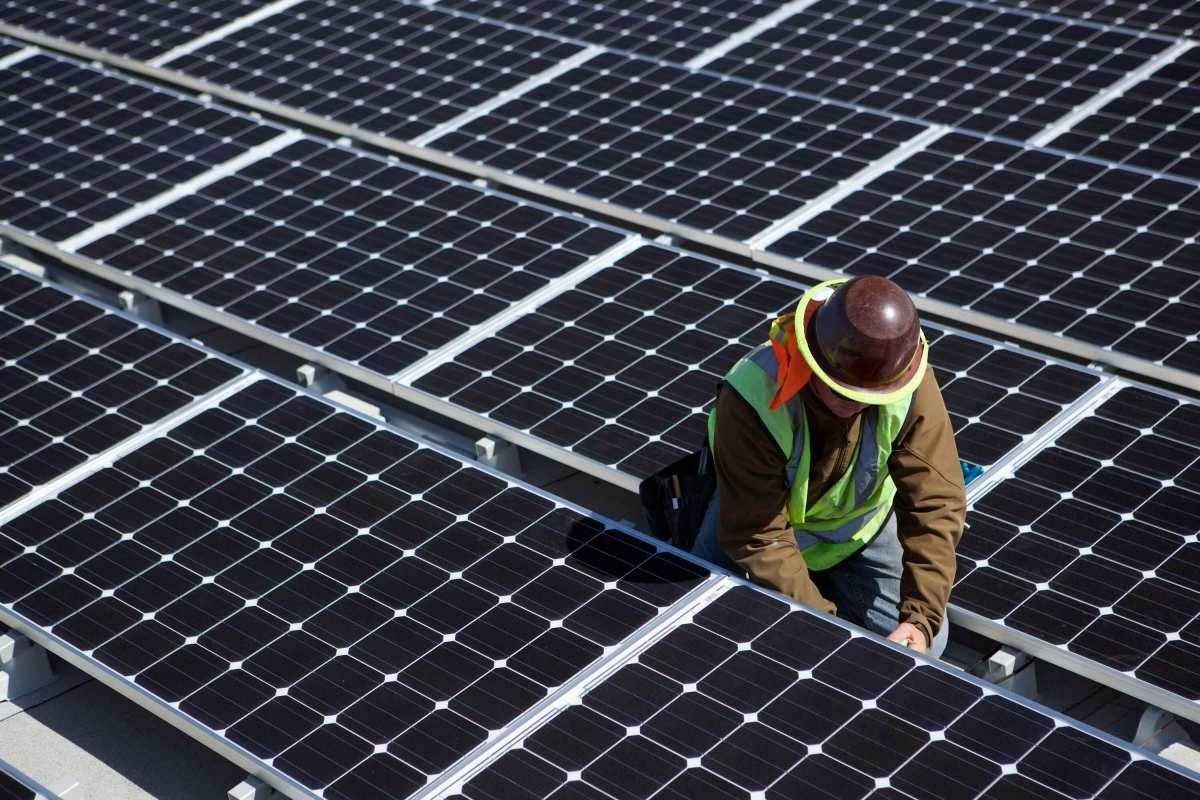
Solar to dominate energy by 2035, but AI data centers will keep fossil fuels in business
Solar will become the largest source of power in the next decade, surpassing coal, oil and natural gas, according to a new report from BloombergNEF. The tectonic shift will occur alongside a historic rise in the use of energy driven by AI and the electrification of entire industries.
“Solar is winning the race,” Matthias Kimmel, head of energy economics at BloombergNEF, told TechCrunch.
BloombergNEF expects the shift to happen on economic grounds alone — solar is simply too cheap to ignore. Pakistan, for example, has added 25 gigawatts of solar power in the last two years after natural gas prices spiked following Russia’s invasion of Ukraine. The transition could be even swifter if countries take more aggressive measures to curb their carbon emissions.
The power handoff comes as investors are viewing energy as one of the biggest opportunities for growth in recent decades. Data centers have been at the center of the obsession, and BloombergNEF’s data reinforces the scale of the opportunity. The energy consultancy expects data centers to drive an additional 1 terawatt of utility-scale solar, 400 gigawatts of solar, 370 gigawatts of natural gas, and 110 gigawatts of coal.
But because of gas and coal’s ability to operate 24/7, BloombergNEF expects those fossil fuels to provide 51% of incremental generation for data centers by 2050. Put simply, tech companies and data center developers will have an outsized influence over which energy sources remain viable by mid-century.
Those forecasts aren’t ironclad, though. Other technologies have been vying for a piece of the data center market, including long-duration energy storage, geothermal, and nuclear. Big batteries received a boost from Google, which has included $1 billion worth of 100-hour batteries from Form Energy in a recent data center project. And both geothermal and nuclear power show promise following the blockbuster IPOs of both Fervo Energy and X-energy this month.
Competition from photovoltaics will be stiff, though. Solar panels have spread dramatically in recent years, spurred by declining costs that show no sign of stopping. By 2035, prices are expected to drop another 30%, outcompeting coal and natural gas. By 2050, solar panels are expected to generate more than twice as much electricity as natural gas.
Solar’s falling costs can be attributed to two causes: One is China’s industrial policy, which has favored the technology, subsidizing manufacturers and flooding the market. The other is mass manufacturing, which has helped wring costs out of solar at a remarkable pace.
Generally, “costs fall with every doubling of of installed capacity,” Kimmel said. “In the case of solar, it has gone even faster than that.”
Solar’s abundance is starting to push grid-scale batteries down the same path. In Spain and Italy, standalone solar farms are no longer profitable because a surplus of solar power has driven down daytime electricity prices, Kimmel said. In response, developers have started building so-called hybrid renewable power plants, which pair solar panels with batteries to take advantage of higher evening prices.
The current state of the battery market is akin to where solar was in 2020, BloombergNEF said. Last year, 112 gigawatts of grid-scale batteries were installed worldwide. By 2035, the company expects that figure to nearly triple. Companies from Redwood Materials to Ford have launched energy storage businesses to capitalize on the trend.
The missing piece in this report was the Iran War, which started when BloombergNEF was too far along in the process to make any major changes. The team did test the effects of two scenarios on various countries’ dependence on energy imports.
Under the economic transition scenario, in which decarbonization is driven largely by dollars and cents rather than regulations, every country would reduce its reliance on foreign energy, including oil powerhouse Saudi Arabia. Under a net-zero scenario, which sees regulations driving deeper decarbonization, every country would be able to virtually eliminate its reliance on energy imports.
“The transition, which in many ways is cost efficient, is actually good for energy independence,” Kimmel said.
When you purchase through links in our articles, we may earn a small commission. This doesn’t affect our editorial independence.
Tim De Chant is a senior climate reporter at TechCrunch. He has written for a wide range of publications, including Wired magazine, the Chicago Tribune, Ars Technica, The Wire China, and NOVA Next, where he was founding editor.
De Chant is also a lecturer in MIT’s Graduate Program in Science Writing, and he was awarded a Knight Science Journalism Fellowship at MIT in 2018, during which time he studied climate technologies and explored new business models for journalism. He received his PhD in environmental science, policy, and management from the University of California, Berkeley, and his BA degree in environmental studies, English, and biology from St. Olaf College.
You can contact or verify outreach from Tim by emailing tim.dechant@techcrunch.com.
Commandité
Annonces
Annonces
Annonces
Catégories
Lire la suite
Bad Bunny lights up London with history-making stadium showImage caption, Bad Bunny is reaching the end of his huge Debí Tirar Más Fotos world tourByMitch MansfieldBBC Newsbeat, Tottenham Hotspur StadiumBad Bunny brought Latin America to London on Saturday night, as he became the first artist from that part of the world to headline a UK stadium.The Puerto Rican rapper captivated a star-studded...

Wirestock raises $23M to supply creative multi-modal data to AI labs In the past few years, creative marketplaces and platforms have realized that they are sitting on a data goldmine, and they can either use that data to develop AI models themselves or turn it into a source of revenue by licensing it to other AI labs. Wirestock, which previously helped photographers distribute and sell their...

The global Automotive Ceramics Market is expected to witness steady expansion as automakers increasingly incorporate advanced ceramic materials into internal combustion engine (ICE), hybrid, and electric vehicle (EV) platforms. According to FactMR, the market was valued at USD 2.84 billion in 2025, is projected to reach USD 2.99 billion in 2026, and is forecast to expand...

Latvian PM Evika Silina resigns over response to drone incursionsLatvian PM resigns after row over stray Ukrainian dronesReutersEvika Silina had headed Latvia's ruling coalition since 2023Latvian Prime Minister Evika Silina has resigned following a political crisis over Russia-bound Ukrainian drones straying into Latvian territory.She had fired her Defence Minister Andris Spruds last week after...

Crisis managing Canadian women often left out of people's willsWomen are also more likely to be entrusted to make medical decisions on behalf of a grantor who becomes incapacitated. Photo by Getty ImagesArticle contentWomen are more likely than men to be appointed to positions of trust for tasks such as administering estates and making important decisions on behalf of someone who has become...