Google adds voice-based prompting to Docs and Keep
Google adds voice-based prompting to Docs and Keep
At the Google I/O developer conference, Google announced it’s bringing a voice-based prompting feature to Workspace apps such as Docs, Keep, and Gmail. These features can help you create drafts, take notes, and search for emails.
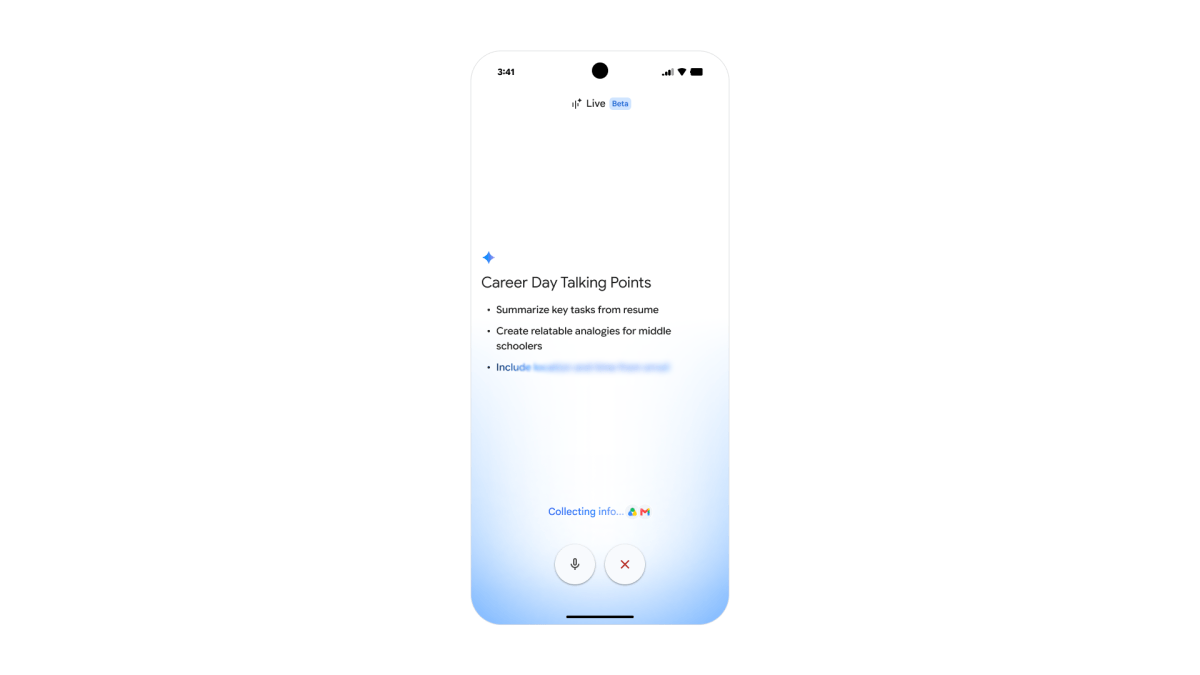
In Docs, you can create a draft document using your voice. For instance, in a demo shown by TechCrunch, Google showed that a user can fetch resume details from Drive, add event logistics from an email on top of the document, and even include some humorous anecdotes.

Previously, users would have to type all this out, and it’s possible that, while typing, they might write short sentences and then various follow-ups, resulting in a multi-turn conversation that took time. Google’s idea is that with voice, you can use long sentences or ask for multiple tasks in one go. Plus, the feature understands when you change your mind and ask for a detail to be changed in the same conversation turn.
Google CEO Sundar Pichai said that in the future, users will be able to create and edit documents using their voice.

What’s more, Google is adding a way to use your voice to dump your thoughts into Keep, and the app will use AI to turn that transcription into a structured note or a list. Note-taking apps like Voicenote.com and AudioPen added this kind of feature a few years ago. Lately, dictation apps such as Wispr Flow, Monolouge, and Aqua voice have built this functionality into their voice-based typing products.
Earlier this month, Google released its own dictation product called Rambler, which is built into Gboard and works across apps.
Besides Docs and Keep, the company is adding voice-based functionality to Gmail. With the new feature, users will be able to converse with Gemini and ask for details like their next flight, code to their Airbnb booking, or time for the physician appointment.
Tech companies are cramming AI into all products and features, and as a result, users are getting attuned to asking lengthier queries.
In some cases, voice is an easier input method to blurt out long sentences and queries describing complex multi-step requests. What’s more, the current generation of models is good enough to understand if users change their mind about something in the middle of a sentence and output the final query accordingly. Google is paying attention to this trend and adding more voice-based features across its apps.
When you purchase through links in our articles, we may earn a small commission. This doesn’t affect our editorial independence.
Ivan covers global consumer tech developments at TechCrunch. He is based out of India and has previously worked at publications including Huffington Post and The Next Web.
You can contact or verify outreach from Ivan by emailing im@ivanmehta.com or via encrypted message at ivan.42 on Signal.
Sponsorizzato
Pubblicità
Pubblicità
Pubblicità
Categorie
Leggi tutto
Trump’s pick to run US cyber agency CISA asks to drop out Image Credits:Tom Williams / CQ-Roll Call / Getty Images 12:33 PM PDT · April 23, 2026 Trump’s twice-chosen pick to run the U.S. federal cybersecurity agency CISA has requested to withdraw from the position, leaving the agency without any clear person to lead it on a permanent basis. In a letter to the...

Trump's mediators offer Hamas formal proposal to give up its weapons in Gaza A Palestinian militant wearing the uniform of the al-Qassam Brigades, the military wing of Hamas, Oct. 15, 2025. Ahmad Salem/Bloomberg via Getty Images...

My Smartwatch Gives Me Health Anxiety. Experts Explain How to Make It StopI'm a wellness writer with health anxiety. Also known as hypochondria or illness anxiety disorder, health anxiety is a condition that makes me worry I am or may become ill even when I’m perfectly healthy. One minute, I have a headache, and the next, I think I've got a deadly brain tumor.What’s ironic is that part of my...

Mastodon looks to newsletters to help revive the open social web Mastodon, the open, decentralized alternative to Big Tech apps like X and Threads, is betting that email could help solve the open social web’s biggest problem: audience growth. With the software’s latest release, the social networking platform is introducing email newsletters, a feature that will allow writers to send their...

Polaroid’s tiny instant camera is $72 and includes a free pack of filmBrad Bourque Brad Bourque is a tech journalist and commerce writer based out of Portland, Oregon. He’s contributed to sites like Digital Trends, Business Insider, and WIRED.Smartphone cameras are convenient, but they lack the charm of analog instant cameras. If you’re trying to relive the nostalgia of waiting for an instant...