As floods get worse, Britain tries a new solution: beavers
As floods get worse, Britain tries a new solution: beavers
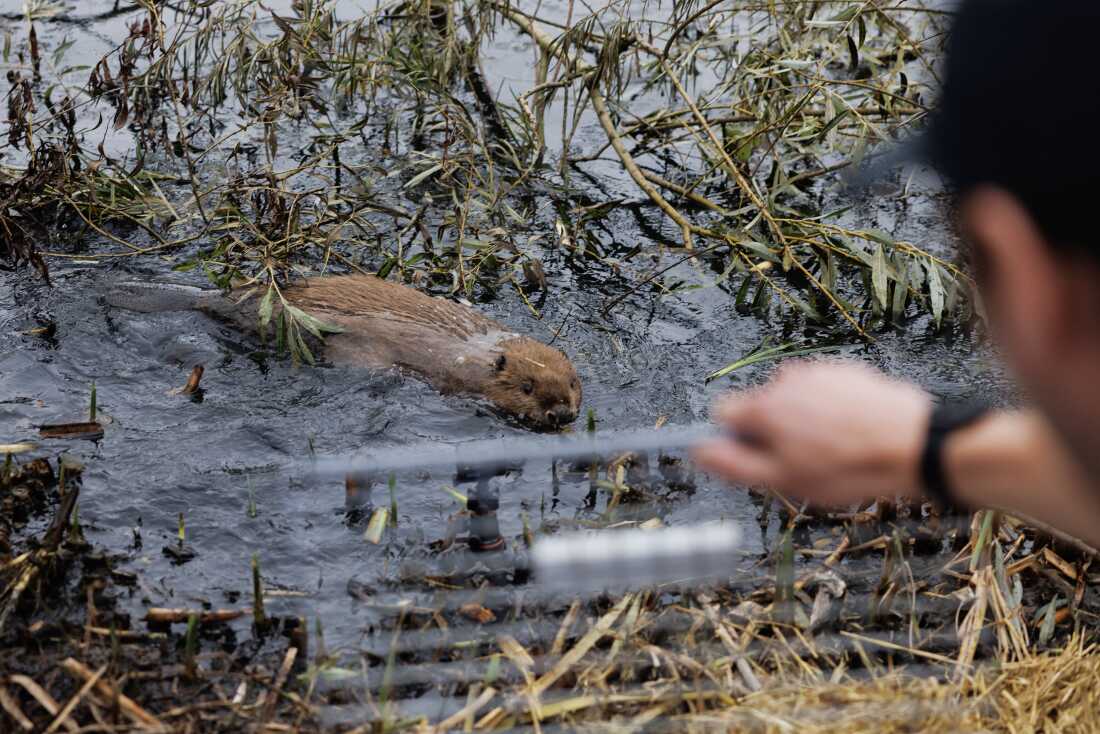
This beaver was released on Oct. 11, 2023, in Greenford, England, as part of the Ealing Beaver Project. A family of five beavers, two adults and three kits, was released into the 20-acre Paradise Fields nature reserve in West London, becoming the first beavers in the west of the British capital in 400 years. Dan Kitwood/Getty Images hide caption
toggle caption
Dan Kitwood/Getty Images
NPR is dedicating a week to stories and conversations about how local communities are moving forward on climate solutions
LONDON — Until two years ago, West London's Greenford Tube station used to flood whenever it rained heavily. The train tracks are aboveground, but the ticket office would often get inundated. Sandbags still line the corridor.
But in October 2023, a new family moved in nearby, determined to halt the water. The family members built their house from scratch with local wood and kept odd hours, sleeping all day and working only at dawn and dusk. They even put their young children to work.
The new neighbors were beavers.

A beaver swims in a pond after being released on Oct. 11, 2023, in Greenford, England, as part of the Ealing Beaver Project. The beavers that were released are part of an unlikely effort to bring back a vanished species and help Britain adapt to a very modern problem: climate change. Dan Kitwood/Getty Images hide caption
toggle caption
Dan Kitwood/Getty Images

West London's Greenford Tube station used to flood whenever it rained heavily. The train tracks are aboveground, but the ticket office would often get inundated. Now, a nearby pond and wetland created by reintroduced beavers has helped mitigate flooding in the area. Sarah Tilotta for NPR hide caption
toggle caption
Sarah Tilotta for NPR
The beavers are part of an unlikely effort to bring back a vanished species and help Britain adapt to a very modern problem: climate change.
Britain is famous for drizzle, but climate change is making rainfall heavier and more erratic. Places that didn't used to flood are now waterlogged. So scientists have enlisted some of the animal kingdom's best flood engineers — beavers — to help.
In West London, conservationists got a government license to resettle a family of five beavers in a 20-acre urban park near the Greenford Tube station. It used to be a golf course, with a creek running through it. Within weeks, the beavers dammed up the creek, creating a pond that holds water and stops it from spilling into the city. They also diverted the creek's flow into smaller tributaries, creating a wetland that better absorbs heavy rainfall — mitigating the risk of flooding downstream.
Loading...
"They effectively turned this site into a giant sponge that can take heavy rainfall and slowly release water back into the landscape, creating a lot more resilience for flooding," explains Sean McCormack, a local veterinarian who started the Ealing Beaver Project, named for the London borough of Ealing, where it's located.
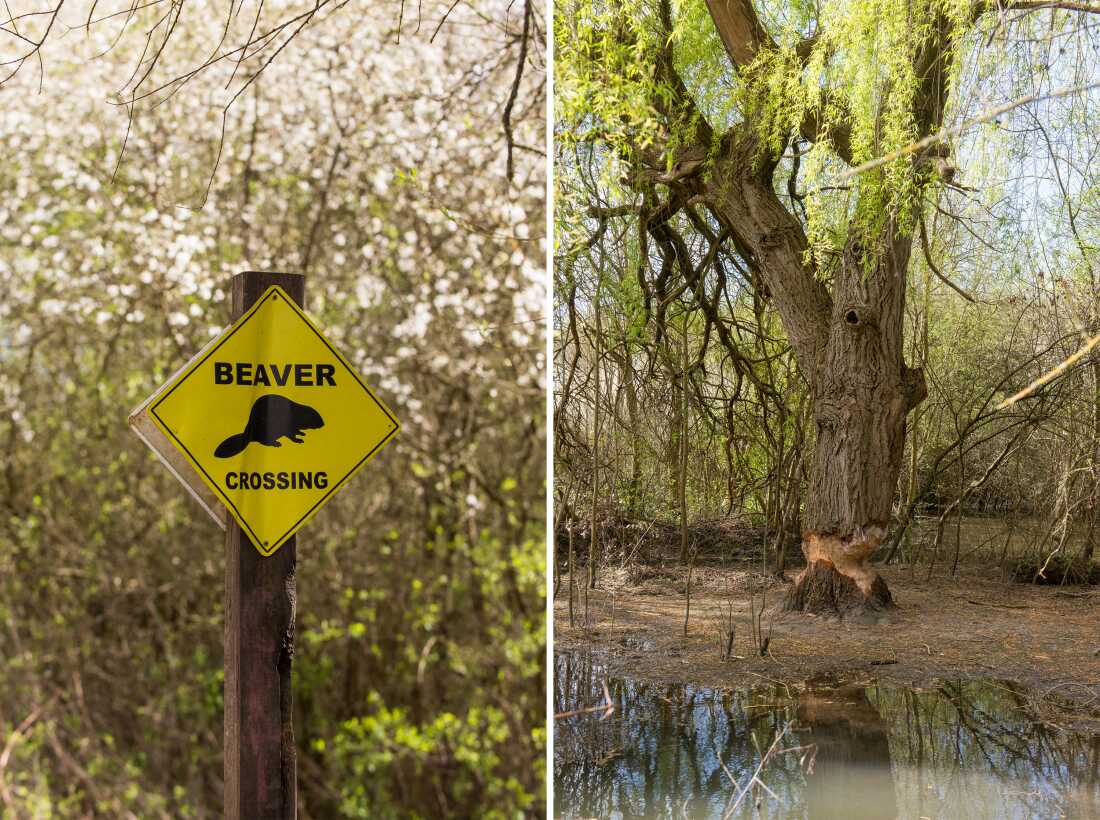
Scenes from the Paradise Fields nature reserve in Greenford, West London, where a family of five beavers has transformed what used to be a golf course into an urban wetland that helps absorb heavy rainfall and prevent local flooding. Sarah Tilotta for NPR hide caption
toggle caption
Sarah Tilotta for NPR
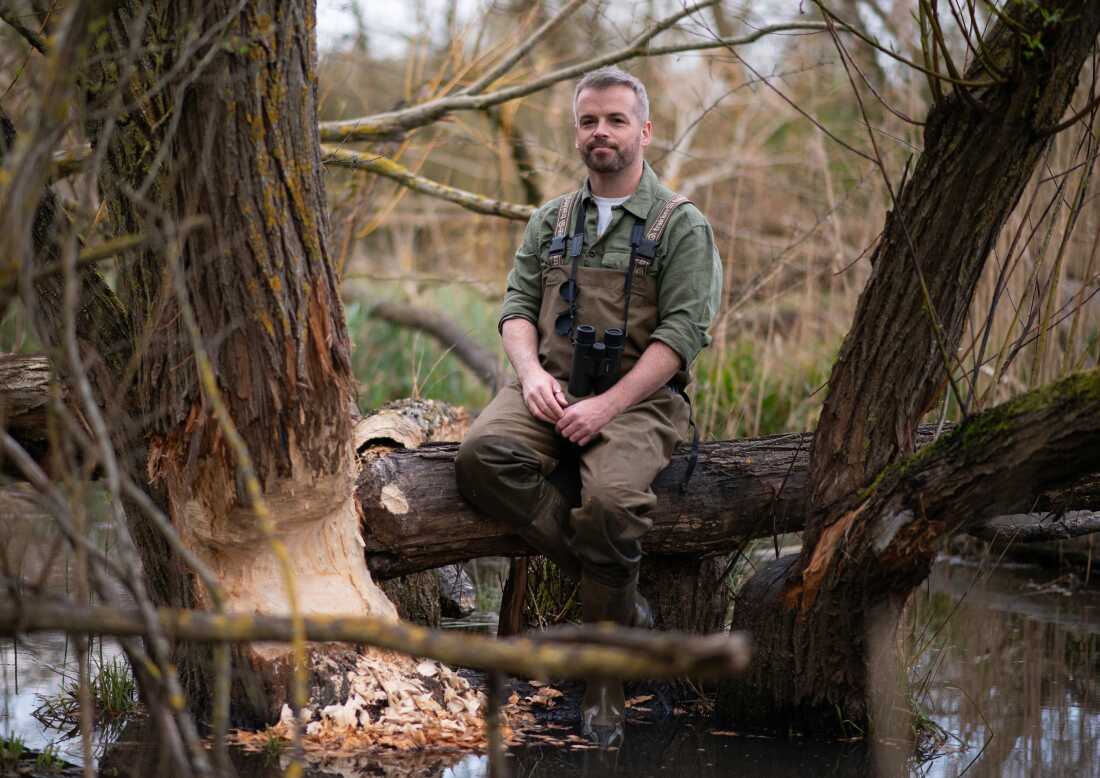
Sean McCormack, a local veterinarian, started the Ealing Beaver Project with Elliot Newton, a rewilding expert with the conservation group Citizen Zoo. Sarah Tilotta for NPR hide caption
toggle caption
Sarah Tilotta for NPR
Not only has the local Tube station stopped flooding, but the beavers have also coaxed back other species.
"By felling trees, they've also opened up the canopy, and we've seen an abundance of biodiversity," McCormack says.
Freshwater shrimp have appeared in the creek, he says, plus eight new species of birds, two types of bats and rare brown hairstreak butterflies, which lay their eggs on blackthorn branches nibbled by beavers.
The beavers have also allowed the city to scrap expensive plans to dig a reservoir and levee.
"We said the beavers can do it for a fraction of the cost, certainly more sustainably," McCormack says.
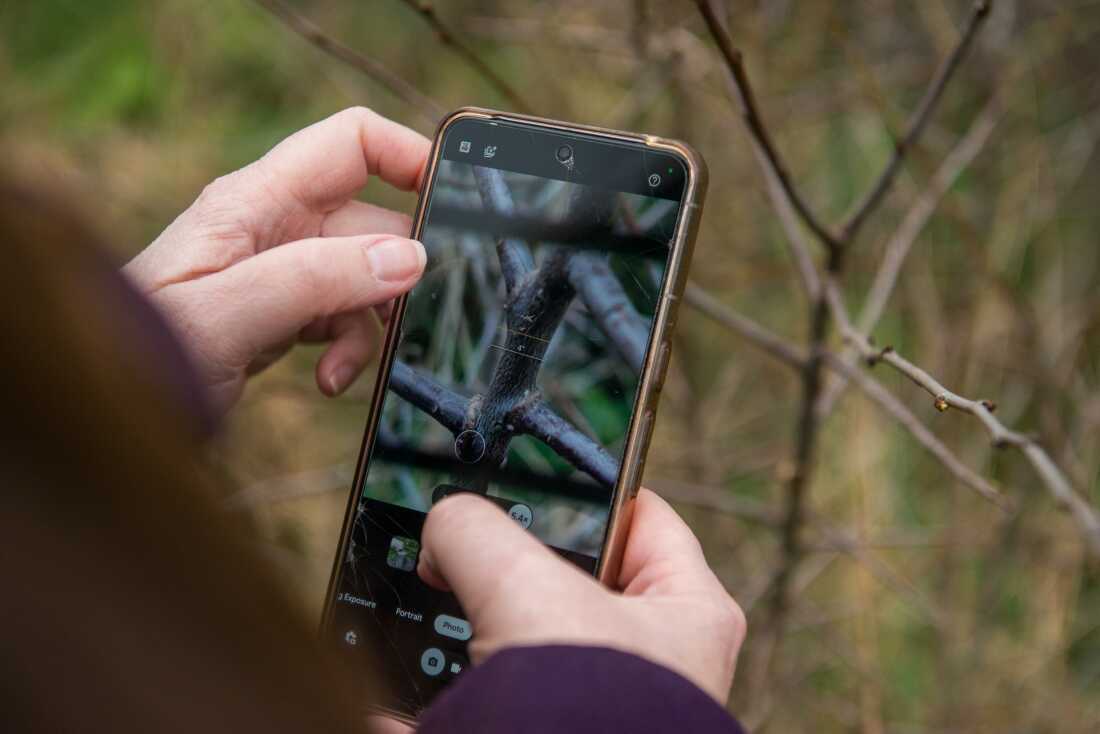
A tour participant photographs the tiny white eggs of the rare brown hairstreak butterfly. Research indicates that the hairstreak may benefit from beavers nibbling on blackthorn, which encourages the new growth on which the butterflies prefer to lay their eggs. Sarah Tilotta for NPR hide caption
toggle caption
Sarah Tilotta for NPR
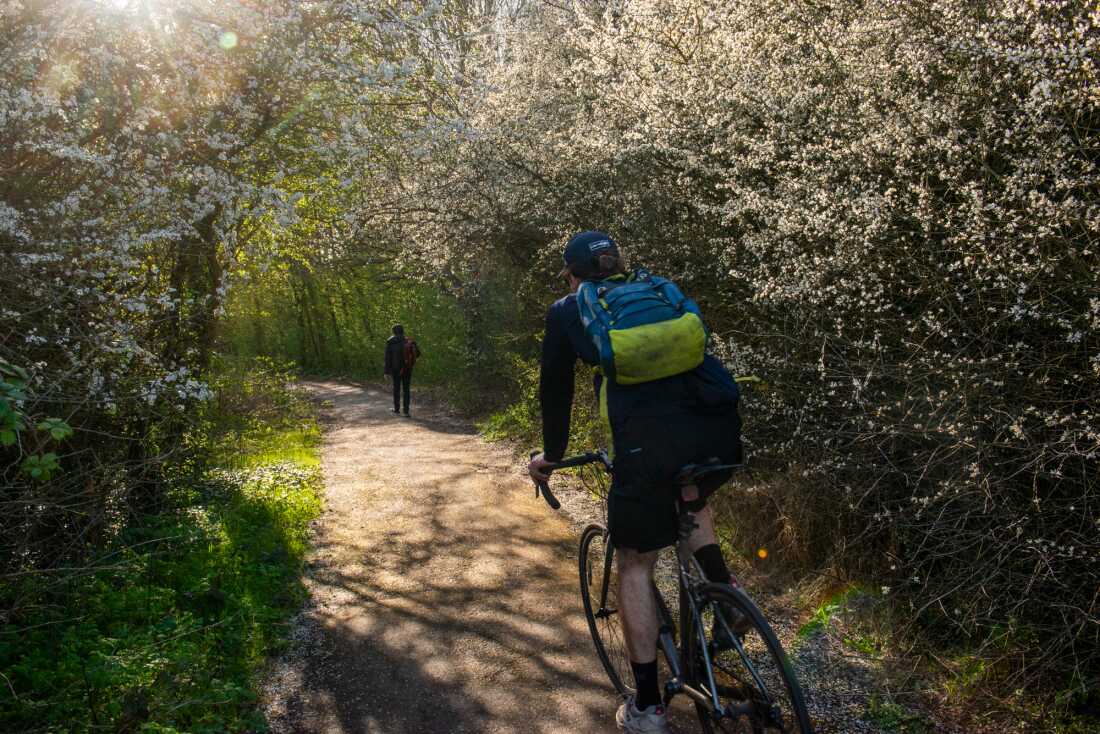
Commuters, tourists and recreationists enjoy hiking paths — and sometimes stop to watch the beavers in action — inside the Paradise Fields nature reserve. Sarah Tilotta for NPR hide caption
toggle caption
Sarah Tilotta for NPR
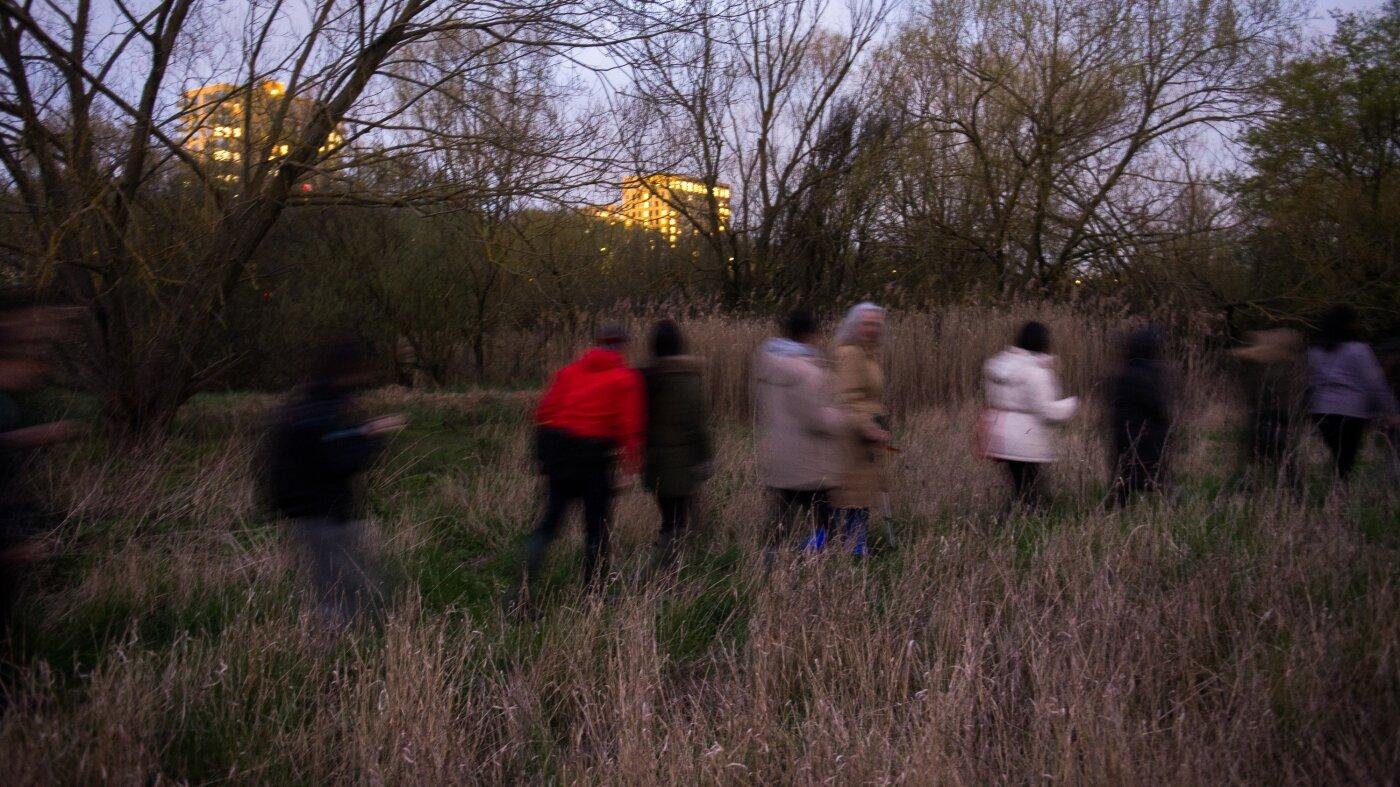
Now, joggers and teenagers stop to gawk at the beavers in action. There are guided walks and beaver safaris.
On a recent spring evening, a reddish-brown adult scampered in and out of the water, chomping on a felled willow tree. Eurasian beavers can weigh up to 65 pounds; this one was the size of a fat golden retriever.
The Ealing Beaver Project is one of dozens of sites across Britain where land managers are using beavers to restore wetlands and tame flooding.
But first, they had to bring them back from extinction.
Loading...
Reintroducing beavers to Britain for the first time in centuries
In Britain, humans hunted beavers to extinction more than 400 years ago. By the early 20th century, only about 1,200 native beavers were left in Europe and northern Asia, surviving in parts of Norway, France, Germany, Belarus, Ukraine, Russia, Mongolia and China. Sweden reintroduced them in the 1920s, and other countries followed — part of a broader effort to restore native species.
Loading...
By studying fossils, scientists determined that today's Norwegian beavers are genetically most similar to the beavers that lived in Britain centuries ago. So in 2009, wildlife officials relocated two Norwegian beavers to Knapdale Forest, a temperate rainforest in western Scotland. That pair, named Millie and Bjornar, became the Adam and Eve of the modern-day British beaver population. The Scottish forestry department calls them the "original beaver power couple."
"We became kind of attached to Millie and Bjornar," says Pete Creech, a forest ranger who remembers when they arrived, scrambling out of crates and splashing into a loch. He recalls their enthusiasm: "Lots of squeaking!"
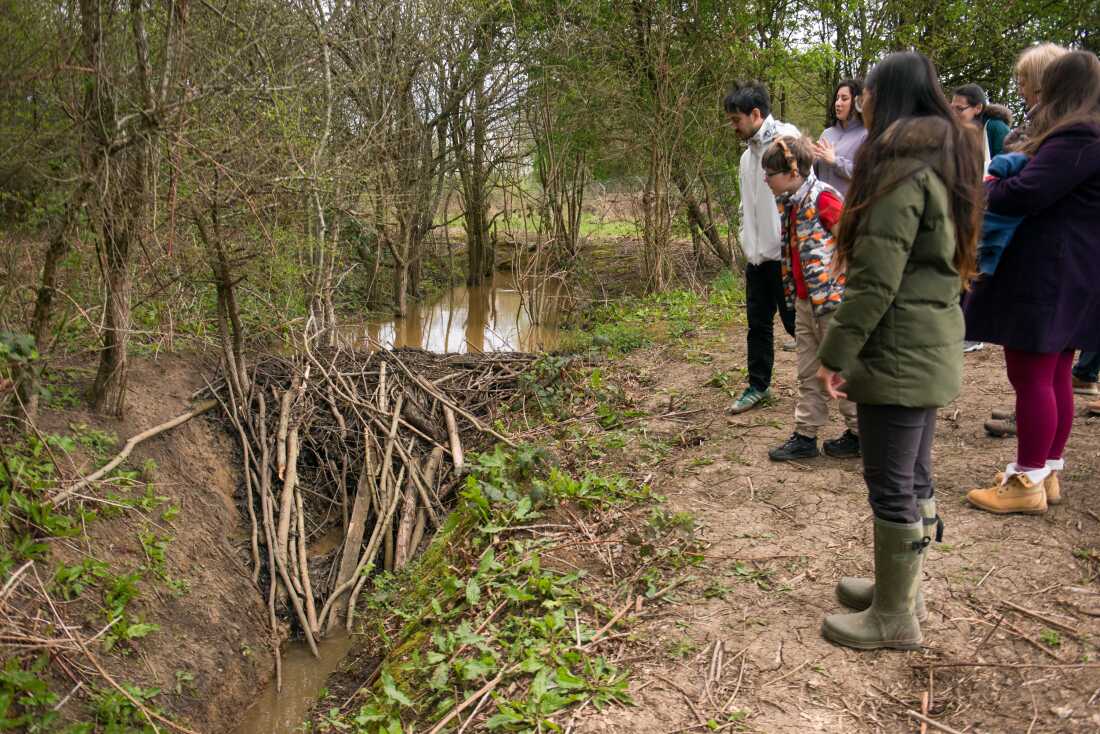
Participants of a guided tour look at a dam built by beavers in a nature reserve in Greenford. Beavers build dams in part to raise water levels and hide underwater from predators. Sarah Tilotta for NPR hide caption
toggle caption
Sarah Tilotta for NPR
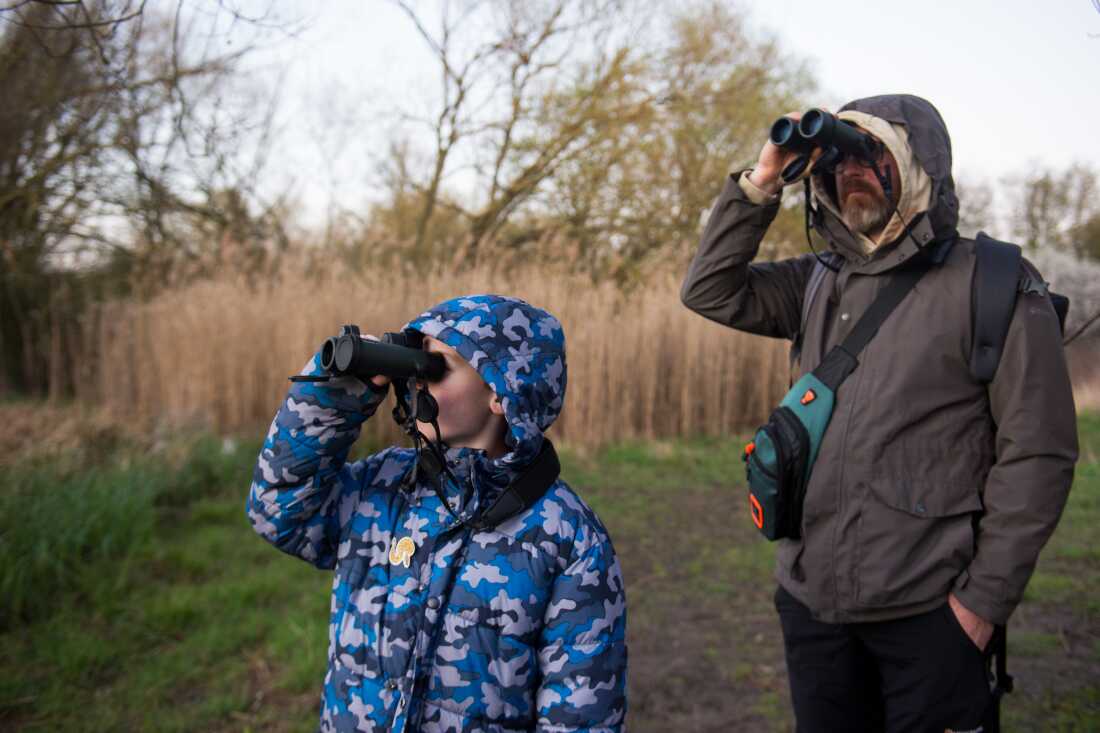
Oliver Hughes and his father, Michael Hughes, who traveled from North Wales to celebrate Oliver's birthday, keep their binoculars trained on the marshland, hoping to spot the resident beavers living at the Ealing Beaver Project. Sarah Tilotta for NPR hide caption
toggle caption
Sarah Tilotta for NPR
Creech set up hidden cameras to capture their crepuscular (dawn and dusk) movements. Within weeks, the beavers dammed up a tiny river, creating an enormous lagoon where swans now nest.
While the United Kingdom overall is getting wetter, some areas — including parts of Scotland — are getting drier, even seeing a growing threat of wildfires. Beavers ensure this rainforest stays wet and, thus, abundant. That's especially important at a time when wetlands are disappearing, with many drained for development.
"Wetlands are one of the most biodiverse habitats in the world," Creech notes. "The U.K. has lost over 95% of its wetlands, and now we're frantically trying to put them back."
Not everyone thinks rodents are the best way to do that, though.
 &
&
Sponsorizzato
Sponsorizzato
Sponsorizzato
Sponsorizzato
Pubblicità
Categorie
Leggi tutto
South Korea jails 90-year-old woman for laundering son's drug moneyGetty ImagesThe South Korean woman has been sentenced to a year in jail for laundering more than 350m won of her son's proceeds.A 90-year-old woman in South Korea has been sentenced to a year in jail for helping her son to launder profits from drug trafficking.The woman, unnamed in local media reports, received a total of 386m...

Watch: 'It's a very sad day' - Mexican fans react to loss to EnglandMexican fans react after England knocked Mexico out of the World Cup with a 3-2 victory at the Azteca Stadium in Mexico City. This is the farthest the Mexican team has reached in the last 40 years of the FIFA World Cup.SubsectionLatin AmericaPublished16 minutes agoRelated topicsMexico CityLos Angeles

My Toddler Has a Better Sleep Score Than Me, and I Have the Data to Prove ItIn honor of World Sleep Day, I decided to embark on a sleep experiment. Earlier this month, I noticed my son's baby monitor, the Nanit Pro, started showing his sleep score every morning. This number tells you how well your child slept the night before on a scale from zero to 100. Sleep scores track how long it takes to...

New Google Tags Will Tell You When an Ad Was Made or Altered Using AIAdvertisers have steadily ramped up the use of AI tools in creating ads you see when perusing the internet. In response to this trend, Google announced a new feature on Thursday that's geared toward helping people identify when an ad was made using generative AI.In Google's My Ad Center panel, a new "How this ad was made"...

Peacock Premium Plus Is Now Part of YouTube's Add-On Subscriptions YouTube's subscription hub expands with this latest addition. Kourtnee Jackson Senior Editor Kourtnee covers TV streaming services and home entertainment. She previously worked as an entertainment reporter at Showbiz Cheat Sheet, where she wrote about film, television, music, celebrities and streaming platforms....