We're in a golden age of phone cameras. Earlier this year I awarded Xiaomi and Leica's Leitzphone an Editors' Choice award for its stunning camera performance and now here's Oppo's Find X9 Ultra, which is similarly targeted at serious photographers who demand the best.
Made in partnership with iconic camera-maker Hasselblad, the X9 Ultra comes with a suite of potent rear cameras boasting large image sensors and wide apertures. And with the addition of an optional telephoto zoom lens it's allowed me to take some superb images in my testing time. The X9 Ultra is essentially a full camera bag of gear, all squashed down into a phone body.

8.0
Oppo Find X9 Ultra
Like
- Stellar battery life
- Excellent camera quality
- Optional telephoto lens delivers wild results
Don't like
- The best images require more manual control
- Telephoto lens is an expensive extra
- Too much preinstalled junk
But the aforementioned Leitzphone is a problem for the X9 Ultra. Yes, it costs a bit more, but Xiaomi's phone brings more genuine innovation in the form of cutting-edge image sensors, and a rare -- perhaps even unique -- physical camera control wheel and a continuous zoom lens with actual moving lens elements. As a result, the Leitzphone remains my top choice for the "ultimate" camera phone, but the X9 Ultra comes close and has some stand-out tricks of its own that make it a formidable choice for even the most demanding of photographers.
However, while it can deliver stunning images, I've found that getting the best results from it requires a more manual approach that asks more of the photographer, both at the moment of taking the image and some extra steps in the editing stage.
I'll come onto that in a moment, but let's talk pricing first. The phone costs £1,449, making it competitive with the Leica Xiaomi Leitzphone which comes in at a princely £1,700. The X9 Ultra is on sale in Europe and the UK now but, like the Leitzphone, it won't be officially sold in the US. (For reference, that price converts to around $1,955.)
Let's start in an obvious place, then: the camera.
Oppo Find X9 Ultra: Camera performance
There's a whole casserole of cameras on the back of this thing, including a 200-megapixel main camera, a 50-megapixel ultrawide, a 200-megapixel telephoto camera with 3x optical zoom and then an additional 50-megapixel telephoto camera with 10x optical zoom. It's an impressive array of numbers and I've taken hundreds of photos with it so far and I'm pleased with many of my results.
Enlarge Image
Shot with the Oppo Find X9 Ultra main camera, auto settings.
Andrew Lanxon/CNETEnlarge Image
Shot with the Oppo Find X9 Ultra ultrawide camera, auto settings.
Andrew Lanxon/CNETThese two shots, taken with full automatic settings in the standard camera mode look good. They're bright, with crisp details and plenty of saturation making them look vibrant and cheerful. But they also look a little cold to my eye, and that's something I found to be the case when shooting with this phone's default settings pretty much the whole time.
Enlarge Image
Shot with the Oppo Find X9 Ultra, main camera: In auto mode (left) and manual mode (right).
Andrew Lanxon/CNETWhen taken in the default camera mode with all settings set to automatic the resulting shot (seen on the left, above) looks cold to my eye, with a magenta color cast in the tint. Switching to master mode allowed me to take control of the white balance, warming the colors up and moving the tint more into the greens. The resulting image (right) looks less natural, but it's much more like what I had in mind when I took the shot. The cooler tones the phone originally wanted didn't do that sunny scene justice.
In fact, pretty much all of my favorite images have been taken in master mode with manual white balance settings. I've mostly shot in DNG raw as well, resuling in images with a lot more flexibility for editing in Adobe Lightroom or Google's Snapseed.
Enlarge Image
Shot with the Oppo Find X9 Ultra, main camera. This is the unedited raw file.
Andrew Lanxon/CNETStraight out of camera, this unedited raw file is off to a good start, with an even exposure and accurate colors.
Enlarge Image
And here's the edited raw file.
Andrew Lanxon/CNETBut just a few tweaks in Lightroom and I've been able to produce something much more artistic. It's not just a great shot for a phone, it's a great shot full stop. The tones and contrast mean it actually fits well in among the similar images I took at the time on my Leica Q3 43 and Canon R6 III, rather than it standing out as "just a quick phone snap." The Ultra allowed me to capture a great base image but it required extra effort on my part to make it better.
Enlarge Image
Shot with the Oppo Find X9 Ultra, main camera, on manual settings.
Andrew Lanxon/CNETI've not edited this from taking the shot, but I did use master mode to set my own white balance to get the look I wanted. I love the tones of the blue sky and the deep shadows on the figures.
Enlarge Image
Shot with the Oppo Find X9 Ultra, main camera, on manual settings.
Andrew Lanxon/CNETI've done the slightest tweaks here, bringing down the highlights just a touch and adding a little warmth to the colors, but otherwise this is mostly as I took it. It's a great shot, with lots of detail. But shooting in DNG raw also means the files aren't treated to Oppo's own image processing, and in my opinion that's a good thing. Like many Android phones, the X9 Ultra uses its own image processing to try and make your images "better." What that really means is usually over-sharpening shots and raising the shadows to a sometimes unrealistic extent.
It's something I've complained about with various Android camera phones -- and, sometimes, on iPhones too -- and while Oppo isn't the worst offender for over-processing, it's definitely noticeable in some of its jpeg images taken in the default camera mode. But it doesn't apply the processing when you shoot in raw in master mode and the benefits, at least to my eye, are clear.
Enlarge Image
Shot with the Oppo Find X9 Ultra, main camera, default settings.
Andrew Lanxon/CNETEnlarge Image
Oppo Find X9 Ultra, main camera, edited DNG raw image
Andrew Lanxon/CNETThe top image here is taken in the default mode with auto settings. The image processing has been quite heavy handed, brightening the shadows so much that it killed a lot of the drama of the beautiful sunrise I was trying to photograph. It's been oversharpened and the cooler tones don't do the scene justice. But my raw file is world's apart. I've lifted the shadows a little, but not much, maintaining that drama of the moment and I've adjusted the tones to match that golden hour sun pouring in.
Enlarge Image
Oppo Find X9, ultrawide camera, default settings
Andrew Lanxon/CNETEnlarge Image
And here's the edited DNG raw image.
Andrew Lanxon/CNETThe difference becomes even clearer in the ultrawide camera -- the default camera mode goes quite far in its image processing, but by taking manual control you can craft a much more artistic image. In my opinion the X9 Ultra's image processing actually does its underlying technology a disservice; the sensor and lens can take amazing, artistic images that look like they were taken on pro-level mirrorless cameras. But the image processing cranks up the shadows and the sharpening to such an extent that they start to look like cliche phone photos again.
It's why I've shot almost every photo in master mode and then spent some extra time editing my shots to get the best from them. It's a different, more labor intensive way of working than was required when I took photos on the Leitzphone. With that, I shot using the built-in Leica color profiles -- especially Leica Chrome and the high-contrast black and white mode -- and I actually preferred many of my jpeg files without any extra editing.
The X9 Ultra does have a small selection of filmic styles built in but I'm honestly not a fan. They're not subtle, looking more like the sort of aggressive photo filters you'd apply in a free photo editing app downloaded from the Play Store.
Enlarge Image
Taken with default settings on the main camera. This shot is fine, so I wanted to see how it would fare using one of the presets.
Andrew Lanxon/CNETEnlarge Image
I don't love the result. It looks too unnatural to my eye -- more like a quick filter you'd apply on Instagram than something you'd expect from a pro-level camera. My advice? Shoot in raw and add your own color toning in Lightroom.
Andrew Lanxon/CNETEnlarge Image
Another filter that tries too hard.
Andrew Lanxon/CNETI can't say I'm surprised; Hasselblad prides itself on its color science and doesn't even offer a monochrome mode when shooting with its professional X2D II or quirky 907X. While they're both utterly superb cameras, they're aimed at pros wanting the ultimate in image quality in order to give the best base for post production later. They're far cries from Fujifilm's X100VI which offers a vast amount of ways you can adjust the filmic look in your images. So while there are some color filters on the phone, I'd be surprised if Hasselblad had all that much to do with them and I really don't think they're a reason to buy this phone.
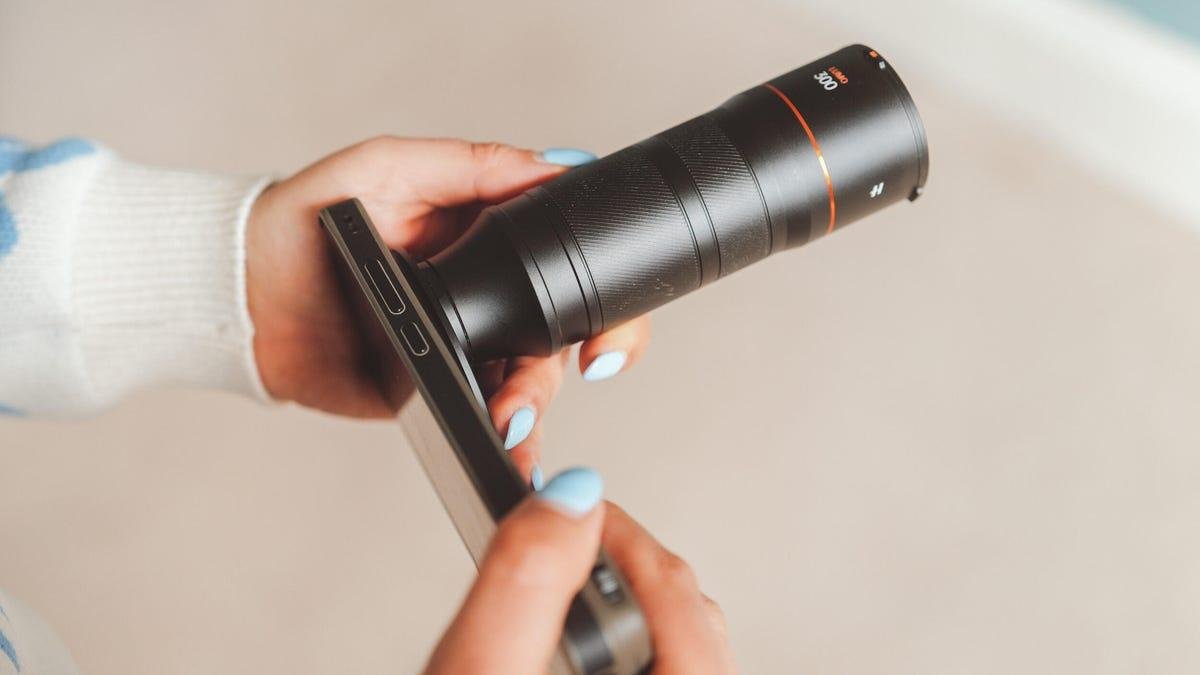
That reason is the zoom skills. Both using the built-in zoom lenses and using the optional telephoto lens attachment which attaches onto the 200mp 3x optical zoom lens of the Ultra and essentially turns your phone into a telescope.
Enlarge Image
Shot with the Oppo Find X9 Ultra, 10x optical zoom.
Andrew Lanxon/CNETThe phone has not one but two separate telephoto lenses, one offering 3x optical zoom and one offering 10x. I took this shot of these roosting pigeons at 10x and it's pin sharp. I love that the amount of zoom has allowed me to compress the scene and captured this much more intimate moment. It's what zoom lenses are made for. But slap on the telephoto zoom lens and things get wild.
Enlarge Image
Shot with the Oppo Find X9 Ultra, ultrawide lens.
Andrew Lanxon/CNETAs a quick reference, here's an ultrawide snapshot of a view of a docked cruise ship (yes, the white balance is very cold). Difficult to really see much of the ship isn't it?
Enlarge Image
Shot with the Oppo Find X9 Ultra with telephoto zoom lens.
Andrew Lanxon/CNETBut attach the telephoto zoom lens and suddenly I'm able to get up close on details like the windows and these vibrant lifeboats.
Enlarge Image
Shot with the Oppo Find X9 Ultra, telephoto lens.
Andrew Lanxon/CNETWhile here I used the zoom lens to create an interesting composition using this sole cable car against the rough rock face. There's no way I could have taken this shot with just the phone by itself. If long zooms are your thing, this add-on is a great option to consider. But it's not always easy to work with.
Even at its base 13x zoom (a 300mm equivalent field of view) it's so zoomed in that it's quite limiting in the shots you can actually take. Trying to frame up your images using the in-sensor crop modes of 30x or 60x zoom (that's up to 1,380mm equivalent) can be extremely tricky too. I took it dolphin spotting and the results were... mixed.
Enlarge Image
Shot with the Oppo Find X9 Ultra with telephoto zoom lens.
Andrew Lanxon/CNETMost of my images were of empty patches of sea and, if I was lucky, a hint of bottlenose. It's hardly a contender for Wildlife Photographer of the Year.
Enlarge Image
Shot with the Oppo Find X9 Ultra with telephoto zoom lens.
Andrew Lanxon/CNETThis was the best I managed to get, but it took a lot of failed attempts. To be fair to the camera, it's not just that the zoom range made it difficult to target the dolphin, I was also taking my shots from a boat bobbing along on the water. It would have been much easier if I had a steady, static shooting position.
Enlarge Image
Shot with the Oppo Find X9 Ultra with telephoto zoom lens.
Andrew Lanxon/CNETI also captured what looked like a pirate ship, even though it was almost barely visible on the horizon to my own naked eye.
Enlarge Image
Shot with the Oppo Find X9 Ultra with telephoto zoom lens.
Andrew Lanxon/CNETI like the chaos in this zoom shot of suburbs of the Madeiran city of Funchal. By zooming in, I was able to focus the composition and emphasize the stepped nature of the landscape. It's truly impressive that I've been able to capture something like this on a phone.
Is the lens a perfect solution? No. Aside from being often quite difficult to actually use, the lens is big and heavy and requires a case and lens mount, making it awkward to attach and a chore to carry around just on the off-chance that you might want a hugely zoomed-in shot. Going up to 30x or 60x relies on a lot of in-sensor cropping along with digital upscaling so while you can achieve a long zoom, there's often not a lot of actual detail in your images. Good enough for Instagram? Sure. Good enough for a gallery print? Probably not.
Enlarge Image
The telephoto lens is immense. It's made from glass and metal so it's also pretty heavy.
Andrew Lanxon/CNETYou can also only use the lens in a specific telephoto camera mode which requires extra steps to activate and means you can't shoot in raw or take manual control over settings like white balance. But the biggest downside is that the lens will set you back an additional £499 (around $674). That's a huge amount to spend on something with arguably limited use. It does come as part of the Explorer Kit though, which includes a camera grip featuring a shutter button and zoom switch.
The small handle makes the phone easier to use as a compact camera -- especially when you have the big lens attached -- but I prefer Xiaomi's grips I've used on its phones like the 15 Ultra. Mostly because they can be attached independently of the case, offer a larger, more ergonomic grip and connect over USB-C, rather than Bluetooth. This not only allows Xiaomi's grips to add extra battery to the phone but it can also be quickly removed when you don't want to use it without having to take off the case. Oppo's grip has to be charged independently, a Bluetooth connection established and turned off again when you don't want to use it. I like my photography to be as free from these little steps as possible so Oppo's grip case isn't the most elegant solution for me.
Enlarge Image
The Leitzphone is the X9 Ultra's biggest competition.
Andrew Lanxon/CNETThere's no question though that the X9 Ultra is a potent camera phone. But it loses out against Xiaomi's Leitzphone in a few key ways. For one, the Leitzphone uses a physically larger main image sensor that employs fancy new LOFIC technology which promises better dynamic range from a single image. Oppo says its sensor will achieve similar results from blending images using traditional HDR techniques, but I can't help but feel that Xiaomi has gone to more effort to equip its phone with more up-to-date tech.
The Leitzphone also offers the first continuous telephoto zoom, using actual moving elements to achieve a lossless zoom across a range, rather than simply jumping between fixed focal lengths. Sure, Xiaomi doesn't offer a whopping additional zoom lens, but the Leitzphone's built-in zoom ranges are more applicable on a day-to-day basis, especially for street and travel photographers. Add on the Leitzphone's innovative settings wheel around the camera lens and it feels like Xiaomi is working harder to provide more tangible benefits for real photographers. Oppo's huge lens is a real headline, but it's an accessory I'd want to call on very rarely in my everyday photography.
Enlarge Image
The display is large, vibrant and bright enough for easy outdoor use.
Andrew Lanxon/CNETOppo Find X9 Ultra: Design and display
I really like the look of the phone. With its stark metal and leatherette design, it's clearly trying to emulate the sleek, professional aesthetics of Hasselblad's X2D cameras and I think it achieves it well. There's certainly a family resemblance -- especially with the orange camera button on the side, which closely mimics the vibrant orange Hasselblad uses on its camera shutter buttons.
It feels good in your hand and its IP69 rating means you won't need to be afraid to keep on taking photos when the rain starts to pour. The camera grip helps give the phone ergonomics more akin to a compact camera but I wish it was possible to buy the grip case independently of the lens. It's a more broadly useful accessory that I suspect most photographers would want to buy but that wouldn't be as interested in paying big money for the gigantic lens.