Pascal Fletcher,Latin America specialist, BBC Monitoring, Duncan Walkerand Alicia Curry

 Reuters
The relationship between the United States and Cuba - already strained and fragile for decades - has been rapidly deteriorating in recent weeks.
Washington is also warning that a peaceful agreement with the Caribbean nation is unlikely, while Cuba says the US is using a "fraudulent case" to justify military intervention.
But what is driving the US pressure on Cuba and how is it responding?
Could the US take military action against Cuba?
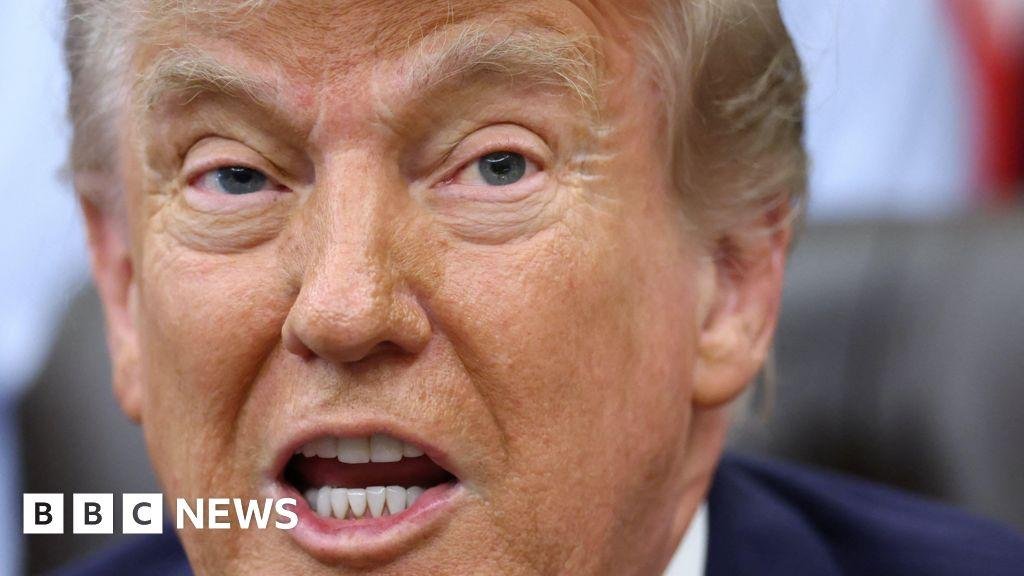
Since returning to the White House, Donald Trump has made clear his desire to change Havana's leadership and has openly mused that Cuba is "ready to fall".
In March, he suggested the country was in "deep trouble" as he threatened a "friendly takeover".
There has been no announcement of plans for any military intervention but Cuba is on edge. especially as surveillance activity in the Caribbean increases.
Leaving the flight transponders on "is likely deliberate", said UK drone expert Dr Steve Wright, with the US intending to send "a clear message it has eyes in the sky to maintain the squeeze".
Flight-tracking data does not give a complete picture as military aircrafts often only share their location for portions of a flight.
It also quoted a US official who said the intelligence - which it characterised as a potential pretext for US military intervention - suggested Iranian military advisers were in Havana.
Cuba's foreign minister, Bruno Rodríguez, responded by saying the country "neither threatens nor desires war" and accused Washington of building a "fraudulent case" for military intervention.
US Secretary of State Marco Rubio said on Thursday that the White House's preference was "a diplomatic solution" but added that Trump had the right and obligation to protect his country against any threat.
He also called Cuba a "national security threat" and said the likelihood of a peaceful agreement is "not high".
Rodríguez reacted by accusing Rubio of trying to "instigate a military aggression" and the US government of "ruthlessly and systematically" attacking his country.
 Reuters
The power hierarchy in Cuba
Like many countries, Cuba has a president and prime minister, but it is governed by a unique hierarchy
That hierarchy still involves one of the most famous names to come out of the Caribbean region: Castro.
Cuba's Communist Party leaders view themselves as the inheritors and continuers of Fidel Castro's 1959 Cuban Revolution that ousted the pro-US strongman Fulgencio Batista and established "anti-imperialism" as a hallmark of the island's government in successive decades.
For this reason, they consider the US indictment of former president Raúl Castro a deliberate blow against the top figurehead of Cuba's one-party communist system.
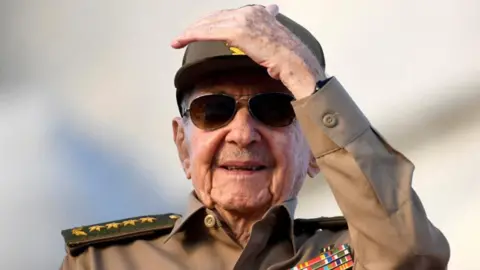
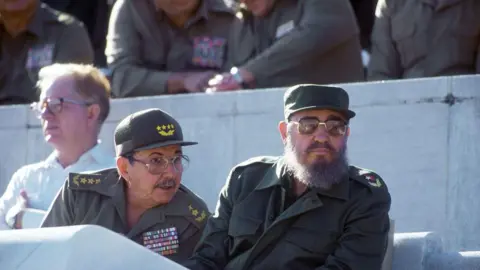
Raúl - who at nearly 95 years old bears the official title "Leader of the Cuban Revolution" - served as Cuba's president between 2008 and 2018.
Prominent party apparatchik Miguel Díaz-Canel, 66, currently holds both the Cuban presidency and leads the Communist Party, but it is the Castro family name that still represents real power on the island and commands respect among its military and security services.
These forces effectively run much of the economy and maintain internal order, repressing internal dissent and opposition.
The Trump administration's talks with Cuba and other recent outreach have even included Raúl Castro's 41-year-old grandson and bodyguard, Raúl Guillermo Rodríguez Castro. An Interior Ministry colonel, he is widely considered the "ear" of his grandfather, even though he holds no formal government or party leadership posts.
Still, Díaz-Canel himself has indicated an element of "collegiate" decision-making exists among the political-military elite ruling the country.
Castro loyalist and military technocrat Manuel Marrero, 62, serves as Cuba's prime minister, and Foreign Minister Rodríguez, 68, is often the most heard-from "voice" of the government in responding to the US.
Marrero is linked to the shadowy military conglomerate GAESA, run by Cuban generals, which is seen as the opaque operator of the economic assets that underpin the country's military and political elite.
Rubio specifically focused on this power structure in a video message to Cubans on 20 May, saying: "Cuba is not controlled by any revolution. Cuba is controlled by GAESA, a 'state within a state".
He went on to say the "corrupt" and "incompetent" ruling elite was blocking reforms and preventing a better relationship with the US.
 Getty Images
Why has the US charged Raul Castro with murder?
The recent charges against Castro date back to an incident 30 years ago.
In February 1996, Cuban fighter jets shot down two small civilian planes - owned by a group of Cuban exiles in Miami. Four people on board the aircrafts were killed, including three US citizens.
At the time, Raúl was Cuba's armed forces minister and one of the most powerful figures in his brother's regime.
Washington accused Cuba of unlawfully targeting civilian planes in international waters, and other countries condemned the action.
The explanation from Havana - which maintains the incident occurred over its airspace - was that the exile group Brothers to the Rescue posed a threat to national security due to repeated air incursions.
Earlier this week, Raúl and five others were indicted by the US with varying charges, including: conspiracy to kill US nationals, murder and the destruction of US aircrafts.
If found guilty, he could face life in prison or the death penalty.
While announcing the charges, Acting Attorney General Todd Blanche said the US "does not, and will not, forget its citizens". But the US is notably taking aim at a key Cuban figure.
Díaz-Canel said the charges were being used to "justify the folly of a military aggression against Cuba".
Calling the indictment "a political manoeuvre, devoid of any legal foundation", he said Cuba had acted in "legitimate self-defence within its jurisdictional waters" in taking down the planes.
Cuba roiled by extensive blackouts from US blockade and sanctions
Most of Washington's pressure has come through its oil blockade and sanctions.
Cuba has been suffering from extensive blackouts for months, caused by chronic fuel shortage.
Venezuela and Mexico in the past supplied most of Cuba's oil and fuel, but they have largely stopped since January, when the US removed Venezuela's president and Trump threatened tariffs on countries that send petroleum to Cuba.
Washington has seized a number of oil shipments bound for Cuba, with only one Russian oil tanker reaching the country since the blockade was imposed.
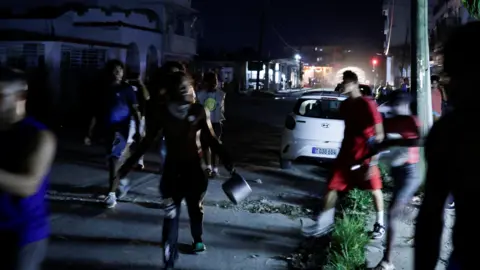
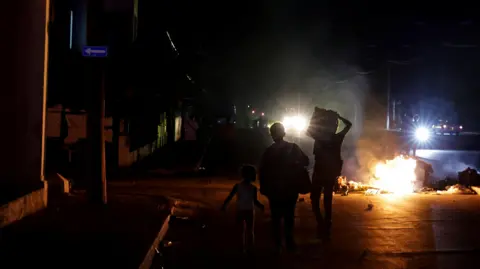
Discontent among Cubans has been mounting from the blackouts as well as shortages of food, fuel and medicine. Hospitals are struggling to function normally and schools and government offices are having to close.
Protesters have repeatedly taken to the streets in the capital, Havana, and in a demonstration on Wednesday blocked roads with burning rubbish and shouted anti-government slogans.
This month the US fresh sanctions put on senior Cuban officials who the US accused of committing human rights abuses or corruption, targeting officials in the energy, defence, financial or security sectors of Cuba's economy.
Meanwhile, the US has continued to offer $100m (£74m) of aid, but on the condition it will be distributed through the Catholic Church and independent humanitarian organisations, bypassing the Cuban government.
Washington has said Cuba denied the help, but the island's foreign minister said it does not reject aid "offered in good faith" and the best way the US could help would be lifting the blockade.
 Reuters
 Reuters
Cuba meets the pressure with fiery words - and support from friends
While the two countries have held some semblance of talks through back channels, confirmed by both nations in March, Cuba's response has been limited to fiery statements from leaders.
Díaz-Canel has accused the US of imposing a "collective punishment" on the Cuban people and repeatedly demanded an end to the blockade, which he has described as "the intimidating and arrogant behaviour of the world's greatest military power".
Responding to the report of a purported drone supply, Rodríguez said the US was constructing a justification for a "ruthless economic war against the Cuban people and the eventual military aggression".
While he insisted Cuba did not wish for war, he said it was preparing for "external aggression".
Meanwhile, China and Russia - both allies of Cuba - have condemned the US over its continued pressure, particularly regarding the Castro indictment.
The Chinese foreign ministry called on the US to stop using "coercion" and "threats" against its ally, while the Kremlin said the pressure being exerted on Havana "borders on violence".