Buckle up: Nvidia is "reinventing the personal computer," according to CEO Jensen Huang. Microsoft and Nvidia have been cozying up to one another in preparation for Nvidia's highly anticipated launch of the RTX Spark. It's a new Arm-based system-on-chip (or "SoC") platform that brings Nvidia's Blackwell architecture to thin and light Windows laptops and mini desktops. The goal is to provide high-power processing performance for running personal agents, creative work and gaming, but without the space, power needs and cooling requirements usually imposed by discrete graphics.
The RTX Spark joins Qualcomm's Snapdragon X processors running Windows on Arm, with similar claims of "all-day battery life." Snapdragons achieve that, but one thing to remember about Nvidia's chip is that it's intended for far heavier workloads than Snapdragon processors.
Those aren't meant to "render ultralarge 90GB-plus 3D scenes, edit 12K 4:2:2 video, generate 4K AI videos, run 120B-parameter LLMs with up to 1 million tokens context using agents locally, and play AAA games at 1440p and over 100 frames per second," all of which can tank your battery life. It remains to be seen if the Spark can live up to that under normal usage.
This is the first of what Nvidia says it plans to be a line of chips across a variety of price segments. These first models are slated to ship this fall:
- Microsoft Surface Laptop Ultra
- Dell XPS 16
- Asus ProArt P14 and P16
- HP Omnibook X 14, Omnibook Ultra 16
- Lenovo Yoga Pro 9n
- MSI Prestige N16 Flip AI
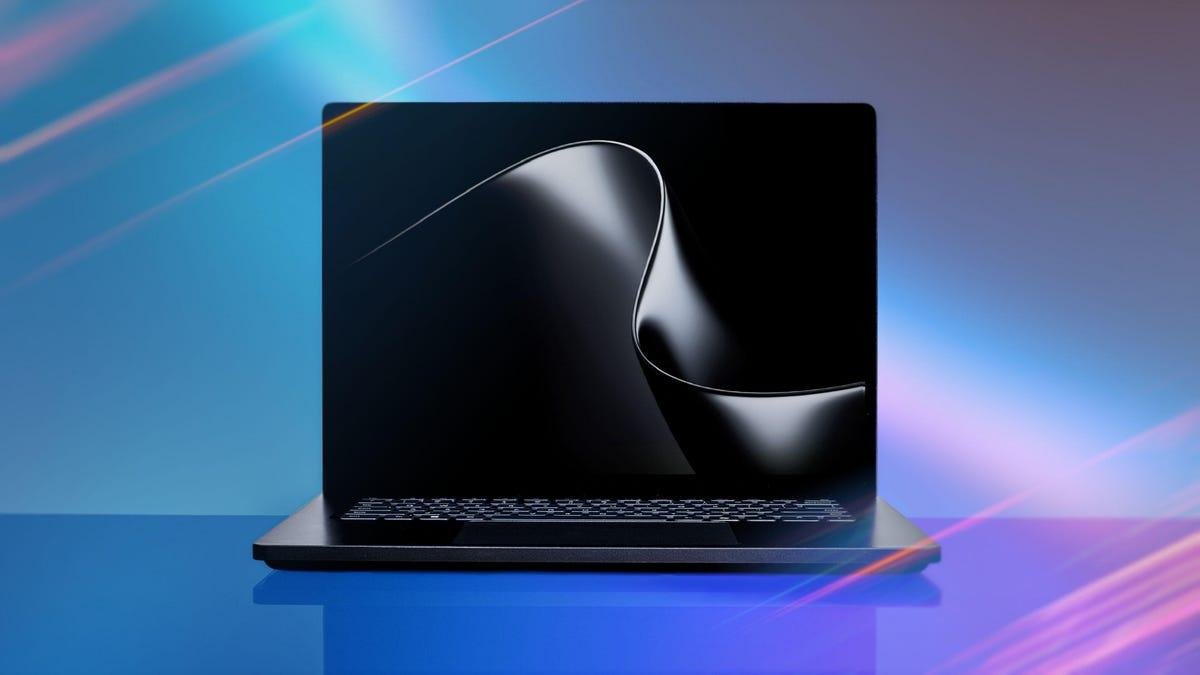
The 15-inch Surface Laptop Ultra is particularly notable because Microsoft hasn't updated its screens in far too long, and the Surfaces (both desktop and laptop) never incorporated discrete GPUs their prices seemed to demand. The Ultra has a higher-resolution (262ppi) 15-inch mini LED touchscreen that supports HDR (with peak brightness of 2,000 nits), unlike the older, meh model. Microsoft hasn't updated its Surface Laptop Studio in three years, and this is the chip and screen it needs if Microsoft plans to bring it back from the dead.
There will also be mini desktops. It seems to have been a resurgence of these -- at least an increase in the number of manufacturers offering them -- thanks to developers. The RTX Spark models will compete with AMD Ryzen AI Halo-based models for example. They're expected from companies such as Acer, Asus, Dell, HP and Lenovo, among others.
Nvidia's planning to have a desktop, laptop and workstation for each generation of chips.
Given current price volatility, we won't know how much they'll cost until they're closer to shipping. AI's ravenous demand for components -- and the resources needed to make them -- has created severe shortages of memory, processors and SSD storage, driving computer and phone prices higher and even affecting available configuration options.
Spark it up
The chip is an offshoot of the DGX Spark (GB10), which powers Linux-based compact desktops specifically targeted at developers and now Windows-based DGX Station. The Spark was designed in conjunction with MediaTek, and has similar specs to the DGX: 6,144 CUDA cores, a 20-core Grace CPU, ability to access up to 128GB RAM and more. Nvidia says it supports up to 120B parameter agents with a 1M context. (For reference, AMD says its top Ryzen AI Max Pro 400 series chip can can handle up to 300B parameter models).
The RTX Spark under the hood of the Surface Laptop Ultra.
MicrosoftIts GPU specs are more or less comparable to an RTX 5070, but the unified memory architecture means it has access to a lot more RAM than 12GB. Nvidia says that system configurations can go as low as 16GB, though, which means it could potentially bottleneck when a dedicated 5070, with 12GB VRAM, might not. The company gave 100fps 1440p as its reference for gaming performance (though it wasn't clear whether that was with or without DLSS 4.5 enabled).
Nvidia claims the chip's overall AI performance is one PFLOPS (a billion floating point operations per second), but that's based on FP4 calculations. On one hand, FP4 is the current darling of the data formats because it's faster than the other floating point choices and more accurate than integer, but there are some tradeoffs. (Procyon has a great visual example of what speed versus accuracy tradeoffs can mean for image generation.) But among the consumer SoCs, this is the first to support it in hardware.
The real competition for these is the M5 Pro and M5 Max MacBook Pros, which target the same users, but the M5 line doesn't support FP4 and FP8 data types, which may turn out to be a hindrance.
The part itself can run at anywhere from "single digits" to 80W, which means you'll really need to pay attention to whether a laptop runs at full power or if the manufacturer is throttling it. In other words, it sounds like performance, especially on battery, may vary a lot. Typically, mobile processor power envelopes are smaller bands; for instance, the Intel Core X9 388H specifies 15W-85W.
It has an NPU, which Nvidia doesn't seem to want to talk much about, but the systems with the Spark are considered Copilot Plus-qualifying, so it must be able to hit at least 40 TOPS.
This illustration of the RTX Spark in situ has the fuzzy, glowy look of a generated image.
NvidiaRTX Spark might seem powerful, but Nvidia is maintaining its strict division between pro and consumer markets. For instance, it doesn't plan to run a certification program for applications or support ECC memory.
In addition to being one of Nvidia's launch partners with its Surface Laptop Ultra, Microsoft has been working to make the necessary updates to Windows in order to take advantage of the new chip.
Like Qualcomm's Snapdragon X series processors, Windows doesn't natively support the Arm instruction set the way it does Intel and AMD's x86-architecture chips, which were foundational to the PC. Instead, Arm-based systems use an emulation layer called Prism to translate instructions. Emulation is partly why the early systems based on Qualcomm chips experienced performance and compatibility problems.
Windows modifications
Many of the updates to Windows that are necessary to support the hardware are under the hood, but one will be right in your face: Microsoft's putting Spark-run agents on the Taskbar.
A lot of the changes we've seen in Windows recently have been laying the groundwork for this. Prism was written specifically for Qualcomm's SoCs, since it was the only Arm-based silicon the operating system needed to run on. Supporting the RTX Spark meant updating Prism and other core parts of Windows to efficiently distribute workloads across the CPU cores, balance cooling and performance, address and intelligently manage a larger amount of the unified memory available to the GPU (for AI processing with TensorRT) and more.
Qualcomm doesn't have nearly as much invested in Windows gaming performance as Nvidia does, for obvious reasons. For example, Nvidia has been working with Microsoft to improve compatibility with anti-cheat software (such as Epic's Easy Anti-Cheat), which has prevented some games from running on the devices, as well as support for the Xbox app, which is key to Microsoft's game-on-everything strategy.
Adobe is also reengineering parts of its imaging engines to tap into the Spark directly, notably with several new pipelines to accelerate more GPU- and AI-intensive features such as rendering complex timelines in Premiere Pro and improving natural brushes in Photoshop. While CUDA and TensorRT already operate on Nvidia's discrete mobile GPUs, taking optimal advantage of them on this different architecture requires some rejiggering. The applications will also be able to interact with Windows agents.
Plus, Nvidia is porting OpenShell -- its security protocols for running agents -- to Windows, via new controls that Microsoft will reveal at its Build conference in the first week of June. OpenShell, in theory, lets you define guardrails for your agents, route queries to approved local models based on your privacy policies and let it "disguise" personal information when querying cloud-based models.
Nvidia is trying to expand everyday agenting beyond developers, with the notion that "broad adoption has been limited by the inability to run agents securely and privately on users' primary PCs." I suspect the trust issues are more complicated than that. The company says that OpenShell will be incorporated into the current agenting faves, OpenClaw and Hermes.