


Food Premix Market Forecast Projecting Global Value Optimization to Rise Comfortably from a Baseline to USD 4.1 Billion by 2035
The global Food Premix Market is witnessing steady expansion as governments, food manufacturers, and nutrition companies increasingly adopt fortified ingredient systems to address micronutrient deficiencies and support preventive healthcare initiatives. The market is projected to grow from USD 2.6 billion in 2025 to approximately USD 4.1 billion by 2035, reflecting a CAGR of 4.7% during the forecast period (2025–2035).
Food premixes—custom blends of vitamins, minerals, amino acids, and functional nutrients—are becoming essential in large-scale food fortification programs, particularly across developing economies and regulated nutrition markets.
Key Market Projections and Strategic Insights
- Market Size (2025): USD 2.6 Billion
- Forecast Market Size (2035): USD 4.1 Billion
- CAGR (2025–2035): 4.7%
- Leading Segment: Vitamin premixes for food fortification programs
- Fastest Growing Segment: Mineral-vitamin combination premixes
- Leading Application: Bakery and processed food fortification
- Fastest Growing Application: Dietary supplements and functional beverages
- Leading Region: Asia-Pacific
- Fastest Growing Region: Latin America
Market Overview
Food premixes are scientifically formulated blends designed to deliver essential nutrients in consistent, standardized concentrations across food and beverage products. They play a critical role in addressing global nutritional gaps and improving dietary quality at scale.
Key growth drivers include:
- Rising global prevalence of micronutrient deficiencies
- Expansion of government-led food fortification programs
- Increasing demand for functional and fortified foods
- Growth of preventive healthcare and wellness nutrition
- Expansion of processed and packaged food consumption
- Rising awareness of nutritional security in developing regions
Food manufacturers are increasingly integrating premixes into staple foods such as flour, dairy products, beverages, and infant nutrition products.
Analyst Perspective
"Food premixes are becoming a foundational component of global nutrition strategies, enabling scalable fortification solutions that bridge the gap between dietary deficiencies and modern processed food systems."
— FACTMR Analyst
Competitive Landscape and Market Share Analysis
The food premix market is moderately consolidated, with global nutrition and ingredient companies dominating through integrated vitamin and mineral production capabilities.
Key companies include:
- DSM-Firmenich
- BASF SE
- Glanbia plc
- ADM (Archer Daniels Midland Company)
- Cargill Incorporated
- Corbion N.V.
- SternVitamin GmbH & Co. KG
- Hexagon Nutrition Pvt. Ltd.
- Vitablend Nederland B.V.
- Farbest Brands
Strategic initiatives include:
- Expansion of customized nutrient premix solutions
- Investments in microencapsulation for nutrient stability
- Partnerships with food manufacturers and governments
- Development of bioavailable and clean-label premix systems
- Expansion into plant-based and functional food applications
Production vs. Consumption Economy Analysis
Production Analysis
Production is concentrated in regions with strong nutritional ingredient manufacturing infrastructure:
- Europe (Germany, Netherlands, Switzerland)
- United States
- India
- China
- Singapore
Key production trends include:
- Growth in customized micronutrient blending facilities
- Expansion of encapsulation and stabilization technologies
- Increased automation in premix formulation
- Development of precision nutrition systems
- Strong compliance with global food safety regulations
Consumption Analysis
Demand is expanding across multiple sectors:
- Processed food manufacturers
- Government nutrition programs
- Infant nutrition companies
- Dietary supplement brands
- Beverage manufacturers
Asia-Pacific leads consumption due to large-scale fortification programs, while Latin America is the fastest-growing region supported by public health initiatives and food security policies.
Supply Chain and Value Chain Insights
The value chain includes:
Vitamin & Mineral Production → Raw Nutrient Sourcing → Premix Formulation → Quality Testing → Packaging → Food Manufacturer Integration → Retail/Institutional Distribution → End Consumers
Key developments include:
- Increasing vertical integration among nutrition companies
- Improved traceability of micronutrient sourcing
- Expansion of fortified food supply chains in emerging markets
- Rising adoption of standardized premix formulations
- Growth in contract manufacturing and blending services
Strategic Procurement Analysis
Procurement strategies are evolving toward:
- Long-term contracts for vitamin and mineral inputs
- Supplier diversification across global chemical and biotech producers
- Cost optimization through bulk nutrient sourcing
- Focus on regulatory compliance and quality certification
- Demand for customized, application-specific premixes
Food manufacturers are prioritizing reliable premix suppliers to ensure consistency in large-scale fortification programs.
Distribution and Retail Trends
Key distribution channels include:
- B2B ingredient suppliers
- Food processing companies
- Government procurement agencies
- Nutritional product manufacturers
- Online ingredient distribution platforms
Emerging trends include:
- Expansion of fortified staple foods in emerging markets
- Growth of ready-to-consume functional beverages
- Increasing use in infant and maternal nutrition
- Integration into plant-based and health-focused food products
Country Opportunity Assessment
Asia-Pacific
Largest market driven by large-scale fortification programs in India, China, and Southeast Asia.
Latin America
Fastest-growing region supported by government nutrition initiatives and public health programs.
Europe
Strong demand driven by regulatory frameworks for food safety and nutrition standards.
United States
Stable demand from processed food and dietary supplement industries.
Africa
Emerging opportunity driven by micronutrient deficiency reduction programs.
Technology and Innovation Outlook
Key innovation trends include:
- Microencapsulation for nutrient stability and bioavailability
- Precision nutrition formulation technologies
- AI-assisted premix customization systems
- Clean-label and organic nutrient sourcing
- Enhanced solubility and dispersibility systems
- Fortification optimization for staple foods
These advancements are improving nutrient delivery efficiency and expanding application potential across food systems.
Read Full Research Report on Food Premix Market
Investment Outlook
The food premix market offers strong opportunities across:
- Nutritional ingredient manufacturing
- Food fortification infrastructure
- Infant and clinical nutrition solutions
- Functional food development
- Government nutrition program partnerships
- Custom premix formulation services
As global nutrition security becomes a strategic priority, demand for scalable premix solutions is expected to remain strong.
Sponsorluk
Sponsorluk
Sponsorluk
Sponsorluk
Reklam
Kategoriler
Read More
How Iranians are reacting to news of the two-week ceasefire between the US and Iran How Iranians are reacting to news of the two-week ceasefire between the US and Iran Audio will be available later today. Iranian state media showed images of Iranians celebrating the news of the ceasefire, but for many, the deal also means an end to...

At a critical moment, Snap loses a top Specs exec Snap has big plans to release the newest version of its AR glasses, Specs, later this year. Despite the strategic priority that the hardware product represents, the company recently shed one of the top executives tied to the project, reportedly over a dispute with Snap CEO Evan Spiegel. The tech blog Sources originally reported that the...

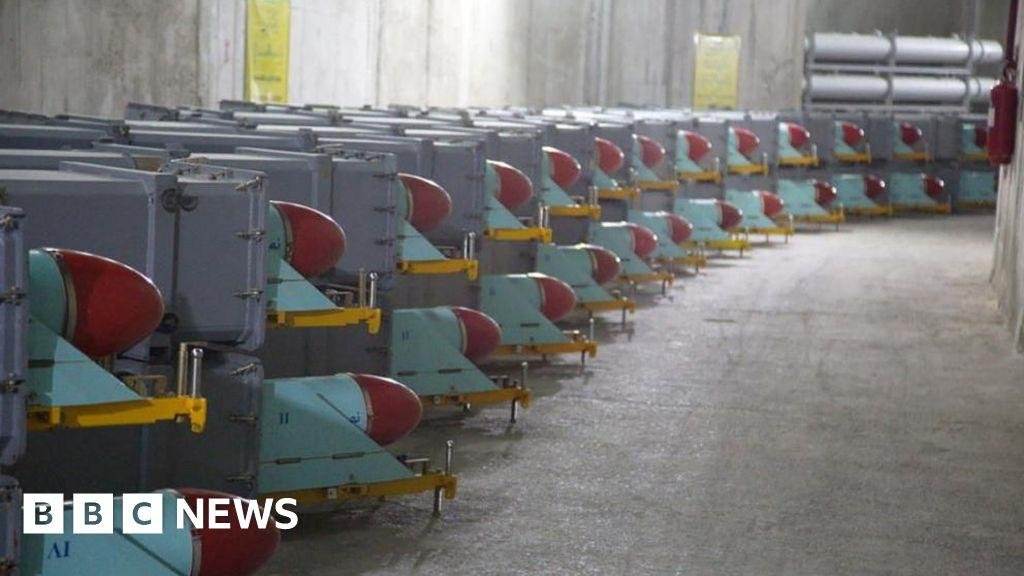
Iran's high-risk war strategy seems to centre on endurance and deterrenceReutersIran appears to have built a strategy around deterrence and enduranceIran's military posture in a widening conflict with Israel and the US suggests it is not fighting for victory in any conventional sense. It is fighting for survival, and survival on its own terms.The Islamic Republic's leaders and commanders have...
The global mezcal market was valued at USD 386.5 million in 2023 and is projected to reach USD 1.45 billion by 2033, expanding at a CAGR of 14.1%. Growth is fueled by rising demand for premium craft spirits, increasing global awareness of agave-based beverages, and strong consumption in HoReCa channels. 📊 Quick Stats at a Glance Market Size (2023): USD...

Dutch government blocks US company from acquisition, citing ‘risk to public interest’ In Brief Posted: 8:44 AM PDT · May 26, 2026 Image Credits:Bryce Durbin / TechCrunch The Dutch government has blocked American IT giant Kyndryl from acquiring Solvinity, a Dutch cloud provider that hosts the Netherlands’ online identity platform. The...

