Snap finally debuts its long awaited AR glasses, Specs, and, oof, they aren’t cheap
Snap finally debuts its long awaited AR glasses, Specs, and, oof, they aren’t cheap
At a spatial AI convention in Long Beach on Tuesday, Snap finally unveiled Specs, its long-awaited consumer smart glasses, and at $2,195, they don’t come cheap.
Specs will be available for preorder on June 16th, with a $200 refundable deposit, and are expected to ship this fall in the US, the UK, and France. The price is well above most Meta Ray-Bans (which can run as low as $350), though still far below the Apple Vision Pro’s $3,500 starting price. Either way, it’s steep enough to put Specs out of reach for most everyday consumers.
For over a decade now, Snap has been working on this device. Despite this, the last time the company released a consumer-facing version of the glasses was in 2019 — its latest iterations have been developer only. Earlier this year, Snap spun off a new company to focus exclusively on bringing the product to market.
Now the glasses are finally here. So what stands out on first impression?
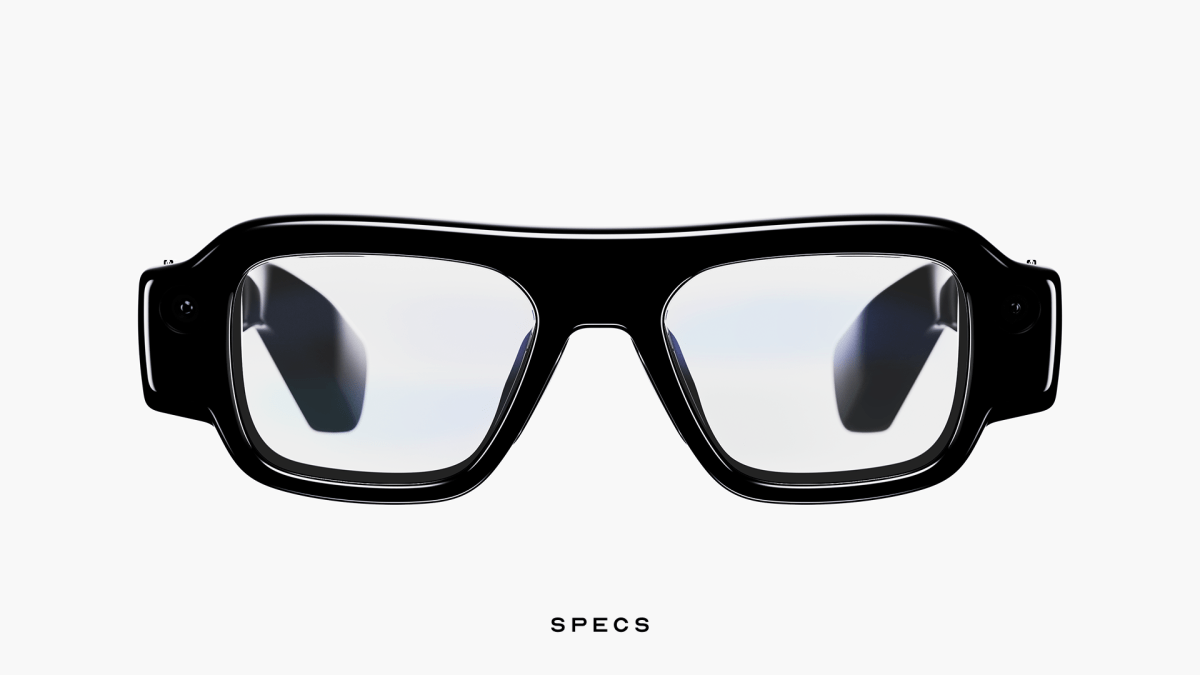
Visually, Specs looks like a fairly normal pair of glasses — albeit a slightly bulkier, goggle-like pair. That extra bulk comes down to a key design choice: unlike some competitors, all of the computing takes place on the actual device, and it conveniently lacks a puck or tether.
Specs runs on two Snapdragon processors, and it comes with up to four hours of continuous battery life, plus a charging case that extends that to 20 hours total.
But what can you actually do with them? For starters, there are games, including ones that support shared multi-player sessions between two users. Snap calls this feature “EyeConnect,” and it’s activated simply by two wearers making eye contact with each other.
You can also watch videos (Snap says the display offers a 51-degree field of view and 16 million colors), record point-of-view footage and, at least in theory, get work done since the glasses allow you to surf the internet, connect to productivity apps, and check your email.
One standout feature is contextual AI. Look at an object and ask about it, and the glasses can pull up information on what you’re seeing — a glimpse of the kind of AI-assistant layer that’s becoming a competitive battleground in this category.
The glasses come in two sizes — a 47mm model, which weighs 132 grams (approximately 4.6 ounces) and a 52 mm model, which weighs 136 grams (4.7 ounces). That makes them noticeably heavier than Meta’s Ray-Bans — the first-gen Wayfarers weigh under an ounce — but far lighter than Apple’s Vision Pro, which tips the scales at 26.4 to 28.2 ounces.
There are also privacy protections. On privacy, Specs follows Meta’s lead with a built-in LED light that glows while the device is recording. The company says that users will also have control over what data is stored, synced, or deleted.
When I was in Las Vegas for CES earlier this year, the Snap team let me demo an earlier version of the glasses. It was fun to play around with the apps and I found myself impressed by the contextual AI, but the device was also quite heavy and, after running for awhile, it could get hot.
From the looks of it, Snap has since slimmed down the hardware, making the glasses both less obtrusive and more efficient.
The bigger question is whether this decade-long innovation marathon will result in some sort of viable business for Snap. Specs enters a market that is increasingly saturated with competitors. Meta now leads with its popular Ray-Ban series, and Google has announced its own new line of AI-powered glasses.
As for who these glasses are for, Snap says it’s aiming first at tech enthusiasts, developers, and studios — though at $2,200, that audience is going to need some deep pockets to match their enthusiasm.
The cumbersome price highlights an ongoing dilemma for the smart glasses industry — which is that consumer interest has yet to go beyond mere curiosity to the kind of enthusiasm that can result in consistent profits.
As a result, no one is really making a profit. Even the industry’s current champ — Meta — is losing tons of money on its AR development division.
Snap has struggled over the past few years with a wobbling stock and a recent decline in North American user engagement. Despite launching well over a decade ago, the company is still not consistently profitable. In April, it also underwent a round of layoffs. Will Specs be the product to turn it all around and usher in the next evolution in computing? I guess we’ll have to wait and see.
When you purchase through links in our articles, we may earn a small commission. This doesn’t affect our editorial independence.
Lucas is a senior writer at TechCrunch, where he covers artificial intelligence, consumer tech, and startups. He previously covered AI and cybersecurity at Gizmodo. You can contact Lucas by emailing lucas.ropek@techcrunch.com.
Sponsorluk
Sponsorluk
Sponsorluk
Sponsorluk
Reklam
Kategoriler
Read More
The Hidden Cost of Loyalty: Why Staying With Your Bank Could Cost You We research all brands listed and may earn a fee from our partners. Research and financial considerations may influence how brands are displayed. Not all brands are included. Learn more. Loyalty isn’t always a two-way street, and that is certainly true for many customers’...

Activists say Israel has intercepted their Gaza aid flotilla near Crete Boats carrying activists and humanitarian aid for Palestinians in Gaza reposition in the port during a symbolic send-off as part of the Global Sumud Flotilla, in Barcelona, Spain, Sunday, April 12, 2026....

Unpacking Peter Thiel’s big bet on solar-powered cow collars Founders Fund has made its name backing what Peter Thiel calls “zero to one” companies — businesses that don’t just improve on existing ideas but create something entirely new. Its portfolio includes Facebook, SpaceX, and Palantir. Its latest bet is a New Zealand startup that puts solar-powered smart collars on cows. Halter, which...

Nigeria gunmen in deadly attack on Kwara villages as US military team's deployment confirmedGunmen reportedly kill dozens in Nigeria as US military deployment confirmedMakuochi OkaforBBC Africa, LagosAFP/Getty ImagesNigeria faces terrible security challenges across the countryDozens of people have been killed by unidentified gunmen in a ferocious attack on two villages in Nigeria's western...

Cape Verde: Tiny nation, massive World Cup dream Praia, Cape Verde (April 9, 2026) — Pedro Bettencourt, president of the country's prestigious youth football training school known by its Portuguese acronym EPIF, says he has seen a shift in young players since the national team's recent...