
ByPaul Adams
Diplomatic correspondent

When US President Donald Trump signed a ceasefire agreement with Iran during dinner at the Palace of Versailles last month, many saw an irony.
His host, French President Emanuel Macron, may have wanted to make sure the Memorandum of Understanding (MoU) was signed before Trump changed his mind, and possibly calculated that the gilded Hall of Mirrors would appeal to his guest.
But the choice of venue inevitably invited comparisons between the one-and-a-half page agreement and the extremely lengthy Treaty of Versailles, signed in 1919 at the end of World War One. The 1919 treaty reshaped Europe, but its demands for huge reparations left an angry and embittered Germany and helped to set the stage for another global conflagration just 20 years later.
Might the Iran deal, different in so many ways, nevertheless come to be seen as similarly fateful?
Almost three weeks later, a fragile ceasefire more or less holds. But after several skirmishes in and around the Strait of Hormuz, and with none of the issues that led to war anywhere close to being resolved, the situation in the Middle East looks every bit as precarious as it did before.

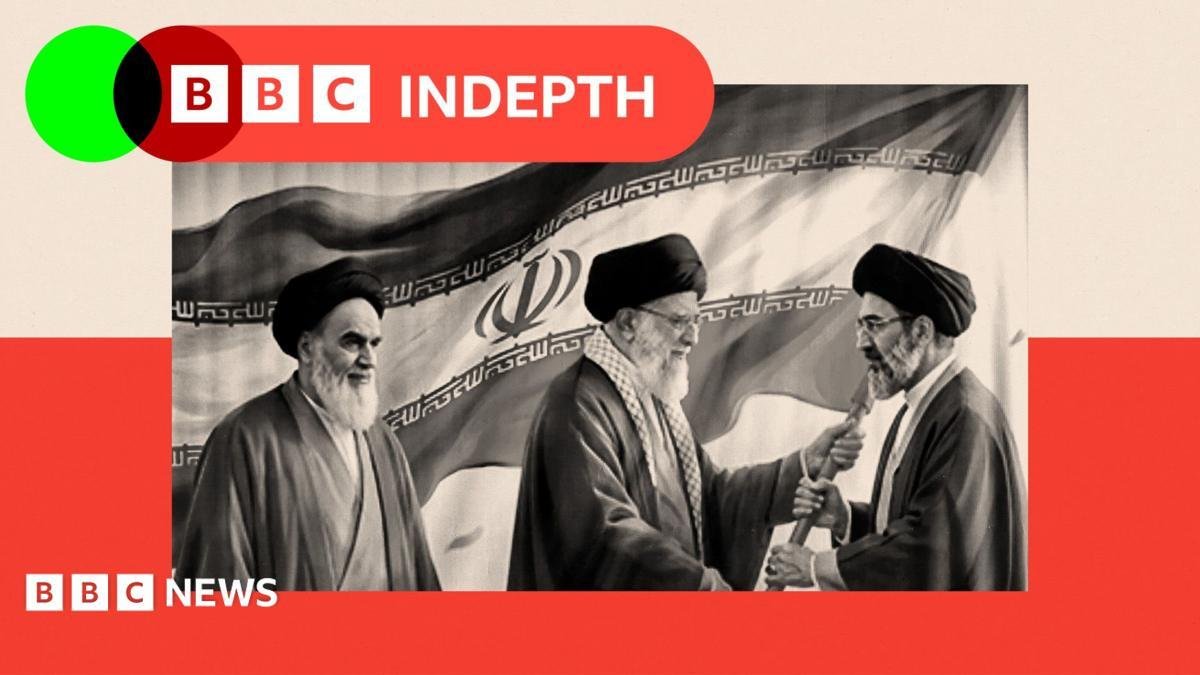
Khamenei will finally be laid to rest after a week-long funeral procession
Meanwhile, Iran is in the midst of profound change.
The country is saying farewell to its former supreme leader, Ayatollah Ali Khamenei, who was killed more than four months ago in the devastating joint US-Israeli airstrikes which began the war and decapitated much of the regime in Tehran.
It's a big moment: a grand reminder that the old guard has given way to the new. And with the new faces comes a new approach with its own implications.
The US and Israel may have sent many of the country's former leaders to early graves, but have they been replaced by even more formidable foes?
Reordering the chess board
"This war is much more consequential and larger than we have given it credit for thus far," Vali Nasr, professor of International Affairs and Middle East Studies at Johns Hopkins' School of Advanced International Studies, told me.
"All major wars of this magnitude ultimately reorder the chess board," he says. "This will do it for the Middle East."
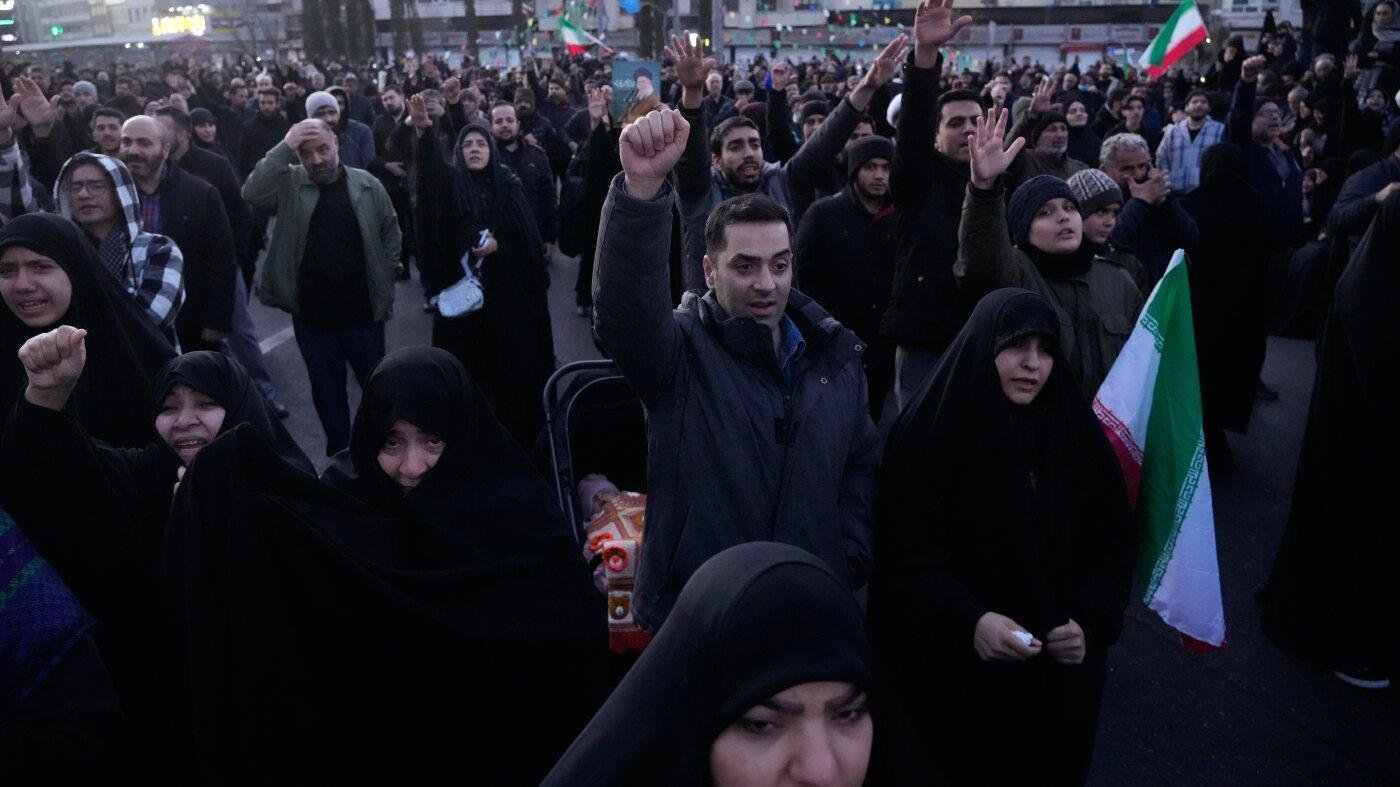
Back in January, Iran was wracked by popular protest which both Trump and Israeli Prime Minister Benjamin Netanyahu predicted might herald the collapse of the Islamic Republic.
Iran's economy was already in tatters after decades of international sanctions. The country was also still badly wounded after a 12-day war with the US and Israel six months earlier.
Iran's nuclear programme, long a diplomatic tool of leverage, had not been obliterated, as Trump boasted, but had been significantly damaged.
The whereabouts of its stockpile of uranium, believed to be enough for 10 or 11 atomic weapons if enriched further, was not certain, but much of it was thought to be buried under rubble near the Isfahan nuclear complex.
Further afield, Iran's "Axis of Resistance," a loose alliance of proxies and allies around the Middle East, had experienced a series of major setbacks.
In Syria, the regime of close Iranian ally Bashar al-Assad was gone, swept away in a few heady weeks at the end of 2024.
In Lebanon, Israel had assassinated leading members of the Iranian-backed Hezbollah group and decimated the ranks of its fighters with exploding pagers and walkie-talkies.
In the Gaza Strip, another Iranian ally, Hamas, had suffered a similar fate. Israel responded to the group's devastating October 2023 attacks with a relentless assault that laid waste to much of Gaza and killed tens of thousands of civilians.
And when - in response to the Gaza war - Iranian-backed Houthi rebels in Yemen had launched ballistic missiles at Israel and started attacking shipping in the Red Sea, Israel, the US and UK had all launched counter strikes, some of them targeting the group's leadership.

Iranians took to the streets prior to the start of the war
After so many setbacks at home and abroad, the consensus was that Iran was in a highly vulnerable state. The New York Times reported that Trump had received several intelligence reports indicating that Iran was weaker than at any point since the 1979 Islamic Revolution.
The idea that it could fight the US and Israel to a standstill seemed far-fetched.
And yet, that's what happened. The Islamic Republic is still standing, thanks in part to its ability to close one of the world's most important waterways, the Strait of Hormuz, and strangle the global economy.
Advantage, Tehran?
Trump is fond of saying that he's achieved regime change in Iran. Vali Nasr doesn't disagree, but says this has actually worked to Tehran's advantage.
"A whole new generation has taken over," he says. "They have a very clear agenda. They managed the war and now they're going to manage the peace as well."
The new leadership is not made up of the sort of people Washington is used to calling "woolly-brained apocalyptic ideologues", says Nasr, but of generally post-revolutionary leaders ruthlessly focussed on preserving the state and willing to act more decisively than their predecessors.
At 56, the country's new supreme leader Mojtaba Khamenei is 30 years younger than his father, Ali Khamenei, who was believed to be in frail physical condition when he was killed at the start of the war.
The president, Masoud Pezeshkian, is older at 71, but the generation that mounted the 1979 revolution are all gone.
Two key figures, the parliamentary speaker and chief negotiator Mohammad Bagher Ghalibaf and the commander-in-chief of the Revolutionary Guard, Ahmad Vahidi, are both in their 60s.
Like the new supreme leader, both have close links to the all-powerful Iranian Revolutionary Guard Corps (IRGC).
"They're children of the revolution," says Sanam Vakil, director of the Middle East and North Africa Programme at London's Chatham House think tank.
"An 86-year old is no longer guiding the ship of the Islamic Republic. The big handbrake on evolution of the system was Ali Khamenei."
For decades, the cautious Khamenei pursued a strategy sometimes dubbed "no war, no peace." His successors have been bolder, launching attacks on US military bases across the region and then, a few short weeks later, willing to sit down and negotiate an end to the war on terms which, on the face of it, are far from humiliating for Tehran.
"They've shown that they're willing to engage in war in a much more aggressive way than the previous generation," Nasr says.
When Trump ordered the air strike that killed the former Revolutionary Guard commander Qasem Soleimani in 2020, Iran deliberately telegraphed its intention to retaliate before launching 12 ballistic missiles at US bases in Iraq. No US service personnel were killed.

The ayatollah's death has brought internal and international change
This year, in the face of an all-out assault by the US and Israel, Iran demonstrated no such restraint, launching drone and missile attacks on multiple US bases across the region, including the headquarters of the Fifth Fleet in Bahrain and al-Udeid airbase in Qatar.
Six US soldiers were killed in Kuwait. Hundreds were injured in the course of the fighting.
Iran's willingness to attack US Gulf allies, target shipping and close the Strait of Hormuz - a vital shipping lane - also seemed to take the White House by surprise.
For decades, Washington had sought to contain Iran through its network of military facilities and burgeoning relationships with Gulf countries.
Iran's dramatic response to Israeli and US attacks suggested the strategy was no longer working.
"A lot of these countries were hoping that US military bases on their territory would provide them with security, not make them a target," says Ali Vaez, Iran project director for the International Crisis Group.
"The Gulf states are now questioning the credibility of the US security umbrella and their own deterrence strategy."
Reports suggest that most Gulf countries are putting out feelers to Iran, looking to repair relations with their dangerous neighbour. Citing an anonymous diplomat, Agence France-Presse even reported that Saudi Arabia, which restored relations with Tehran in 2023 after decades of emnity, was preparing to hold a "reconciliation summit", bringing together Iran and the Kingdom's Gulf neighbours.
But for all their anger at being caught in the middle of a war they didn't want and tried hard to avoid, Vaez doubts any are ready to sever their ties with the US military.
More from InDepth
"They are too reliant on the US to completely cut off security arrangements," he says. "They can try to hedge their bets, but at the end of the day, they don't have anywhere better to go."
Eschewing grander historical parallels, Vaez calls the current situation a "plastic moment", pregnant with possibility as old adversaries contemplate a different set of relationships.
"I sense a degree of realism that didn't exist in the past," he says.
But what about the people of Iran?
The new pragmatists
In January, Trump promised Iranian citizens that "help is on its way." Launching the war, on 28 February, he was even more explicit.
"When we are finished, take over your government," he urged them. "It will be yours to take."
Such promises have so far proved illusory. A new generation may be in charge in Tehran, but not one that has yet offered its people the prospect of a freer, more prosperous future.
With the regime utterly focussed on its own survival, Aniseh Bassiri Tabrizi, a Chatham House analyst based in Abu Dhabi, does not expect to see a different approach to dissent.

Trump made an appeal to the Iranian people
"They will keep a very, very strong focus on the street," she says.
But with the hijab no longer enforced outside state institutions, even before the war, and alcohol quietly available in Tehran restaurants, there are also signs that the regime may gradually be casting aside some of the old taboos.
Vali Nasr says it's all driven by necessity: the need to restore faith in the state.
"They made a pragmatic decision that their raison d'état [literally "reason of state"] requires them to relax these things," he says.
After the shock generated by its mass bloodletting in January, the regime has shown that it can at least protect the country's sovereignty.
For Iranians, the war has been profoundly confusing. Horror at the regime's brutality gradually gave way to a different kind of horror, as American and Israeli bombs rained down on their country, killing civilians and damaging vital infrastructure.
The deaths of scores of children at an elementary school in Minab, on the first day of the war, caused some to wonder who the real enemy was. After promising to liberate them, Israel and the US seemed intent on destroying the country.
But having stood up to the combined might of the US and Israel, can Iran's new leadership capitalise on this potentially fleeting opportunity to rebuild the regime's shattered legitimacy?
"This is a sort of China-after-Mao moment," Vaez says, "in the sense that the system as a whole recognises that something's got to give. This new leadership understands that it needs a new social contract."
Whether they can deliver it is an open question. More than ever, Iran is now run by the IRGC elite, while huge numbers of well-educated young people, still grieving over the loss of thousands of their friends in January's bloody crackdown, feel they have no real say in determining the country's future.
This is an inflection point, with Iran poised precariously between old certainties and future possibilities, both at home and abroad.
Despite a series of recent flare-ups in the Gulf, Tehran has embarked on a diplomatic process with the US which could result in what US Vice President JD Vance has already called "a fundamentally transformed relationship."

Iran was devastated by airstrikes
Faced with the tantalising prospect of sanctions relief in return for nuclear concessions, the regime's ability to manage the economy could help to restore its shattered domestic reputation.
Since the MoU was signed, Iran has already benefited from American sanctions waivers, allowing it to export crude oil and petroleum products for 60 days.
Other forms of relief could follow during the 60-day negotiating period, including the unfreezing of billions of dollars Iranian assets and, when a final deal is reached, the ultimate prize: the lifting of all international sanctions.
The MoU also refers to the creation of a $300bn (£225bn) "reconstruction and development" plan, although it remains unclear who will pay for it.
Taken together, these financial carrots offer a powerful incentive for Iran's new leaders to strike a deal.
Sanam Vakil agrees that the region is facing "a window of opportunity", but she's cautious.
"There's a scenario where they don't get a deal, where this drags on and on and President Trump gets impatient… and says, 'okay, it's time for round three.'"
None of the experts I spoke to believe the future is assured.
Decades of tortured relations between Iran, its Middle Eastern neighbours and the US have left behind a toxic legacy, characterised by deep suspicion and an almost total lack of trust.
There's no shortage of scope for failure: disagreements over Iran's nuclear programme, the future of the Strait of Hormuz, the war in Lebanon, as well as the entrenched views of hardliners everywhere.
After six tumultuous months, the region has started to look different. But a lot has to go right for this plastic moment to solidify into something better.
Top picture credit: AFP via Getty Images

BBC InDepth is the home on the website and app for the best analysis, with fresh perspectives that challenge assumptions and deep reporting on the biggest issues of the day. Emma Barnett and John Simpson bring their pick of the most thought-provoking deep reads and analysis, every Saturday. Sign up for the newsletter here
Get in touch
Are you personally affected by the issues raised in this story?