Xbox’s bold plan for the future sounds nearly impossible
Xbox’s bold plan for the future sounds nearly impossible
It’s another bad week for the video game industry. Microsoft outlined a series of layoffs on Monday that Xbox CEO Asha Sharma described as “the most significant restructure in Xbox history.” But buried in Sharma’s memo was a curiously optimistic statement: “I want Xbox to be one of the few companies that entertains more than a billion people each day and gives everyone the opportunity to create and connect,” she wrote.
Xbox has been a shambling mess after Microsoft spent billions of dollars with little to show for it, and now it aims to reach a much bigger audience with a much smaller team, amid one of the most challenging times in the industry’s history. Sharma’s billion-person goal would sound outlandish at the best of times. Right now it sounds nearly impossible.
The job cuts will see Xbox laying off 1,600 employees this summer, with another 1,600 expected over the next year. This is all part of broader restructuring at Microsoft, though the gaming division has been hit particularly hard. Four internal Xbox studios — Double Fine, Compulsion Games, Undead Labs, and Ninja Theory — are also being spun out as independent developers, which is perhaps the one bit of good news. Those studios were acquired over the years primarily to bolster the offerings on Game Pass, Microsoft’s subscription gaming service, but now it seems that the company is moving in a different direction.
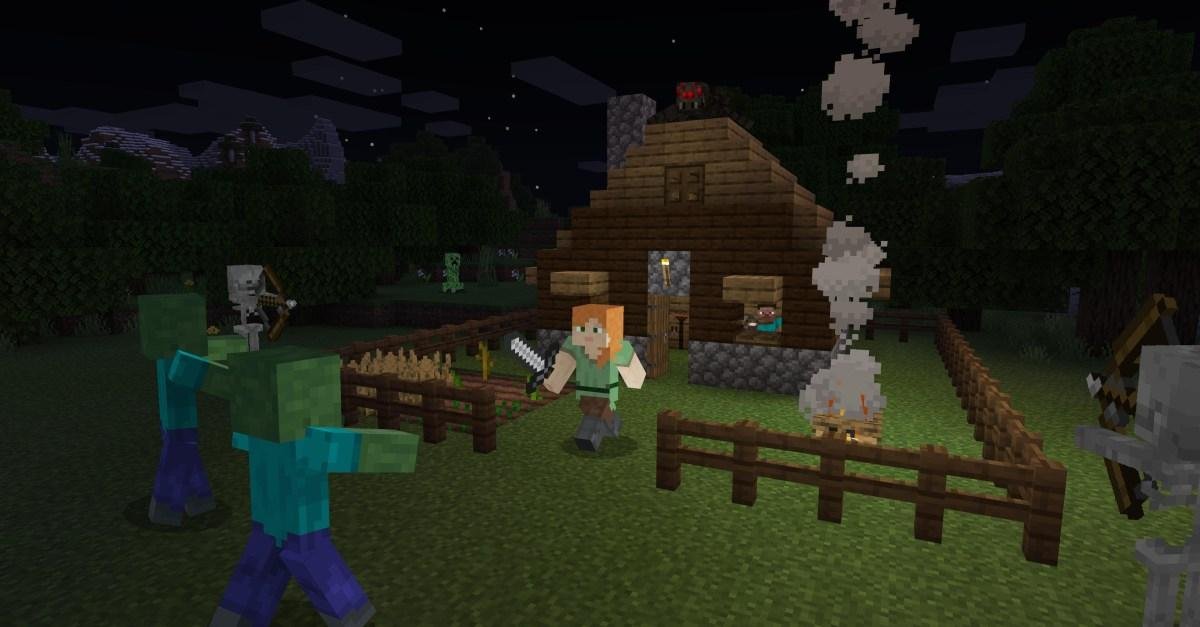
What is that direction? Well, it isn’t entirely clear. (Confusing strategies are pretty standard for Xbox of late.) Xbox has been losing a lot of money — Sharma claims that “in a typical year, we lost 64 cents for every dollar we invested” — and now it seems like the goal is to focus entirely on major properties that have a better chance of being blockbuster hits. Sharma says the teams that remain at Microsoft will “focus on higher priority projects.” That means not just those closely associated with the brand, like Halo and Gears of War, but also massively popular franchises under the Xbox umbrella, most notably Minecraft and Candy Crush.
In fact, as part of the most recent restructuring, Helen Chiang — who previously oversaw the Minecraft franchise — has been promoted to a new role as Xbox’s chief operating officer, reporting directly to Sharma. “She will bring our businesses together under one operating model, making sure we make clear investment decisions, learn from our successes and failures, and hold ourselves accountable for results,” Sharma said of Chiang’s upgraded role.
With that focus on bigger projects, some of the changes at Xbox make a certain sense. If your goal is to reach a billion people each day, a game from a quirky studio like Double Fine about a sentient lighthouse probably won’t move the needle in comparison to expanding Minecraft or Candy Crush.

Image: Amazon
But the reasoning for other cuts is much more opaque. If your goal is to lean into big games, why would you also be “making reductions” at places like Bethesda (Fallout, Elder Scrolls), id (Doom), and, perhaps Xbox’s most prolific studio, Obsidian (Avowed, The Outer Worlds)? It seems more like those teams would need further investment — and at the very least, to not have to spend the next year wondering if they’ll be hit by the next wave of layoffs — to create a major blockbuster at a time when the industry is as volatile and unpredictable as ever.
You only need to look at the sorry state of the live-service space to see how poorly things can go when companies are simply chasing big numbers. The entire industry saw Fortnite become a money-printing cultural phenomenon and hoped to re-create it for themselves, collectively spending billions of dollars in the process. The result was a graveyard of canceled games and studio closures. In 2026, even Fortnite itself is struggling.
This all makes Sharma’s goal of eventually reaching “a billion people each day” seem all the more absurd. It’s not clear what metric she is using to measure that number. It’s extremely unlikely Xbox will reach that in terms of daily players even if you factor in mobile games and an expansion into China and emerging markets like India, which Sharma is planning to do. King says that its lineup of games attracts more than 200 million monthly players, so you’d need quite a few Candy Crush apps to even get close. And that’s assuming that follow-ups will be as successful as the original, which is rarely the case (just ask Niantic). Sharma really wants to continue to push the Xbox brand into Hollywood, so maybe Fallout viewers — Amazon says 100 million people watched the first season — will count toward that goal. But even if you add up games, TV shows, and Game Pass subscribers, 1 billion people a day is a very large number.
So instead of a clear path forward at a time of heightened uncertainty, Xbox has a vague and seemingly unattainable goal in front of it. And it’ll be doing that with a team that is smaller and will continue to shrink. “These changes are about a bigger future for Xbox,” Sharma claims, “not a smaller one.” But it’s hard to see how that’s the case. Xbox was already experiencing an identity crisis heading into these layoffs, and this lack of vision isn’t making things any clearer.
Follow topics and authors from this story to see more like this in your personalized homepage feed and to receive email updates.
Sponsor
Zoekertjes
Zoekertjes
Zoekertjes
Categorieën
Read More
Nigeria sentences four to death over Owo Catholic church attack which killed 41Four sentenced to death for killing worshippers at Catholic church in Nigeria41 minutes agoChukwunaeme ObiejesiBBC Africa, AbujaReutersFive men were on trial but only four were sentenced after one was acquittedA court in Nigeria has sentenced four men to death for attacking a church in the south-western Ondo state in...

WWDC 2026 bonus live blog: Tech Talk with Craig FederighiFresh off the WWDC keynote presentation, The Verge has been invited to an “on-the-record technical deep dive into the bold new architecture enabling Apple Intelligence capabilities.” Apple SVP of Software Engineering Craig Federighi and his team will be there, and so will we.The revamped Apple Intelligence is at the heart of nearly every...

What Happened in Hulu's 'Paradise'? Here's a Recap Before Season 2 PremieresParadise, the Emmy-nominated drama from This Is Us creator Dan Fogelman and starring Sterling K. Brown, is returning for season 2. In the series, Brown plays Xavier Collins, the head security guard to former President Cal Bradford (James Marsden). When Cal is found dead, an investigation is put into motion that opens...

Trump announces a deal for Hamas to disarm, but many hurdles and uncertainty remain Palestinians salvage their belongings from the rubble of a building and tents destroyed in an Israeli airstrike in Gaza City, Thursday, July 30, 2026....
Today's Wordle Hints, Answer and Help for April 30, #1776Looking for the most recent Wordle answer? Click here for today's Wordle hints, as well as our daily answers and hints for The New York Times Mini Crossword, Connections, Connections: Sports Edition and Strands puzzles. Today's Wordle puzzle is a bit tricky, thanks to its repeated letter. If you need a new starter word,...