Venus Aerospace raises $90M Series B to build a new kind of rocket engine
Venus Aerospace raises $90M Series B to build a new kind of rocket engine
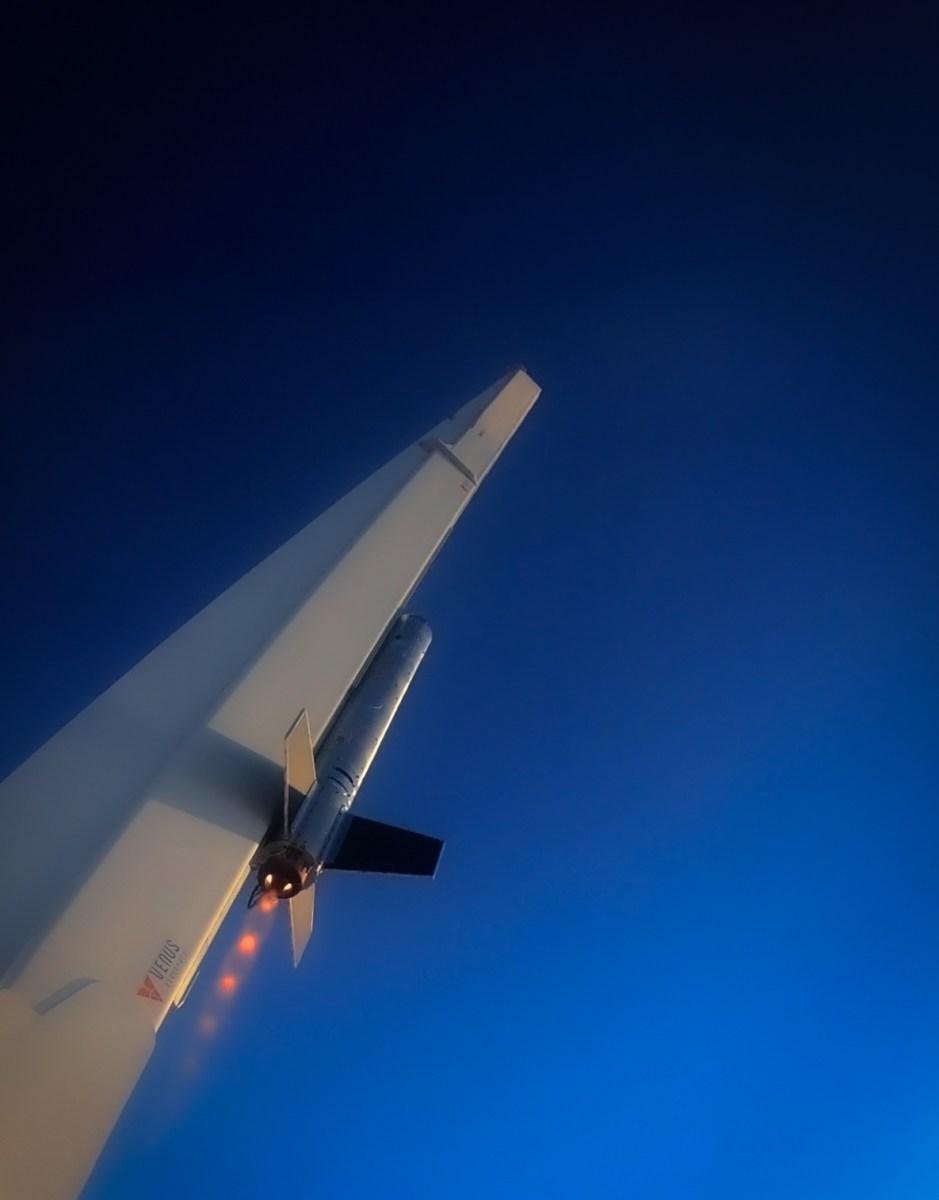
Build a new kind of rocket engine, and the world will beat a path to your door. Or at least that’s how it’s worked out for Venus Aerospace and its Rotating Detonation Rocket Engine (RDRE), an ultra-efficient way to hurl stuff into the sky.
The company was founded in 2020 by husband-and-wife duo, CEO Sassie Duggleby and CTO Andrew Duggleby, with the idea of developing clean-flying hypersonic jets for passenger travel. But after successfully demonstrating the engine last year, their plans changed.
“What happened when we flew last May is the world looked at us and said, ‘oh my gosh, you have a working RDRE, would you sell us one?’ And that wasn’t what we were expecting,” Sassie Duggleby told TechCrunch.
Now, the company is focused on hypersonic weapons development, replacing the solid rocket motors that power many missiles with its own thruster, and high-speed space vehicles that appeal to the military.
“Our propulsion architecture combines efficiency, throttling, reusability and manufacturability in a way that
customers need for real defense and space missions,” Andrew Duggleby said in a statement. “We are focused on translating technical progress into reliable systems for operational use.”
Venus announced a $90 million Series B round today that aims to put the company in a position to do just that by funding testing and development work on specific vehicle designs with potential customers. The funding round was led by Mercury Fund and saw participation from Lockheed Martin Ventures, MESH, PEAK6, Draper
Associates, Starboard Star Venture Capital, and Green Sands Equity.
The RDRE was dreamed up in the mid-20th century as a theoretically more efficient way to launch rockets; instead of burning propellants in a round chamber, the engine creates a continual supersonic wave of combustion that rotates through a circular channel. (Here’s a visualization.) The idea promised to waste less propellant, but the complex physics proved tricky to understand and control.
That’s changed in recent years, with the advent of 3D printing and better simulations. The first working test took place in 2020 at the University of Central Florida. NASA demonstrated an RDRE on the ground for the first time in 2022, while Japan’s space agency JAXA fired one for a few seconds in space in 2021. Venus’ 2025 test was the first time an RDRE launched a rocket into flight.
“When we first started Venus, the entire story was there’s a new type of rocket engine, we think it’s going to put out more heat and more thrust and be more efficient, but we think we know how to keep it from melting,” Sassie Duggleby said. “That’s been a lot of what our work has been over the last four years—how do we keep this engine from melting—and we’ve solved that.”
This year, the company was awarded a grant from the Texas Space Commission to build a new, larger test stand. That will be key for Venus: The longest it has fired its engine during 600 tests is 32 seconds, but it will likely need to burn for at least 6 to 15 minutes to meet the goals of its customers.
When you purchase through links in our articles, we may earn a small commission. This doesn’t affect our editorial independence.
Tim Fernholz is a journalist who writes about technology, finance and public policy. He has closely covered the rise of the private space industry and is the author of Rocket Billionaires: Elon Musk, Jeff Bezos and the New Space Race. Formerly, he was a senior reporter at Quartz, the global business news site, for more than a decade, and began his career as a political reporter in Washington, D.C. You can contact or verify outreach from Tim by emailing tim.fernholz@techcrunch.com or via an encrypted message to tim_fernholz.21 on Signal.
Sponsorizzato
Sponsorizzato
Sponsorizzato
Sponsorizzato
Pubblicità
Categorie
Leggi tutto
'It's like a decaying body': Australia farmers battle mouse plagueWatch: Mouse plague terrorising farmers in AustraliaA mouse plague is terrorising farmers across large swathes of Australia, with the rodents running rampant around homes and ravaging fields of grain.This new battle has seen farmers pour hundreds of thousands of dollars into either re-planting crops that have been devoured by the...
Over the past decade, artificial intelligence has steadily moved from research labs into mainstream technology. Early AI systems focused on automation—replacing repetitive tasks and streamlining workflows. However, in 2026, a new and far more impactful trend is taking shape: AI co-pilots. Instead of replacing human workers, AI systems are increasingly designed to collaborate with them....

Lucid Motors’ new CEO cuts 18% of staff to ‘simplify the company’ Lucid Motors is laying off 18% of its workforce, or around 1,500 employees, just four months after the EV maker cut 12% of its staff. The company said on Monday that it has also “eliminated the second shift” of EV production at its factory in Casa Grande, Arizona. The cuts are part of a bid by Lucid’s new CEO, Silvio Napoli, to...

Third round of Russia-Ukraine talks to take place as strikes continueHafsa KhalilandLaura GozziState Emergency Service of Ukraine/Anadolu via Getty ImagesUkrainian firefighters respond to a strike on residential buildings in Sumy Russian and Ukrainian delegations are set to meet in Geneva for the latest round of US-brokered talks, a week before the fourth anniversary of Moscow's full-scale...

Woman seriously injured in shark attack at Sydney beachReutersThe incident happened at Coogee Beach in SydneyA woman has been seriously injured after being bitten by a shark at a beach in Sydney, police have said.New South Wales Police said emergency services were called to Coogee Beach in the east of the city on Saturday morning. The woman, 35, was "pulled from the water by members of the...