What Are the First Signs of Congenital Lyme Disease?

Introduction
Pregnancy is a time when protecting both maternal and fetal health becomes especially important. For expectant parents who have been diagnosed with Lyme disease—or who may have been exposed to infected ticks questions about congenital Lyme disease often arise. One of the most common concerns is: What are the first signs of congenital Lyme disease?
Congenital Lyme disease refers to the possibility of Borrelia burgdorferi, the bacterium that causes Lyme disease, being transmitted from a pregnant person to the developing fetus. While this topic remains an area of ongoing scientific research, current evidence has not established a definitive cause-and-effect relationship between maternal Lyme disease and specific congenital health outcomes. However, researchers continue to investigate potential associations and emphasize the importance of timely diagnosis and appropriate medical care during pregnancy.
Understanding the possible first signs of congenital Lyme disease can help parents and healthcare providers recognize symptoms that may warrant further medical evaluation. It is important to remember that many of these signs are not unique to Lyme disease and can occur with a variety of medical conditions. A qualified healthcare professional should always evaluate any concerning symptoms in a newborn or infant.
At Holistic Therapy Tribe, we believe in providing balanced, evidence-aware educational information that supports informed conversations between patients and healthcare providers while respecting both conventional and holistic approaches to wellness.
What Is Congenital Lyme Disease?
Congenital Lyme disease is a term used to describe the possible transmission of Borrelia burgdorferi from a pregnant individual to the fetus during pregnancy. Lyme disease itself is a tick-borne illness primarily spread through the bite of infected blacklegged ticks.
Researchers continue to study whether transmission before birth occurs and, if it does, how often it happens. Although individual case reports have suggested possible associations, larger studies have produced mixed findings. Because of this, many medical organizations recommend careful monitoring and appropriate treatment of Lyme disease during pregnancy while acknowledging that additional high-quality research is needed.
According to the CDC Lyme disease overview, prompt diagnosis and recommended treatment during pregnancy are considered important for maternal health and may help reduce potential complications.
Can Lyme Disease Be Passed From Mother to Baby?
This is one of the most frequently searched questions about Lyme disease and pregnancy.
Current research suggests that transplacental transmission of Borrelia burgdorferi may be biologically possible, but the frequency, likelihood, and clinical significance remain uncertain. Scientific literature contains reports describing possible congenital infection, yet definitive evidence proving routine transmission has not been established.
Organizations such as the Centers for Disease Control and Prevention (CDC), the National Institutes of Health (NIH), and other research institutions continue to evaluate available evidence.
Because Lyme disease is an active area of medical research, healthcare providers typically recommend:
- Early recognition of Lyme disease symptoms during pregnancy
- Prompt medical evaluation after a suspected tick bite
- Appropriate testing when clinically indicated
- Following evidence-based treatment recommendations from qualified healthcare professionals
These measures are intended to protect both maternal and fetal health.
What Are the First Signs of Congenital Lyme Disease?
The first signs of congenital Lyme disease are not clearly defined because there is currently no single symptom pattern that confirms congenital infection. Instead, healthcare providers evaluate a combination of medical history, pregnancy history, clinical findings, and diagnostic testing.
Some infants who have been discussed in published case reports experienced symptoms shortly after birth, while others showed no obvious signs.
Possible early findings that have been described in medical literature include:
Feeding Difficulties
Some newborns may experience challenges with feeding, including:
- Difficulty latching
- Poor feeding endurance
- Reduced appetite
- Slower weight gain
These symptoms are common in many newborn conditions and are not specific to Lyme disease, but they may prompt further medical evaluation.
Increased Irritability
Persistent fussiness or unusual irritability has been reported in some infants with various medical conditions, including those evaluated for possible congenital infections.
Parents should seek medical advice if an infant appears consistently difficult to console or develops new behavioral changes.
Low Muscle Tone
Reduced muscle tone (hypotonia) may sometimes be noticed during newborn examinations.
Signs may include:
- Poor head control
- Floppiness
- Delayed motor responses
- Weak muscle strength
Because hypotonia has many possible causes, a comprehensive medical assessment is essential.
Poor Weight Gain
Healthy growth is an important indicator of infant well-being.
If a newborn is not gaining weight as expected despite adequate feeding, healthcare providers may investigate numerous potential causes, including nutritional, metabolic, neurological, infectious, or gastrointestinal conditions.
Sleep Disturbances
Some reports have described infants experiencing:
- Difficulty settling
- Frequent waking
- Excessive sleepiness
- Altered sleep patterns
These findings are nonspecific and should always be interpreted within the broader clinical picture.
Are Neurological Symptoms Possible?
One area receiving continued scientific attention is whether congenital exposure to Borrelia burgdorferi could contribute to neurological symptoms.
Researchers have investigated possible associations involving:
- Changes in muscle tone
- Developmental concerns
- Delayed achievement of developmental milestones
- Abnormal reflexes
- Increased irritability
It is important to emphasize that these findings are not unique to congenital Lyme disease and may occur in many pediatric neurological or developmental conditions.
Healthcare providers often perform a detailed neurological examination when developmental concerns arise, regardless of the underlying cause.
Could Skin Changes Be an Early Sign?
When people think of Lyme disease symptoms, they often picture the erythema migrans rash, commonly called the "bull's-eye" rash. In congenital Lyme disease, however, there is no established characteristic skin rash that reliably indicates infection in newborns.
Unlike individuals who develop Lyme disease after a tick bite, infants with suspected congenital exposure are not expected to have a tick bite history or the classic expanding rash. Instead, healthcare providers assess the overall clinical presentation, pregnancy history, and other possible explanations for any skin findings.
Some newborns may experience rashes or skin discoloration for reasons unrelated to Lyme disease, making careful medical evaluation essential before drawing conclusions.
Sponsored
Ads
Ads
Ads
Categories
Read More
15 Money Moves That Could Fund Your First Ounce of Gold in 2026 We research all brands listed and may earn a fee from our partners. Research and financial considerations may influence how brands are displayed. Not all brands are included. Learn more. Money is not a client of any investment adviser featured on this page. The information provided on this page is for...

Fusion power startup Zap Energy pulls a partial pivot, adding nuclear fission to the mix Nobody said building a fusion power plant would be easy. Physicists and engineers have been working for decades to crack the problem. But over the last year or so, fusion startup Zap Energy took a deeper look at its pathway to a working power plant and decided that it would be quicker to build a...

Popular Potato Chips Face FDA's Most Serious Recall: What to Know Utz Quality Foods voluntarily recalled select varieties of potato chips due to potential salmonella contamination in the seasoning powder. Corin Cesaric-Epple Editor Corin Cesaric-Epple is an Editor at CNET covering home and kitchen tech and meal kits, and reporting regularly on artificial intelligence. She earned...

The whole Pixel line could get more expensive this yearThe Pixel 11 could drop the 128GB storage configuration, while the Pixel Watch 5 may cost $50 more than last year’s model.The Pixel 11 could drop the 128GB storage configuration, while the Pixel Watch 5 may cost $50 more than last year’s model.by Emma RothJul 8, 2026, 2:43 PM UTCEmma Roth is a news writer who covers the streaming wars,...

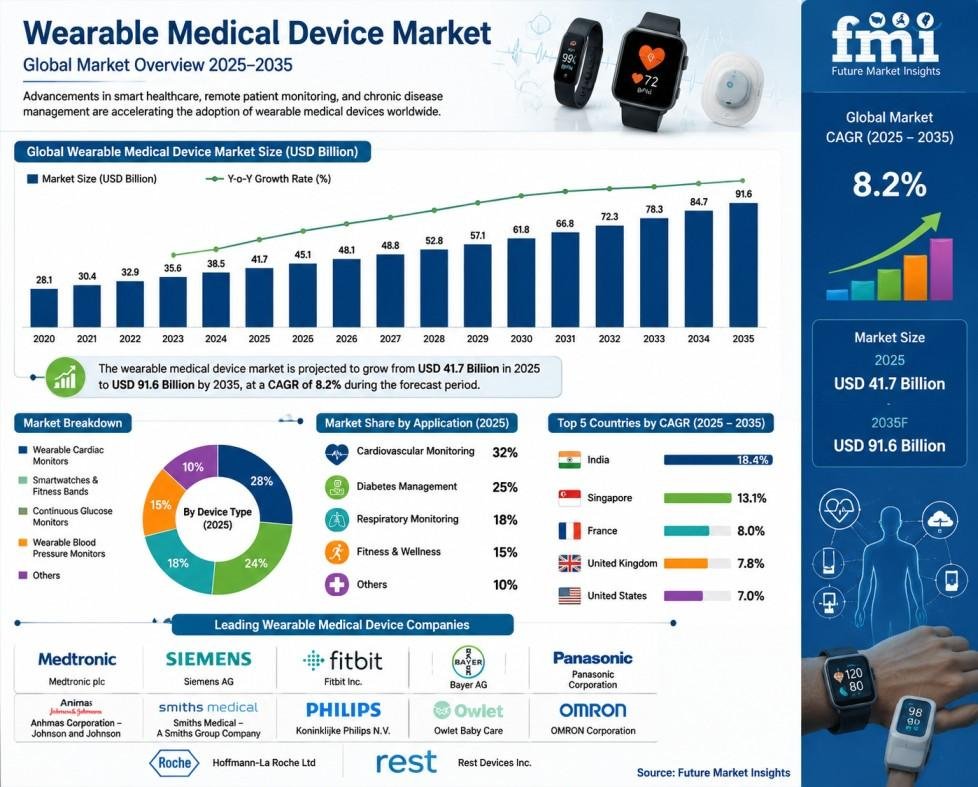
The global Wearable Medical Device Market is experiencing robust growth as healthcare systems increasingly embrace remote patient monitoring, connected healthcare, and home-based disease management. According to Future Market Insights (FMI), the market is projected to grow from USD 41.7 billion in 2025 to USD 91.6 billion by 2035, registering a 8.2% CAGR during the forecast period. Rising...