Automakers developing self-driving cars are betting on car insurance discounts becoming one of their chief selling points.
While the technology and the laws around it remain divisive, consumers excited about self-driving capabilities boast about safety gains and time back in the car for work or entertainment. And if reduced crash risk could also slash their insurance bills? Even better.
Must Read
Experts say that insurance companies will likely face pressure to offer more affordable car insurance if self-driving cars prove to be safer and lower insurers' costs. However, cheaper insurance is not guaranteed, and there are several reasons why self-driving technology may ultimately fail to deliver significant savings.
The self-driving mode must be engaged to save
Early versions of self-driving cars require owners to drive part of the time. Insurance discounts may only apply when self-driving modes are active, meaning the savings potential is limited.
Deals are already available to some Tesla drivers who use the Full Self-Driving (Supervised) mode, a partially autonomous feature that costs $99 per month and requires an alert human driver behind the wheel.
Lemonade's Tesla discount takes 50% off its usage-based per-mile charge when Tesla's FSD mode is engaged. The car's telematics data tells the insurer when FSD is active; for all other miles, the full rate applies.
To be eligible for Lemonade's discount, a Tesla must have Hardware 4 (HW4), which came out in 2023.
Online, Tesla owners have shared mixed reactions to the quotes they've received from Lemonade. The drivers who stand to save the most relative to a typical Lemonade policy seem to be owners of higher-end Teslas who drive thousands of miles per month and use FSD most of the time. It's unclear whether any of these drivers are saving enough with Lemonade's discount to fully offset the monthly cost of FSD.
The safety data is disputed
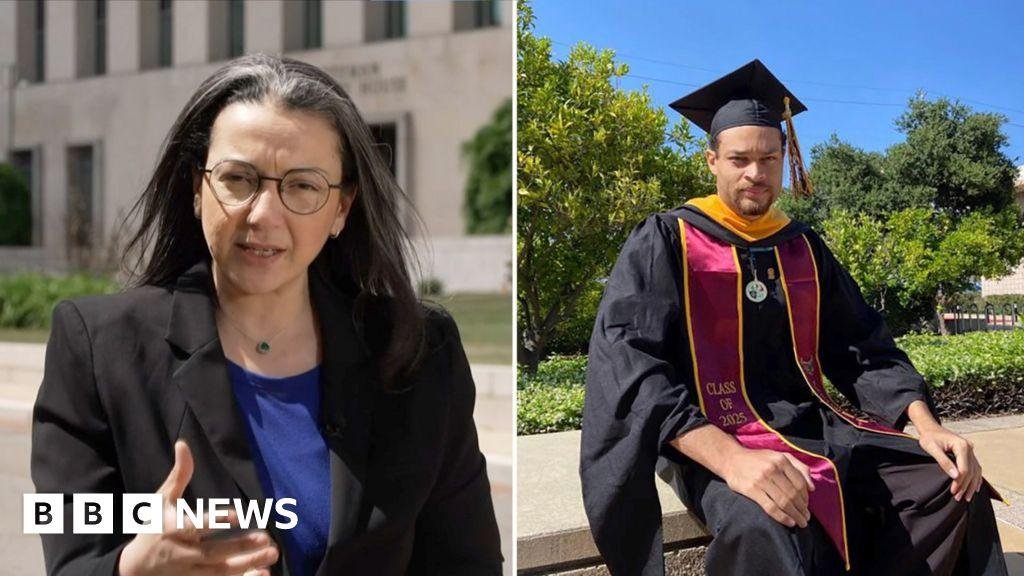
Maya Prosor, Lemonade’s chief business officer, tells Money that Lemonade came up with its 50% discount after reviewing Tesla's safety data and other outside reports. The company was convinced that miles driven using FSD were cheaper to insure than miles driven by humans.
"If that's the case, then it's on us as insurance companies to come in and figure out a way to more accurately price the fact that autonomous driving and machines driving is safer, and transfer that cost reduction — or transfer that benefit — back to consumers," she says.
Where People Are Protecting Their Trips and Vacations Right Now
Recent reporting from media outlets like Reuters, however, has cast doubt on the integrity of Tesla’s FSD safety stats, even prompting a letter from Senate Democrats demanding additional federal regulatory scrutiny.
Reuters wrote that Tesla took an "apples-and-oranges approach even though apples were readily available for comparison" to overstate FSD safety. The company compared its crash rates defined by airbag deployment to general crashes defined by the need for tow trucks, which is often a lower bar. Analysts told the outlet that Tesla vehicles with FSD actually traveled about three times farther between crashes than typical cars — not 10 times farther, as the company had claimed.
Bryant Walker Smith, an associate professor of law at the University of South Carolina, says the company-promoted statistics are "based on the combination of Tesla's [FSD] feature and an attentive human driver." That is a key distinction because if human intervention is preventing crashes, the stat package "tells us nothing about the performance of Tesla's system," Smith adds.
He also says he believes that FSD miles are a "proxy" for easier, safer miles because drivers are more likely to use the feature in favorable conditions.
"If this feature is activated in easier driving conditions on freeways in good weather when there's not construction, then we would already expect crash frequency to be much less," he says.
Broad car insurance savings for self-driving cars will only materialize if insurers become convinced that the safety data is rock solid.
High-tech cars are costly to repair
This is an expensive venture. Autonomous and partially autonomous driving will require additional cameras, sensors and software. On top of that, customers will likely have to pay add-on fees or subscriptions (or both) for self-driving technology, increasing car ownership costs.
Insurers may also raise premiums if additional tech makes repairs more complicated and expensive. This has been a trend for years: Even as cars are getting safer, they're becoming more expensive to insure.
A study from insurance marketplace Zebra assessing nine vehicle safety technologies found that just one actually lowered insurance costs — and only by about $7. S&P Global reported that "these same features can increase repair complexity and material costs." Smith adds that severe damage to electrical components can total a vehicle.
Lemonade states that it will continue to monitor the latest safety data and expects to boost discounts in the future.
"As FSD continues to improve and becomes even safer, we'll adjust our pricing to reflect it," the company's website reads.
As self-driving cars come to market, all insurers will have to update their assessments of both the frequency and costs of crashes. It's a lot to sort out.
"If you have very expensive equipment that needs to be replaced if there's a crash… then you could see insurers being very hesitant to offer lower rates," Smith says.