Framework Passes Rising Memory and Processor Costs to Buyers, With a Twist
Framework Passes Rising Memory and Processor Costs to Buyers, With a Twist
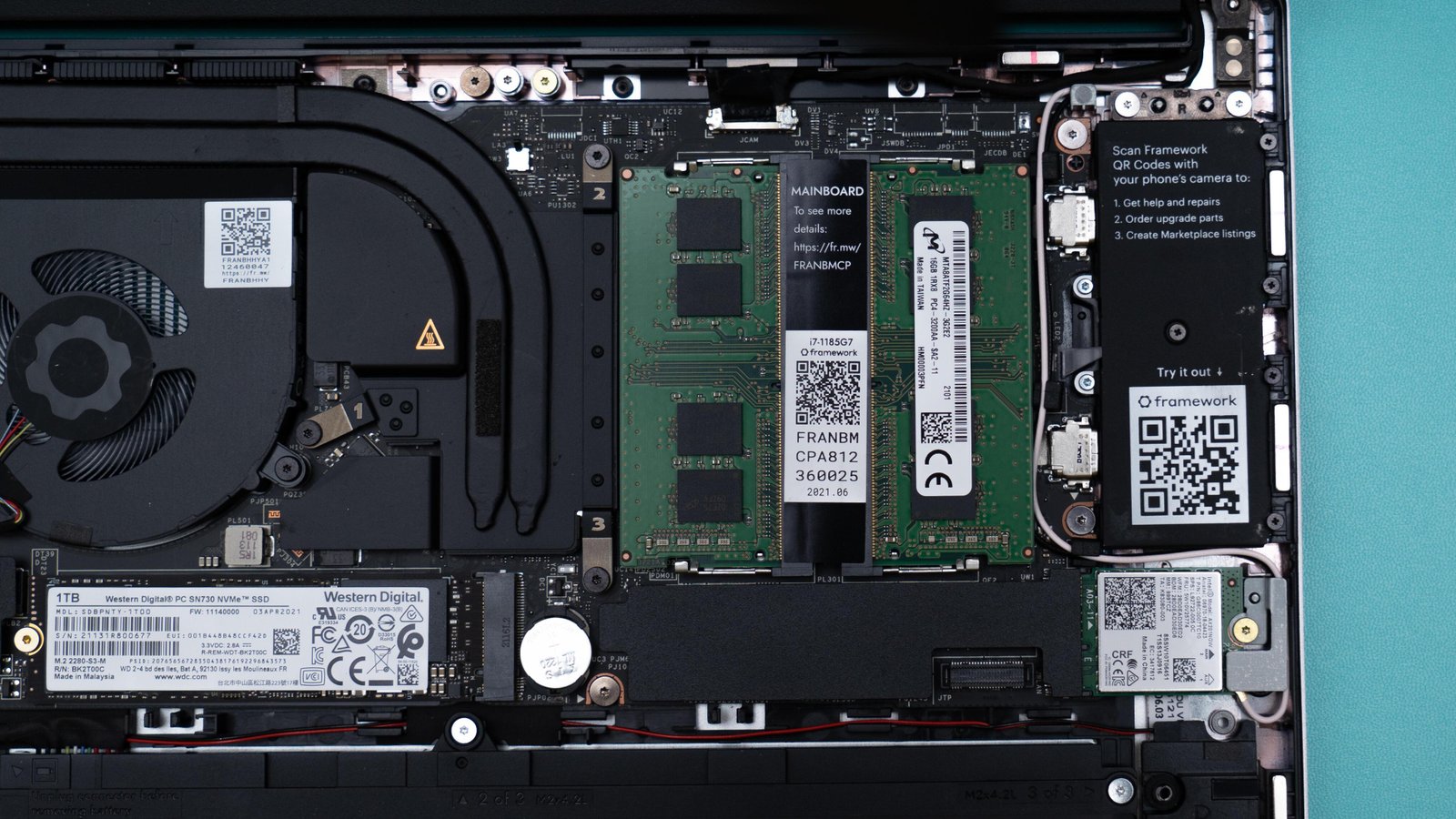
The maker of fully modular laptops, Framework, is getting hit by a sharp increase in memory prices, and the numbers are pretty astounding. Its LPCAMM2 modules have nearly doubled: The 32GB jumped from $439 to $800, and the 64GB jumped from $849 to $1,600.
In a July 22 news post on navigating the volatile silicon market, Framework’s CEO Nirav Patel said that the cost hikes from the supplier go “far beyond anything we had predicted and anything we’re able to absorb without placing our ability to operate at real financial risk.”
In short, the memory market has become so volatile that Framework is passing on the higher costs to buyers rather than absorbing the losses itself. That part’s not surprising.
But in perhaps a less conventional twist, to manage the orders it already took for its Framework Laptop 13 Pro, the company is rejiggering some presold configurations rather than canceling them. That means when inventory runs out, it’s downsizing configurations on preordered models and adjusting the price. Or more concretely, for later preorder batches that were set to ship with 64GB, it’s swapping in 32GB modules at the original 32GB price.
So yes, some customers will end up with a different memory configuration than they originally picked. But they won’t get the sticker shock. Framework is also allowing customers to cancel their preorders for a full refund if the new configuration doesn’t meet their needs.
The memory crunch
LPCAMM2 is a somewhat newer memory module format analogous to SODIMM, which can be used in laptops to allow upgrading or replacing the module. That’s in contrast to most lightweight laptops, where the memory is part of a system on a chip or soldered to the mainboard.
In a briefing with Micron, one of the biggest manufacturers of memory dies and modules, before it announced LPCAMM2 at CES 2024, my notes ended with “data center” scribbled on the bottom.
That’s because, as the cost of AI data center memory rises, the pain is spread across a larger ecosystem. According to Framework’s own blog post, “the boom in data center construction and server manufacturing is consuming immense amounts of energy.”
Dubbed “RAMageddon,” the crunch we’re experiencing is for anything created in a semiconductor fab, resulting in shortages of components for consumer laptops, smartphones, external storage devices, gaming consoles and more. That’s because fab resources are — or are expected to be — reallocated toward whatever’s ultimately the most profitable. And that pressure carries all the way down the supply chain, significantly boosting prices on the devices we buy.

Framework also attributes system price increases to factors beyond just memory, noting that the total cost of building those systems is going up in several places at once. So the sticker price reflects a costlier ingredient list, including the Core Ultra Series 3 processor for X7 and X9 models; Windows software license costs; and even the memory, storage and other chip components used in some Ryzen AI 300 Series configurations.
One of those things is not like the other, though. Despite no supply issues for bits, in early July, Microsoft raised Windows licensing fees as part of an across-the-board hike for all its products.
Big vs. small
Beyond the obvious, Framework’s news post offers some insight into aspects of the crisis beyond inflation. For one, it proves just how complicated computer pricing and configuration decisions can get when you can’t rely on a “one price fits all, so the only way is up” model. What normally works for large manufacturers like Apple, Lenovo, HP and Dell won’t fly for smaller companies. Take, for instance, Maingear’s bring-your-own-RAM option, which lets you buy a built-to-order system with RAM you ship to the custom PC builder.
For buyers, Framework’s unilateral configuration changes on preordered devices can be just as frustrating as a higher bill. If I order a laptop with 64GB, it’s because I need 64GB.
But the beauty of a Framework-type laptop is the modularity, which means I can always upgrade to a higher capacity when (or if) prices ever hit whatever the new normal becomes.
That upgradability also highlights why we should be concerned about the existential threat the component situation poses to small companies and custom builders stuck in the middle. For instance, Framework was the first to develop an all-modular, fully upgradable laptop design in response to the industry hitting peak soldered-and-sealed. Now, companies like Lenovo are backtracking a bit with some of their lines to increase repairability, as with the company’s latest X1 Carbon.
Big companies might get away with quietly shifting specs over time to address the memory crunch. But smaller companies like Framework are offering some creative alternatives, reacting publicly and in real time.

Lori Grunin
Senior Editor / Advice
I've been reviewing hardware and software, devising testing methodology and handed out buying advice for what seems like forever; I'm currently absorbed by computers and gaming hardware, but previously spent many years concentrating on cameras. I've also volunteered with a cat rescue for over 15 years doing adoptions, designing marketing materials, managing volunteers and, of course, photographing cats. See full bio
Patrocinado
Patrocinado
Patrocinado
Patrocinado
Anúncios
Categorias
Leia Mais
Artemis II Is Shooting for the Moon: All the Details About NASA's Historic MissionAre you ready for a bona fide moon shot? The upcoming Artemis II mission is one of the most exciting space excursions in recent memory. It'll be the first time humans have flown to the moon since December 1972, when the landmark Apollo program wrapped up, and NASA began shifting focus toward the space...

Stripe is reportedly eyeing deal to buy some or all of PayPal Stripe is considering a deal to buy some or all of PayPal Holdings, sources told Bloomberg, though talks are still in their very early stages and the deal may not happen. The news comes the same day Stripe released its annual letter, giving updates on the business. The big news was that Stripe is making a tender offer that values...

This One Killer Feature Sets the Samsung Galaxy S26 Ultra Apart From All Other PhonesThere are so many reasons not to buy a new phone in 2026. For starters, our existing phones last longer than ever if we take care of them. Plus, most new phones are way too similar – not only to each other, but to last year's batch. Finally, most of us won't have our heads easily turned by yet another AI sales...

The Witcher 3, Kingdom Come Deliverance 2 Bring the Heat to Xbox Game PassThe second half of February and early March could be considered one of the best stretches in recent memory for Xbox Game Pass subscribers. The Witcher 3: Wild Hunt, widely regarded as one of the best games of the past decade, and Kingdom Come: Deliverance 2 headline a lineup that leans heavily into sprawling,...

South Korea woman and doctors guilty of murder of newborn babyJake Kwon,Seoul Correspondent ,Koh EweandLeehyun Choi,BBC KoreanGetty ImagesSince an abortion ban was struck down in 2019, there have been no official restrictions on the termination of pregnancies in South KoreaA South Korean court has convicted a woman and her two doctors of murder for killing the baby she had delivered.The woman...