Here's why rock stars get stuck on a highway to tax hell when they tour Canada
Here's why rock stars get stuck on a highway to tax hell when they tour Canada
Article content
Add merchandise, say, $25 a head and that’s roughly $5.9 million in gross sales, with perhaps 35 per cent of that, or $2.05 million, flowing back as royalty, thus forcing a 25 per cent withholding tax.
Article content
On that combined $27.45 million, Regulation 105 and the 25 per cent royalty withholding would pull more than $4.3 million before the tour bus leaves the country. That’s a whole lotta Rosie held by the CRA against a final tax bill that, once touring costs are deducted, is almost certainly a fraction of that.
Article content
The recovery requires a T1 or T2 return to be filed under Section 115 of the Income Tax Act, depending on who was paid. The 25 per cent royalty withholding is a different animal: that’s generally a final tax; there’s no return to file to get it back.
Article content
Because 15 per cent of gross revenue almost always exceeds a touring act’s real Canadian tax liability once expenses are counted, the system allows for certain waivers.
Article content
Since 2018, the CRA has offered a simplified process for non-resident artists and athletes earning no more than $15,000 in Canada annually, which is handy for a support act, but useless for AC/DC. Above that threshold, touring artists don’t get the easier path other non-resident service providers can use. Instead, they get thunderstruck.
Article content
Article content
Budget 2024 proposed giving the CRA legislative authority to issue a single waiver covering multiple transactions over a specified period, rather than engagement by engagement, which is precisely the high voltage a touring act needs.
Article content
That measure became law through Bill C-15 earlier this year, but the CRA hasn’t yet built the process to use it. Separately, the CRA ran its own consultation through summer 2025 and has said administrative improvements are coming this year.
Article content
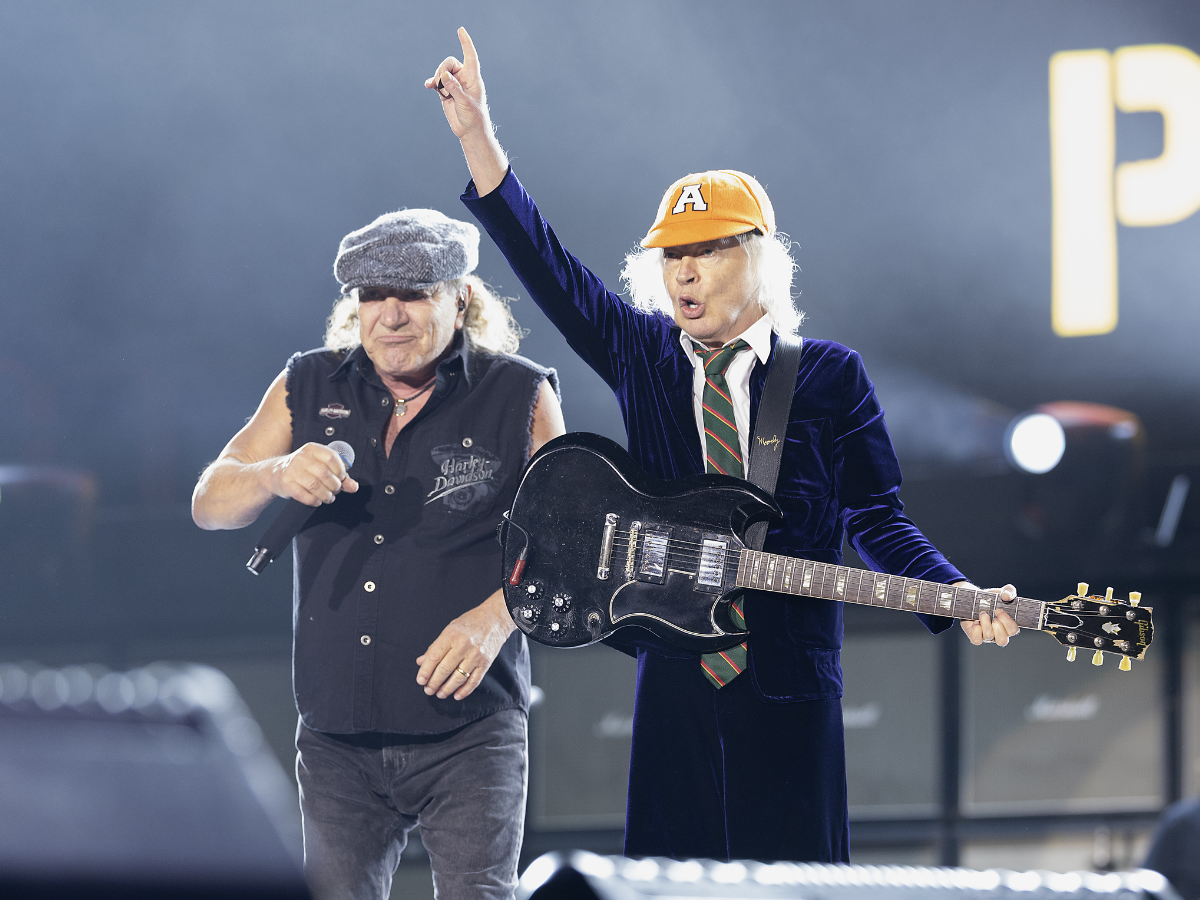
Angus Young and his advisers have long figured all of this out. But the mid-tier and emerging acts who don’t have a battalion of tax experts can often get shot down in flames by the compliance complexity. The rules aren’t unreasonable in principle — Canada has every right to tax income earned on its soil — but getting relief from over-withholding is disproportionately burdensome relative to the revenue at stake.
Article content
If Canada wants to be a more attractive stop on a global tour with its related economic benefits, the multi-transaction waiver authority in Bill C-15 is a real step forward. But it will only matter if the CRA implements it with fast turnaround times and clear, published criteria.
Article content
Article content
A touring act needs certainty measured in weeks, not months. In other words, the dirty deeds need to be done dirt cheap.
Article content
I’ll be keeping a stiff upper lip at the Vancouver show, trying to forget about Regulation 105 for two hours. Bill C-15 gave the CRA the amplifier. For those about to rock — and those about to withhold — we salute you.
Article content
Kim Moody, FCPA, FCA, TEP, is the founder of Moodys Tax/Moodys Private Client, a former chair of the Canadian Tax Foundation, former chair of the Society of Estate Practitioners (Canada) and has held many other leadership positions in the Canadian tax community. He can be reached at kgcm@kimgcmoody.com and his LinkedIn profile is https://www.linkedin.com/in/kimgcmoody.
Article content
_____________________________________________________________
Article content
If you like this story, sign up for the FP Investor Newsletter.
Article content
_____________________________________________________________
Article content

We apologize, but this video has failed to load.
Article content
Sponsorizzato
Sponsorizzato
Sponsorizzato
Sponsorizzato
Pubblicità
Categorie
Leggi tutto
Anthropic ramps up its political activities with a new PAC In Brief Posted: 1:22 PM PDT · April 3, 2026 Image Credits:Chris Ratcliffe/Bloomberg / Getty Images Anthropic has filed documents to create a new political action committee — a sign that, like its peers, the AI lab is committing significant resources toward influencing policy and...

Andy Burnham, a former mayor, could become the U.K.'s next prime minister Andy Burnham, a former mayor, could become the U.K.'s next prime minister Audio will be available later today. The former mayor of Manchester, England, Andy Burnham, may soon replace British Prime Minister Keir Starmer, who announced his resignation. Burnham...

These Robot Legs Helped Me Hike 12,000 Steps in the Grand Canyon, Without My Cane I thought the Hypershell X Ultra S exoskeleton would turn me into a superhero. Here's what it did instead. Adam Doud/CNET These Robot Legs Helped Me Hike 12,000 Steps in the Grand Canyon, Without My Cane The Hypershell hardware attaches to your body App-powered power turns...

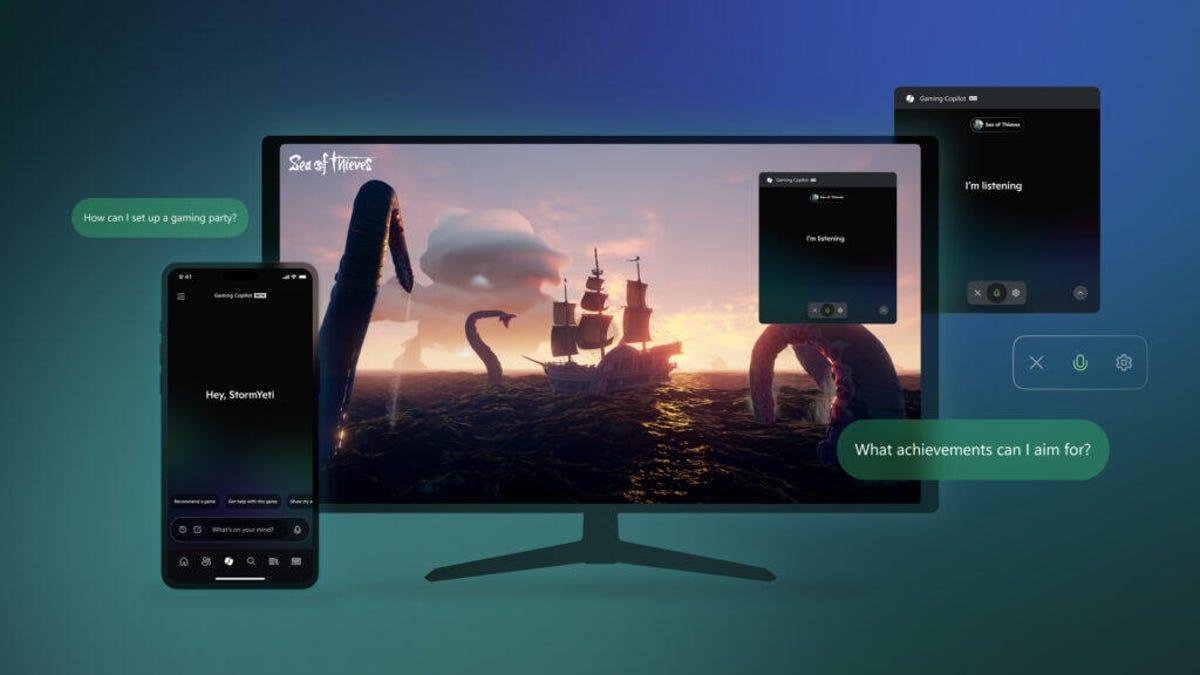
Relax, Xbox Owners: Copilot's Not Invading Your Game ConsoleIf you play games on an Xbox console and you don't like Microsoft's AI, you can breathe a little easier: Asha Sharma, CEO of Xbox, announced Tuesday that Copilot is no longer coming to the company's consoles.In an X post, the executive said the division needs to move faster, "deepen our connection with community, and address...
Startup Battlefield Australia application closes in days: Apply before July 6 What if one pitch changed everything? The last time TechCrunch brought Startup Battlefield to Sydney, two little-known startups stepped onto the stage. What happened next led to more than $85 million raised. If you want your shot, applications close in just a few days on July 6. In 2017, Manuri Gunawardena...