


What Makes Mold Steel Important in Automaticmachinefactory Mold Manufacturing
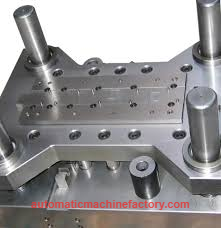
Mold performance depends on a combination of design, machining accuracy, processing conditions, and material characteristics, with mold steel serving as one of the most important foundations. A properly selected steel grade can influence hardness, wear resistance, thermal stability, surface finish, and dimensional consistency throughout repeated production cycles. For companies involved in Mold Manufacturing, understanding this relationship is useful when developing stamping dies, injection molds, drawing dies, and other forming tools. automaticmachinefactory, operated by Yongkang Tarun Technology Co., Ltd., provides mold technology solutions covering several metal mold categories and related manufacturing capabilities. When a mold must maintain its intended geometry during demanding production, how does steel selection affect its overall performance?
Steel Selection and Mold Structure
Mold steel is not simply a structural material. It forms the working surfaces that directly interact with materials during forming, stamping, injection, drawing, or other production operations. Its mechanical and thermal characteristics therefore need to correspond with the intended application.
A mold used for repeated stamping may experience continuous mechanical impact and sliding contact, while an injection mold can encounter elevated temperatures, pressure changes, and repeated thermal cycles. Drawing applications may place substantial stress on specific forming surfaces. These differences mean that material selection should begin with the operating environment rather than relying on a universal steel choice.
Hardness is one important characteristic because working surfaces need resistance against deformation and wear. Toughness also matters because excessive hardness without sufficient toughness may create a greater risk of cracking under certain loading conditions. The balance between these properties can influence the working stability of the completed tool.
The Mold Technology Division of automaticmachinefactory provides progressive stamping dies, single punch dies, hardware injection molds, and hardware drawing molds for different industrial requirements.
Wear Resistance and Production Stability
Repeated production places continuous contact stress on mold surfaces. Over time, unsuitable material properties can contribute to abrasion, deformation, edge deterioration, or changes in critical dimensions.
Wear resistance helps maintain the geometry of important working areas. For a stamping die, cutting edges and forming sections need to preserve their intended shape. For an injection mold, cavity and core surfaces influence the appearance and dimensions of molded components. A material with appropriate wear characteristics can support consistent operation during repeated cycles.
Surface treatment may also complement the characteristics of the base steel. Depending on the application, heat treatment, polishing, coating, or other finishing processes can influence surface behavior. These processes should be considered together with the original material because the final working condition results from the combination of steel composition, processing, and finishing.
Hardness and Toughness Balance
High hardness can provide useful resistance against surface wear, but hardness alone does not determine mold quality. A mold may encounter impact, bending, pressure, vibration, or thermal stress during operation, making toughness another important consideration.
If a working component is excessively brittle, sudden loading can produce cracks or fractures. If the material is too soft for the application, deformation and surface wear may occur at a faster rate. Consequently, manufacturers need to evaluate hardness and toughness together according to the intended production environment.
Heat treatment plays an important role in establishing the required balance. Controlled heating and cooling can modify the internal structure of steel, influencing hardness and mechanical behavior. The exact treatment depends on the selected grade, mold structure, dimensions, and intended application.
Thermal Performance in Injection Molds
Injection molds have particular thermal requirements because molten material enters the cavity at elevated temperature and the mold repeatedly experiences heating and cooling. These changes can influence dimensional stability and surface condition.
A suitable steel should maintain appropriate mechanical properties across the expected temperature range. Thermal conductivity can also influence how heat moves through the mold, while thermal expansion can affect dimensional relationships between different components.
The cooling system and steel selection should therefore be considered as part of the same engineering process. A mold designed with suitable cooling channels and appropriate material characteristics can support controlled thermal conditions during production.
automaticmachinefactory's hardware injection mold information describes injection molding as a process involving molten material entering a mold cavity under pressure before cooling and solidifying into the required shape. The company also notes that its mold solutions can accommodate complex designs and tight tolerances.
Surface Quality and Product Appearance
The surface condition of a mold directly influences the surface condition of the manufactured part. For applications where appearance is important, polishing quality and surface characteristics require careful attention.
A suitable steel grade can provide a workable foundation for machining and polishing. The steel's internal structure, hardness, cleanliness, and processing history may influence the final surface that can be achieved.
For injection molds, cavity surfaces can affect gloss, texture, release behavior, and visible marks on finished parts. For forming dies, working surfaces can influence how material moves across the tool.
Machining and finishing therefore cannot be separated from material selection. A steel grade that is appropriate for a specific product should also be compatible with the required machining and surface finishing processes.
Dimensional Accuracy
Precision is a central requirement in many industrial molds. Small dimensional changes can influence part fit, assembly, appearance, or functional performance.
Steel selection can affect dimensional stability during heat treatment and subsequent operation. If material changes significantly during thermal processing, additional machining or correction may be required to achieve the intended geometry.
Precision machining equipment also plays an important role. CNC machining, grinding, EDM, measurement equipment, and controlled finishing procedures can help establish the required dimensions. However, accurate machining cannot fully compensate for inappropriate material behavior.
The combination of suitable steel, controlled heat treatment, precision machining, and inspection provides a practical foundation for maintaining mold dimensions.
Mold Steel and Service Life
Service life is influenced by many factors, including material, design, production conditions, lubrication, maintenance, operating pressure, temperature, and the material being formed.
A suitable steel grade can help a mold withstand repeated mechanical and thermal stresses, while proper design distributes forces across appropriate structural areas. Maintenance can then help preserve the working condition established during manufacturing.
Regular inspection can identify wear before it affects finished products. Areas such as cutting edges, cavity surfaces, guide components, inserts, and cooling passages can be examined according to the mold's operating requirements.
When wear reaches an unsuitable level, polishing, sharpening, component replacement, or repair may restore working conditions. A maintenance program should therefore be planned alongside the original material and mold design.
Steel Selection for Different Mold Types
Different mold categories require different material considerations. Progressive stamping dies often need strong resistance to repeated cutting and forming actions. Single punch dies may place concentrated loads on specific working areas. Drawing molds experience friction and material flow along forming surfaces. Injection molds encounter pressure and thermal cycling.
automaticmachinefactory's Mold Technology Division covers these categories, including progressive stamping dies, single punch dies, hardware injection molds, and hardware drawing molds. The company's published information describes its mold business as serving automotive, electronics, consumer goods, and other industrial fields.
This range demonstrates why steel selection needs to be connected with the actual manufacturing process. A material suitable for one mold structure may not necessarily provide the desired characteristics in another application.
Manufacturing Equipment and Steel Performance
The quality of mold steel becomes useful only when the manufacturing process can preserve its intended characteristics. Cutting, milling, grinding, EDM, heat treatment, polishing, and inspection all contribute to the final tool.
Precision machinery can help maintain dimensional accuracy during machining, while appropriate processing methods reduce the possibility of unwanted surface damage or geometric deviation.
automaticmachinefactory states that its Mold Technology Division combines precision metal mold manufacturing with advanced machinery and engineering techniques, with a focus on accurate and durable molds for production applications.
The company also operates across metal processing machinery, industrial automation equipment, tools, abrasives, materials, molds, and related products, providing a broader manufacturing background around its mold technology activities.
Considering Steel During Mold Design
Steel selection should take place during the early design stage rather than after the mold structure has already been finalized. Designers can evaluate expected load, temperature, forming method, production volume, surface requirements, machining method, and maintenance conditions before determining an appropriate material approach.
This can also help coordinate mold dimensions with heat treatment and machining requirements. When material behavior is considered from the beginning, engineers can plan allowances and finishing procedures around the expected manufacturing characteristics.
For custom projects, communication between the buyer and manufacturer is especially important. Product drawings, forming materials, expected production conditions, dimensional requirements, and surface specifications provide useful information for material and process decisions.
Choosing a Mold Manufacturing Partner
A suitable mold supplier should be evaluated through its technical capabilities, manufacturing equipment, product range, quality processes, and understanding of different forming applications. Steel knowledge is valuable, but it should be supported by design, machining, heat treatment, finishing, assembly, and inspection capabilities.
Yongkang Tarun Technology Co., Ltd. states that it engages in research, development, manufacturing, and sales covering metal processing machinery, industrial automation equipment, molds and accessories, tools, abrasives, and related products. Its company information also describes cooperation with domestic and international agents and retailers.
For businesses researching Mold Manufacturing, the company's Mold Technology Division offers information on several mold categories and their industrial applications. This makes the platform useful for buyers who need to understand available mold structures before discussing project requirements.
Selecting a Suitable Mold Steel Solution
Mold steel affects a wide range of performance characteristics, including wear resistance, hardness, toughness, dimensional stability, surface quality, thermal behavior, and potential service life. However, steel should never be evaluated separately from mold design, machining, heat treatment, operating conditions, and maintenance.
For companies exploring industrial mold solutions, the automaticmachinefactory Mold Technology Division provides information covering stamping, injection, drawing, and related mold applications. Buyers can review the available manufacturing categories through https://www.automaticmachinefactory.com/ and then discuss material, structure, processing, and application requirements with the manufacturer. A carefully coordinated material and manufacturing approach can provide a practical foundation for stable mold operation across demanding production environments.
Sponsored
Ads
Ads
Ads
Categories
Read More
War in Iran strands tons of tea in Kenyan port War in Iran strands tons of tea in Kenyan port Audio will be available later today. Iran war-linked shipping disruptions have stranded 8 million kg of tea in the Kenyan port of Mombasa, costing the industry about $8 million a week in mounting losses.

Dell Takes Aim at the MacBook Neo With Its $599 XPS 13 LaptopApple reset the budget laptop market earlier this year when it debuted the MacBook Neo, a machine with a design superior to anything near its price of $599 and enough performance for most students. It was only a matter of time before Windows laptop-makers responded, and Dell has answered with the XPS 13. The XPS is Dell's premium...

Faisal Islam: Trump comments may have eased oil price spiral, but havoc remainsFaisal IslamEconomics editorGetty ImagesIt has been the most volatile day of oil trading in world history. The oil price spiralled to $115 (£86) a barrel at one point early on Monday, but word soon emerged of an emergency meeting of the G7 finance ministers.Reports suggested there could be a 300 million-barrel...

Nintendo Thinks Your Portion of Its Tariff Refund Windfall Should Be $0 Nintendo is fighting in court over whether it should have to share with customers any refund it receives from the US government for tariff fees, arguing against returning money to consumers who paid higher prices for its products. In March, Nintendo sued the federal government for its share of about $166 billion in...

Sprinklers are easy to overlook when you're busy planting, selling, and chasing the next unlock. Then you place one properly and the whole farm feels different. Crops finish sooner, watering stops eating your time, and smart use of GAG 2 Items can leave you with more cash for the upgrades that actually matter. Watch How the New Growth Cycle Works The current farming loop rewards players who...

