Introduction
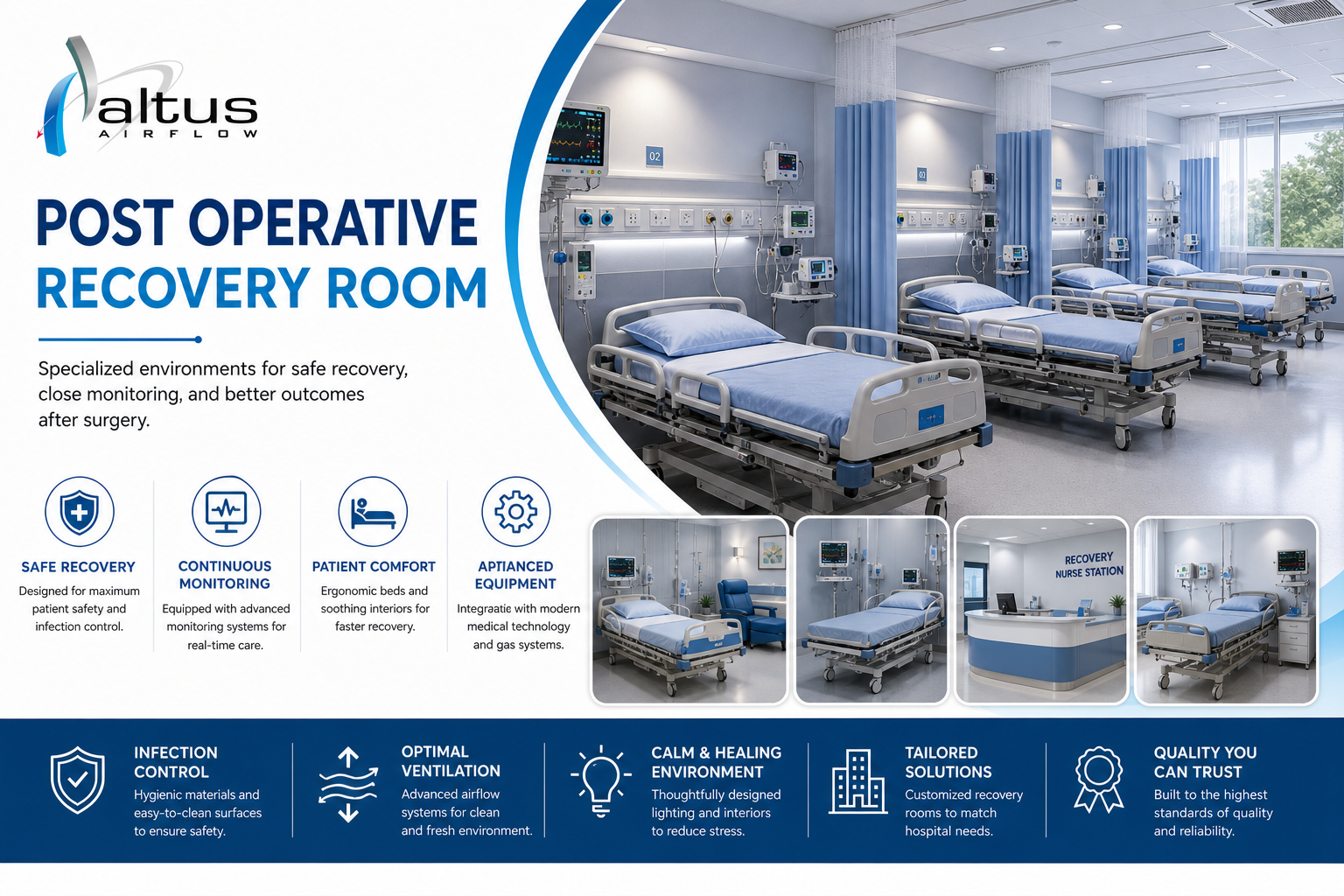
A Post Operative Recovery Room provides a controlled clinical environment where patients can be closely observed after surgery and anesthesia. The immediate period following an operation can require careful assessment because patients may experience changes in breathing, circulation, consciousness, temperature, pain, or other physiological functions. A properly planned recovery room gives trained healthcare professionals access to monitoring equipment, oxygen, suction, emergency resources, medications, and other facilities required for post-operative care.
Immediate Post-Surgical Observation
One of the primary purposes of the recovery room is to observe patients as they emerge from anesthesia.
Healthcare professionals can monitor the patient's condition and identify changes that may require further assessment or intervention.
Monitoring Vital Signs
Recovery rooms are equipped to support monitoring of important physiological parameters.
Depending on the patient's condition and clinical protocol, monitoring may include blood pressure, heart rate, oxygen saturation, respiratory rate, ECG, and temperature.
Airway and Breathing Support
Anesthesia can temporarily affect breathing and airway reflexes.
The recovery environment provides access to oxygen, suction, airway-management equipment, and other respiratory-support resources when clinically required.
Oxygen Support
Some patients require supplemental oxygen during the early recovery period.
Oxygen outlets and suitable delivery equipment can be positioned near patient beds according to clinical requirements and hospital infrastructure.
Circulatory Observation
Changes in blood pressure, heart rate, or other circulatory parameters may occur following surgery.
Continuous or intermittent monitoring allows trained professionals to assess these changes and determine appropriate clinical action.
Pain Management
Post-operative patients may experience pain as anesthesia wears off.
Recovery teams can assess pain and administer prescribed analgesia or other appropriate interventions while monitoring the patient's response.
Management of Nausea and Vomiting
Nausea and vomiting can occur following anesthesia or certain procedures.
Recovery staff can observe symptoms and provide prescribed treatment and supportive care according to the patient's clinical needs.
Temperature Management
Patients can experience changes in body temperature after surgery.
Suitable monitoring, warming equipment, blankets, environmental controls, or other measures may be used according to clinical requirements.
Emergency Response
A recovery room provides quick access to emergency resources if a patient's condition deteriorates.
Depending on hospital protocols, these resources can include crash carts, defibrillators, airway devices, emergency medications, oxygen, suction, and resuscitation equipment.
Continuous Nursing Care
Trained healthcare professionals observe patients throughout the recovery period.
They can assess vital signs, consciousness, breathing, pain, surgical-site concerns, and other clinically relevant factors according to established protocols.
Medical Gas Facilities
Recovery beds may require access to medical gases.
Depending on clinical requirements, infrastructure can provide oxygen, medical air, and vacuum outlets connected to the hospital's medical gas system.
Suction Facilities
Suction equipment can support airway management and other clinical procedures.
Central vacuum outlets or portable suction devices can be available according to the requirements of the recovery facility.
Electrical Infrastructure
Recovery rooms use multiple electrically powered devices.
Medical-grade electrical outlets, grounding, essential circuits, and emergency power provisions can support monitors, infusion pumps, beds, lighting, and other equipment.
Patient Monitoring Equipment
Monitoring systems provide information that helps healthcare professionals assess recovery.
Multi-parameter monitors can display selected physiological measurements and generate alerts when configured parameters reach specified limits.
Safe Patient Positioning
Patients may require appropriate positioning during the recovery period.
Suitable recovery beds and sufficient surrounding space allow healthcare professionals to assess and reposition patients when clinically necessary.
Infection-Control Measures
A clean clinical environment supports safe post-operative care.
Hand hygiene facilities, cleanable surfaces, suitable ventilation, organized storage, controlled access, and appropriate cleaning procedures can contribute to infection prevention.
Patient Privacy
Patients may require privacy during examinations, treatment, and personal care.
Curtains, screens, partitions, and suitable bed arrangements can provide privacy without preventing necessary clinical observation.
Communication Facilities
Recovery teams may need to coordinate with surgeons, anesthesiologists, operating theatres, wards, intensive care units, and other departments.
Nurse call systems, intercoms, telephones, and data connections can support communication.
Nursing Station and Observation
A strategically positioned nursing station can help staff coordinate patient observation.
Central monitoring displays, documentation systems, communication equipment, and essential supplies can be located within or near the staff work area.
Safe Transfer to the Next Care Area
Once the patient meets the relevant clinical criteria, they may be transferred to a ward, intensive care unit, or discharged according to the care plan.
Clear routes and suitable patient-transfer facilities help support safe movement between departments.
Equipment and Supply Storage
Recovery rooms need organized storage for frequently used supplies.
Storage can accommodate medications, consumables, monitoring accessories, protective equipment, respiratory supplies, and emergency resources.
Patient Comfort
The recovery environment should support comfort as well as clinical observation.
Appropriate temperature, lighting, privacy, noise management, comfortable beds, and convenient access to assistance can create a more supportive environment.
Modular Recovery Room Infrastructure
Hospitals may use modular systems to integrate medical services within recovery areas.
Wall and ceiling systems can incorporate medical gases, electrical connections, lighting, communication facilities, and equipment supports according to project requirements.
Conclusion
The main purpose of a Post Operative Recovery Room is to provide close observation and supportive care while patients recover from surgery and anesthesia. It allows trained healthcare professionals to monitor vital signs, assess breathing and circulation, manage pain and other post-operative symptoms, provide oxygen or suction when required, and respond quickly to emergencies. Appropriate monitoring equipment, medical utilities, emergency resources, infection-control facilities, communication systems, and safe transfer arrangements help create an environment suited to the immediate post-operative period.
FAQs
1. What purpose does a Post Operative Recovery Room serve?
A Post Operative Recovery Room provides supervised care and monitoring after surgery and anesthesia, helping healthcare professionals assess breathing, circulation, consciousness, pain, temperature, and other relevant recovery indicators.
2. How long does a patient stay in a recovery room?
The duration varies according to the procedure, anesthesia, patient condition, clinical assessment, and hospital protocol. Patients are transferred when the responsible clinical team determines that the relevant recovery criteria have been met.
3. What is monitored after surgery?
Depending on the patient's needs, healthcare professionals may monitor blood pressure, heart rate, oxygen saturation, respiratory rate, ECG, temperature, consciousness, pain, and other clinical parameters.
4. Why is oxygen available in recovery rooms?
Some patients may require supplemental oxygen after anesthesia or surgery. Oxygen infrastructure allows trained healthcare professionals to provide it when clinically indicated.
5. What happens when a patient's condition becomes unstable?
The recovery team assesses the patient and provides appropriate intervention according to clinical protocols. Emergency equipment, oxygen, suction, monitoring systems, medications, and resuscitation resources should be readily accessible.
Read Our Previous Blog----------->How can a Hospital Recovery Room support safe patient observation?