Texas Home Health Care: A Guide to Convenient and Personalized Support
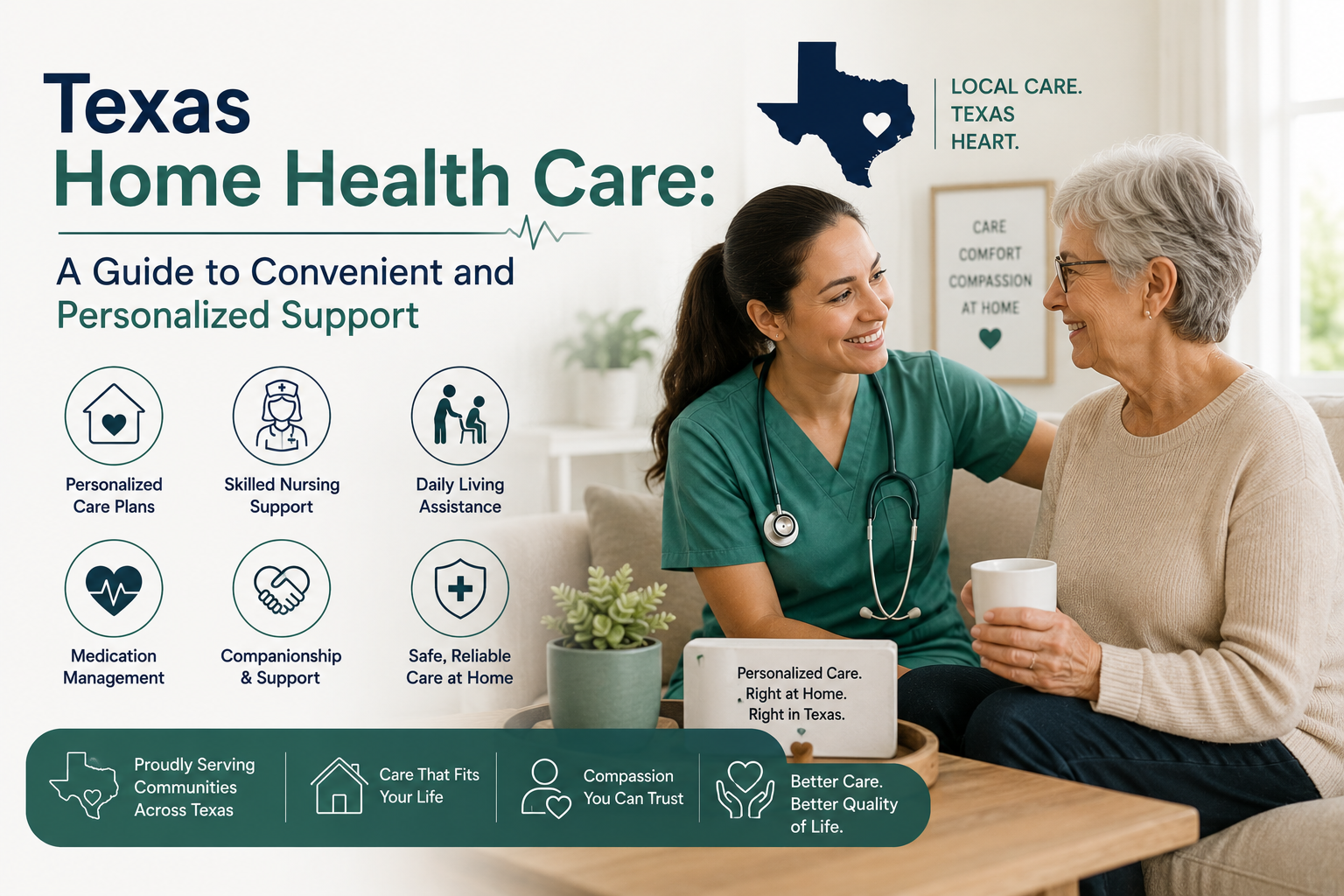
Healthcare is becoming more flexible as patients look for convenient ways to access support without making unnecessary trips to a medical office. Texas home health care can offer individuals and families access to certain health-related services in a more comfortable home environment, depending on their specific needs and the provider's scope of practice.
Understanding what these services include, who may benefit from them, and how they differ from other forms of healthcare can help people make informed decisions about their wellness.
What Is Texas Home Health Care?
Home health care generally refers to healthcare services delivered in a person's home rather than exclusively in a traditional clinical setting. The type of care available can vary significantly depending on the provider.
Some home-based services may focus on assistance with daily healthcare needs, while others may provide clinical services under the direction of qualified healthcare professionals. The appropriate level of support depends on factors such as the individual's health status, mobility, treatment needs, and care goals.
It is important to understand that home health care is not the same as home care. Home care may involve non-medical assistance with everyday activities, while home health care can involve medical services provided by qualified professionals.
Why Home-Based Healthcare Can Be Convenient
One of the major advantages of receiving appropriate healthcare services at home is convenience. Traveling to appointments can be difficult for people with demanding schedules, limited mobility, or other logistical challenges.
Home-based services may help reduce some of these barriers. Patients may also feel more comfortable discussing their health concerns in a familiar environment.
Convenience, however, should always be balanced with the need for appropriate medical evaluation. Some symptoms and conditions require in-person examination, urgent treatment, or specialized care that cannot safely be delivered at home.
Personalized Support for Individual Needs
Healthcare is not one-size-fits-all. Two people with similar concerns may have very different health histories, lifestyles, medications, and wellness goals.
Personalized support begins with understanding the individual's circumstances. Depending on the service, a healthcare professional may review medical history, current symptoms, laboratory information, medications, nutrition, lifestyle habits, and other relevant factors.
This information can help guide appropriate recommendations and follow-up care.
Services That May Be Available at Home
The services offered through home-based healthcare vary by organization and patient needs. Depending on the provider, options may include health assessments, laboratory testing, mobile phlebotomy, medication-related support, monitoring, follow-up consultations, and other services.
At-home laboratory collection can be particularly convenient for people who have difficulty traveling to a laboratory. However, not every test is appropriate for home collection, and testing should be selected based on the individual's healthcare needs.
The Connection Between Preventive Care and Home-Based Services
Preventive healthcare emphasizes understanding potential health concerns early and supporting healthier habits over time. Certain home-based services can complement preventive care by making appropriate testing and follow-up more accessible.
For example, laboratory information may help healthcare professionals evaluate specific biomarkers when testing is medically appropriate. Results can then be considered alongside symptoms, health history, nutrition, lifestyle, and other factors.
Routine preventive care should still include recommended screenings and evaluations through a primary care provider or appropriate specialist.
Functional Medicine and Personalized Health
Some individuals are interested in functional medicine because they want a broader discussion about factors that may influence their overall well-being. Functional medicine commonly emphasizes individualized assessment and may consider lifestyle, nutrition, environmental influences, symptoms, and laboratory findings as part of the evaluation.
People searching online for functional medicine near me may be looking for a healthcare professional who offers a personalized approach rather than a standardized wellness program. When choosing a provider, it is useful to review their qualifications, services, approach to testing, and follow-up process.
How Thryve Clinic Supports Convenient Wellness Care
Thryve Clinic focuses on personalized wellness and functional medicine services designed to make certain aspects of healthcare more convenient. Its services include advanced biomarker testing, at-home lab testing, mobile phlebotomy, telemedicine consultations, and personalized physician-guided wellness plans.
These options can be useful for individuals who want greater flexibility when completing appropriate testing or discussing wellness goals with a healthcare professional. Thryve Clinic's approach centers on using individual health information to support personalized recommendations rather than relying solely on generalized wellness advice.
Questions to Ask Before Choosing a Home Healthcare Provider
Before selecting a home-based healthcare service, consider whether the organization uses appropriately qualified healthcare professionals and clearly explains which services it provides.
It may also be helpful to ask how appointments are scheduled, how laboratory samples are handled, how results are communicated, and what happens if additional in-person medical evaluation becomes necessary.
Understanding costs, insurance coverage, privacy practices, and follow-up procedures can also help avoid surprises.
When Home Care May Not Be Appropriate
Although home-based services can provide convenience, they are not suitable for every medical situation. Severe symptoms, medical emergencies, rapidly worsening conditions, or concerns that require physical examination may require immediate in-person medical attention.
Home healthcare should therefore be viewed as one component of a broader healthcare strategy rather than a replacement for emergency services, primary care, or specialist treatment when those services are necessary.
Making Healthcare More Accessible
As healthcare continues to evolve, home-based services and telehealth may offer additional ways for people to access appropriate support. For many individuals, convenience can make it easier to stay engaged with routine health monitoring and follow-up.
Texas home health care can be a valuable option when services are appropriately matched to a person's needs and delivered by qualified professionals. Combining convenient care with preventive health practices, regular medical evaluations, and informed lifestyle choices can support a more consistent approach to long-term wellness.
Sponsorizzato
Pubblicità
Pubblicità
Pubblicità
Categorie
Leggi tutto
The U.S.-Iran ceasefire grows more distant. And, Congress faces a consequential week Good morning. You're reading the Up First newsletter. Subscribe here to get it delivered to your inbox, and listen to the Up First podcast for all the news you need to start your day. Today's top stories Strikes between the U.S. and Iran stretched into early today, marking a third...

U.K.'s parliament had a rare debate about the royals Europe February 24, 20265:51 PM ET Lauren Frayer DEBATING ROYALS IN PARLIAMENT...
Spotify expands AI remix and covers project with Merlin partnership During its second-quarter earnings call on Tuesday, Spotify again teased the upcoming release of a new product that will allow music fans to leverage AI to make covers and remixes of artists’ music, with the artists’ consent. The company also announced that Merlin, a licensing partner for independent labels and distributors,...

As the US and Venezuela mend relations, Trump touts it as a model for regime change As the US and Venezuela mend relations, Trump touts it as a model for regime change Audio will be available later today. Washington and Caracas moved to restore diplomatic ties, as President Trump touts Venezuela's post-Maduro transition as a model...
One fallen power line exposed a growing AI data center problem. Here’s how to fix it. A power line went down outside of Washington, DC, this week. Normally, the grid would only need a few seconds to recover from such an event. But this one took more than 10 minutes because more than 3 gigawatts of data centers stopped drawing power nearly simultaneously. The event caused voltage across the PJM...