


Advanced Trunnion Technology for Industrial Flow Control
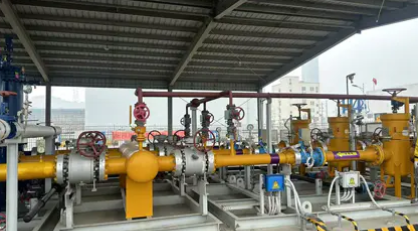
Critical pipeline infrastructure often operates under substantial mechanical loads, pressure fluctuations, temperature variations, vibration, and repeated opening and closing cycles. Oil and gas transportation, petrochemical facilities, LNG systems, power generation, and chemical processing networks therefore require flow control equipment with dependable structural and sealing performance. A professionally engineered Forged Steel Trunnion Mounted Ball Valve combines forged construction with a supported ball arrangement for demanding industrial service.
Forged steel manufacturing provides a strong foundation for components exposed to mechanical stress. During controlled forging, steel is formed under pressure, helping establish a dense and consistent material structure. Appropriate heat treatment, material inspection, and precision machining can further support mechanical integrity and dimensional stability.
The trunnion-mounted configuration provides fixed support for the ball. When process pressure acts on the ball, the supporting trunnion components absorb much of the resulting force. This reduces the load transmitted to the seats and can contribute to lower operating torque and smoother actuation.
Application analysis is an important stage of valve engineering. Manufacturers evaluate process media, pressure conditions, temperature range, pipeline configuration, installation environment, and expected operating cycles. These factors influence body construction, material selection, sealing arrangements, and actuator requirements.
Material compatibility has a direct effect on long-term valve performance. Forged carbon steel can provide suitable mechanical characteristics for many industrial systems, while forged stainless steel and specialized alloys may be considered where greater corrosion resistance is needed. Selecting materials according to actual service conditions helps reduce premature deterioration.
Precision machining is essential for reliable component interaction. CNC equipment can process the valve body, ball, trunnions, stem, seats, and sealing surfaces with controlled dimensions and consistent surface quality. Accurate machining supports proper alignment, smooth movement, and predictable operation throughout repeated service cycles.
Sealing performance remains central to pipeline isolation. The trunnion structure helps manage the forces acting on the ball, while carefully engineered seats maintain effective contact with the sealing surface. Appropriate materials and precision finishing help support stable sealing as pressure and temperature conditions change.
Internal flow geometry also influences pipeline performance. Properly designed flow passages allow process media to pass through the valve with limited turbulence and unnecessary pressure loss. Efficient hydraulic characteristics contribute to stable downstream conditions and effective operation of connected equipment.
Industrial valves may encounter vibration, thermal expansion, pressure cycling, and external mechanical forces. The strength of forged construction provides a robust structural foundation, while the trunnion arrangement helps distribute internal loads. Engineering analysis can identify areas of concentrated stress and support structural optimization.
Maintenance planning is important for valves installed in critical infrastructure. Durable forged components can reduce wear-related servicing, while practical internal arrangements can facilitate inspection and maintenance. Better serviceability helps operators manage downtime and maintain reliable pipeline operation.
Forged trunnion-mounted valves are widely considered for oil and gas pipelines, petrochemical facilities, LNG infrastructure, chemical plants, power generation projects, and industrial utility systems. Appropriate selection should reflect the process medium, operating environment, and project-specific requirements.
Automation provides greater operational flexibility through electric, pneumatic, or hydraulic actuation. Position monitoring can also provide useful information to centralized control platforms, allowing operators to manage pipeline assets more efficiently.
Durable valve construction supports responsible lifecycle management by reducing unnecessary replacement and material consumption. Reliable sealing can help limit process losses, while efficient flow control supports effective use of energy and process resources.
Professional manufacturers can customize valve configurations according to project requirements. Material grades, sealing arrangements, connection structures, actuator systems, and internal support components can be evaluated according to operating conditions and installation environments.
Companies seeking dependable Forged Steel Trunnion Mounted Ball Valve solutions can rely on Zhejiang Naishi Valve Co., Ltd. and its NCETEK brand for engineering development, precision manufacturing, testing, and industrial flow control expertise. Additional product information and valve solutions can be explored through https://www.ncevalve.com/product/.
Commandité
Annonces
Annonces
Annonces
Catégories
Lire la suite
Research Finds Guaranteed Income in Retirement Can Actually Help You Live Longer We research all brands listed and may earn a fee from our partners. Research and financial considerations may influence how brands are displayed. Not all brands are included. Learn more. Retirees who turn their savings into a guaranteed monthly income via...

Best Portable Projector for Movies and Gaming Anywhere in 2026Portable projectors let you create a TV-sized image, sometimes even bigger, on any flat surface. Also called mini projectors or beamers, many have batteries and built-in streaming so you can be entertained anywhere. That includes the outside of your house at night or the wall or ceiling of any room. Even sides of a tent can now be...

MMOEXP offers one of the most reliable solutions for purchasing game currency, items,accounts, and more.You can now use the exclusive discount code "east" to enjoy a 8% discount. Struggling to stack enough FC 26 Coins to build your dream Ultimate Team? Tired of losing progress to banned accounts from sketchy third-party hacks? Wondering how casual and competitive players can grow their...

Smart Printers Price The demand for intelligent printing technology has grown significantly as homes, offices, schools, and businesses increasingly rely on efficient document management. Modern printers are no longer limited to basic printing tasks; they now offer wireless connectivity, cloud printing, mobile compatibility, automatic scanning, and advanced security features. Before investing in...

Ukraine hits a Moscow oil refinery and other sites in a large-scale drone attack Ukraine strikes Moscow refinery in one of its largest drone attacks yet Black smoke rises from the area of the Russian oil producer Gazprom Neft's Moscow oil refinery on the...

