Canada's retaliation tests the limit of American power under Trump
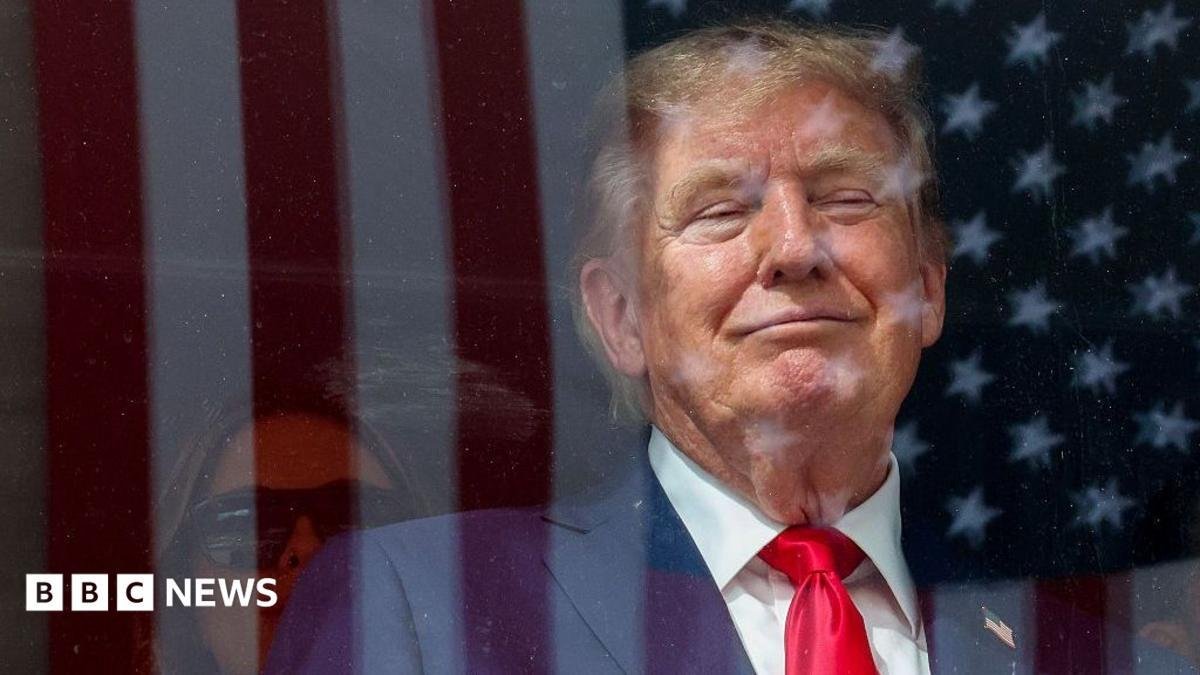
Canada's retaliation tests the limit of American power under Trump
Two days before US-Canada trade talks dramatically derailed, Vice-President JD Vance was telling an audience at a private fundraiser that Prime Minister Mark Carney was a "very sweet guy".
In a private audio recording leaked to the Canadian Press, Vance reportedly went on to say that Carney "comes in and puffs his chest out and says: 'I'm going to, like, out-tough Donald Trump.'"
He described that approach as "hilarious" because the Canadians ultimately "climb down on a lot of issues".
Maybe those comments, which received considerable coverage in Canada, were not the proximate cause for Carney's diplomats to pack up and go home over the weekend. But they certainly didn't help.
Carney's move abruptly terminated negotiations over a new trade agreement and sparked a fresh round of tariffs between neighbours who conduct more than $872bn (£640bn) in bilateral annual trade.
The serious and deepening rift - and Vance's comments - offer the latest example of a Trump administration willing to exert force on the global stage against friend and foe alike, again highlighting the potentially disruptive consequences of such actions.
What's more, if Trump thought the Canadians would cave in the face of American pressure - as many US allies have done over the past 19 months - he may have miscalculated. And the consequences of that mistake could linger for the rest of his presidency.
But power has limits. Trump's second term has been a continuous test of those limits - and, at times, a lesson in finding exactly where they are.
While obvious differences exist between a shooting war in Iran and a trade dispute with Canada, the lessons are not dissimilar. In both, the US faces a counterpart that, despite having far less overall power, retains the means to retaliate.
For Iran, that leverage lies in targeting US allies and disrupting global commerce by threatening maritime chokepoints like the Strait of Hormuz.
Canada, for its part, is beginning to test its own ability to inflict economic pain. Tuesday's targeted tariffs mark a first step. Future measures could include restricting US access to Canadian energy and critical minerals, alongside consumer boycotts of American goods.
"As the broader world shifts into a more economic security theatre, you see this game of chokepoints and leverage angles continue to pan out across supply chains," said DeLong. Countries just have to look for them, he added.
For the moment, clear exit ramps are scarce. Trump has escalated his rhetoric, repeatedly accusing Canada of "ripping off" the US, while Ontario Premier Doug Ford fired back by telling the American president to "kiss my ass".
"Every time we push allies and partners away, I think we incentivise them to look for new relationships and new partnerships rather than trying to acquiesce to US demands," said Imran Bayoumi, deputy director of the GeoStrategy Initiative at the Atlantic Council.
There is another possibility that Carney has aired publicly since Trump returned to office, however.
Canada may continue shifting away from the US altogether, charting a course that deliberately widens the distance between the two nations. As Carney noted: "We cannot depend on traditional alliances when the rules of the game have fundamentally changed."
While geographic proximity ensures the two countries will remain intertwined, the deeply integrated economic relationship of recent decades may be coming to an end.
In that respect, Canada presents a contrast with Mexico, which appears to be opting for even closer economic integration with the US. Meanwhile, other global trading partners - including US allies in Europe and Asia - are watching Canada's "elbows up" resistance as a plausible blueprint for future dealings with Trump.
"Ten years from now, this is going to be taught in classrooms," said DeLong. "You have these bifurcating paths within North America, and the question is: Are they going to come back together, or is this going to continue to split? And if it does, who benefits most in the long run?"
If the supposedly easygoing Canadians can stand up to their pugnacious – and powerful - neighbour, others may decide they can, too.
Sponsor
Zoekertjes
Zoekertjes
Zoekertjes
Categorieën
Read More
5 European nations say Alexei Navalny was poisoned and blame the Kremlin FILE - Russian opposition leader Alexei Navalny speaks to the media in front of security officers standing guard at the Foundation for Fighting Corruption office in Moscow, Russia, Thursday, Dec. 26, 2019....

Today's NYT Connections Hints, Answers and Help for Feb. 4, #969 Here are some hints and the answers for the NYT Connections puzzle for Feb. 4 #969. CNET editor Gael Fashingbauer Cooper, a journalist and pop-culture junkie, is co-author of "Whatever Happened to Pudding Pops? The Lost Toys, Tastes and Trends of the '70s and '80s," as well as "The Totally Sweet '90s." She's been a...
Designer toys have become a global phenomenon, blending creativity, storytelling, and collectible value into one exciting hobby. Among the brands winning the hearts of collectors is Nommi, a charming toy line celebrated for its adorable characters, artistic designs, and imaginative themes. Whether you're searching for a nommi blind box, a soft nommi plush, or a beautifully designed nommi...

Retiring This Year? Do This Before Your Paychecks Stop We research all brands listed and may earn a fee from our partners. Research and financial considerations may influence how brands are displayed. Not all brands are included. Learn more. Preparing for retirement can come with a lot of tasks, stress and excitement. Multiple decades of...

With Perplexity's Push for Hybrid AI, Your Laptop Could Function as a Data CenterPerplexity, an AI-powered search and answer engine, has a new way to turn personal devices into decentralized data centers. The company said Tuesday that it's adding a new hybrid local-server system to Personal Computer, its AI agent that can work across files, apps and the web. Starting in July, the system...