Percutaneous Endoscopic Gastrostomy (PEG) Tube: Procedure, Benefits, Risks, Lab Tests, and Recovery
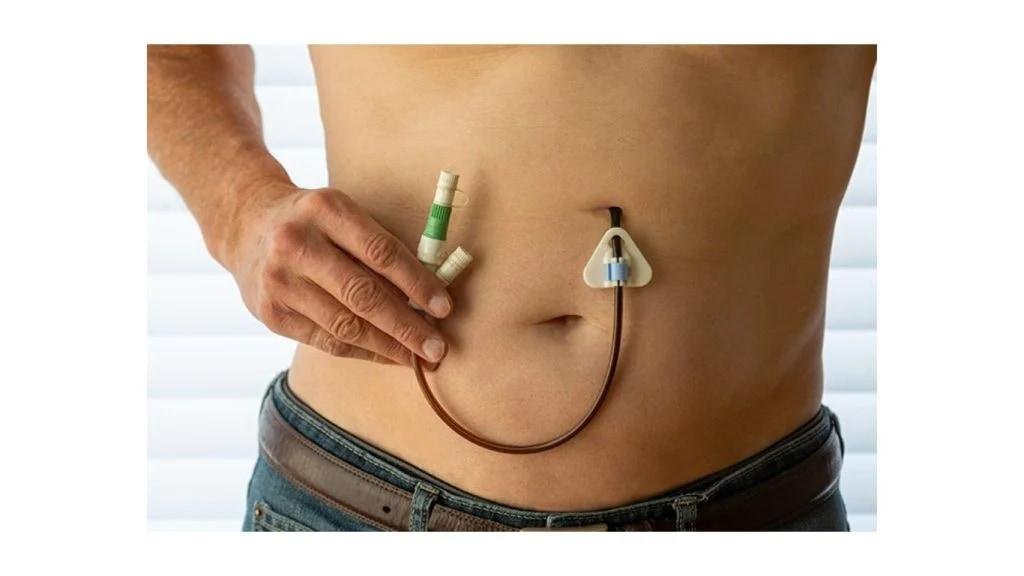
A percutaneous endoscopic gastrostomy (PEG) tube is a feeding tube placed directly through the abdominal wall into the stomach. It provides nutrition, fluids, and sometimes medicines to people who cannot safely eat or drink enough by mouth.
PEG tubes are commonly considered for people with swallowing difficulties caused by neurological conditions, stroke, head or neck cancer, certain injuries, or other illnesses affecting normal eating. Cleveland Clinic notes that PEG feeding can provide nutrition directly to the stomach when a person cannot safely chew or swallow or cannot obtain enough nutrition orally.
PEG placement is an established medical procedure, but it is not appropriate for every patient. A gastroenterologist and the wider healthcare team should consider the person's underlying condition, expected duration of feeding support, nutritional needs, swallowing ability, and overall health before recommending it.
What Is a PEG Tube?
PEG stands for percutaneous endoscopic gastrostomy:
- Percutaneous means through the skin.
- Endoscopic refers to the use of an endoscope, a flexible camera passed through the mouth into the stomach.
- Gastrostomy means creating an opening into the stomach.
One end of the PEG tube remains inside the stomach while the other remains outside the abdomen. Special liquid nutrition, water, and suitable medications can then be given through the tube.
PEG feeding bypasses the need to swallow, although some patients may still be able to eat or drink safely by mouth after placement. Whether oral eating is allowed depends on the reason for the PEG and the patient's swallowing assessment.
Why Is a PEG Tube Needed?
A PEG tube is usually considered when a person cannot meet nutritional or hydration needs through normal eating for a prolonged period.
Conditions that may lead to PEG feeding include:
- Stroke causing difficulty swallowing
- Neurological disorders
- Brain injury
- Head and neck cancer
- Head or neck surgery
- Severe swallowing disorders
- Certain traumatic injuries
- Prolonged unconsciousness
- Malnutrition when adequate oral intake is not possible
PEG placement does not treat the underlying disease itself. Instead, it provides a route for nutrition, hydration, and medications while the underlying condition is managed.
How Is a PEG Tube Inserted?
PEG placement is generally performed in an endoscopy unit or hospital.
Before the procedure, the healthcare team reviews the patient's medical conditions, medicines, allergies, nutritional status, and bleeding risks. Instructions regarding fasting and medications are provided beforehand.
During the procedure, an endoscope is passed through the mouth and down into the stomach. This allows the gastroenterologist to see inside the stomach and identify an appropriate site for the tube.
The abdominal skin is cleaned, local anesthetic is used, and a small opening is created through which the feeding tube is positioned into the stomach. Sedation is commonly used, and antibiotics are generally administered to help reduce infection risk.
Cleveland Clinic reports that the procedure itself commonly takes around 20 to 30 minutes, although preparation and recovery make the total hospital visit longer.
Benefits of a PEG Tube
The major benefit of PEG feeding is providing reliable nutritional support when eating normally is difficult or unsafe.
A PEG tube can help deliver:
- Calories and nutrients
- Fluids for hydration
- Suitable medications
- Long-term enteral nutrition
Because the tube enters the stomach directly, it can be more practical for longer-term feeding than a tube passed through the nose.
For people with severe swallowing difficulties, PEG feeding also avoids the need to swallow nutrition. However, it is important to understand that having a PEG does not completely eliminate the risk of aspiration, because saliva or stomach contents may still enter the lungs.
Lab Tests Before PEG Tube Placement
Not every patient requires the same blood tests before PEG insertion.
The American Society for Gastrointestinal Endoscopy (ASGE) recommends that pre-endoscopy laboratory testing be selected according to medical history, physical examination, medications, and procedural risks, rather than routinely ordering every possible test in healthy patients.
Depending on the patient's condition, tests may include:
|
Lab Test |
Why It May Be Ordered |
|
Complete Blood Count (CBC) |
May assess anemia, infection, hemoglobin, and platelet count when clinically indicated |
|
Platelet Count |
Helps evaluate bleeding risk when platelet abnormalities are suspected |
|
PT/INR |
May assess blood clotting, especially in patients with bleeding risks or certain anticoagulants |
|
aPTT |
May be appropriate when a coagulation disorder or medication effect is suspected |
|
May identify sodium, potassium, or other abnormalities in medically complex or malnourished patients |
|
|
Kidney Function Tests |
May be relevant to overall medical assessment and medication planning |
|
Blood Glucose |
Important when diabetes or abnormal glucose control is a concern |
|
Pregnancy Test |
May be considered in patients of childbearing potential when pregnancy status is uncertain |
ASGE specifically recommends against automatically performing routine coagulation tests, hemoglobin/hematocrit, chemistry tests, and several other investigations before endoscopy in otherwise healthy patients. Testing should be individualized.
Therefore, a patient should not assume that every test in this table is mandatory before PEG placement.
Blood-Thinning Medicines and PEG Placement
Medication review is particularly important because PEG placement carries a risk of bleeding.
Current ASGE guidance suggests against routinely withholding antiplatelet medications, including dual-antiplatelet therapy, solely because PEG placement is planned. For patients taking anticoagulants, management should involve an individualized, multidisciplinary discussion that weighs bleeding risk against the danger of cardiovascular or thromboembolic events from stopping treatment.
Patients should never stop anticoagulants, aspirin, antiplatelet drugs, or other prescribed medications on their own before PEG insertion.
What Happens After PEG Placement?
After the procedure, healthcare professionals monitor the patient for bleeding, pain, sedation-related problems, and other complications.
Mild discomfort around the insertion site and abdominal cramping can occur. Cleveland Clinic states that procedure-related pain usually decreases within approximately 24 to 48 hours. Some drainage around the insertion site may also occur during early recovery.
An important development in modern PEG care concerns feeding time. Current ASGE guidance recommends that, when there are no clinical contraindications, feeding through a newly placed PEG may begin within four hours rather than being routinely delayed.
The actual feeding schedule should always be determined by the patient's healthcare team.
PEG Tube Care at Home
Correct care helps reduce infection, blockage, leakage, and skin problems.
Patients and caregivers are usually taught how to clean the area around the tube, administer formula and water, give appropriate medications, flush the tube, recognize complications, and protect the tube from accidental pulling.
The skin around the PEG should be regularly checked for redness, swelling, pain, discharge, bleeding, or leakage.
ASGE notes that patients receive specific post-procedure instructions about feeding-tube use and care.
Medication tablets should not automatically be crushed and placed through a PEG. Some medicines must not be crushed because doing so can alter how they work. A doctor or pharmacist should confirm which medications can safely be administered through the tube.
Risks and Complications of PEG Tubes
PEG insertion is generally considered safe when appropriately performed, but complications are possible.
Potential risks include pain, bleeding, infection around the insertion site, leakage of stomach contents, aspiration, tube blockage, tube displacement, and accidental tube removal.
More serious complications can include damage or perforation involving nearby gastrointestinal structures.
Another possible long-term complication is buried bumper syndrome, in which the internal retaining component becomes embedded in the stomach wall.
Any suspected complication should be evaluated rather than treated at home without professional advice.
What If the PEG Tube Falls Out?
A dislodged PEG tube requires prompt medical attention.
The opening between the skin and stomach can begin closing after the tube is removed. Cleveland Clinic advises contacting a healthcare provider immediately if a PEG tube accidentally falls out or moves and notes that timely medical treatment is important.
Do not attempt to push a displaced tube back into the stomach unless specifically trained and instructed by the patient's healthcare team.
How Long Does Recovery Take?
Many patients can leave the hospital on the same day or the following day, although people with serious underlying illnesses may remain hospitalized for other medical reasons.
Initial soreness typically improves over the first few days. The insertion site then continues healing while the patient and caregiver become familiar with feeding and tube care.
A dietitian often helps determine the correct feeding formula, calorie requirements, feeding schedule, and hydration needs.
Can You Eat Normally With a PEG Tube?
Sometimes.
A PEG tube does not automatically mean that a patient can never eat again. The answer depends primarily on why the tube was required.
Some patients can safely eat or drink small amounts while also receiving nutrition through their PEG. Others with severe swallowing problems may need to avoid oral food because it could enter the airway.
A swallowing assessment by an appropriate healthcare professional may be necessary before oral feeding is continued.
Cambridge University Hospitals
How Long Can a PEG Tube Stay In?
PEG tubes can remain in place for months or even years when long-term nutritional support is required. Over time, a tube can become damaged, blocked, worn, or leaky and may need replacement.
When the patient no longer needs tube feeding, a healthcare professional can remove the PEG. The opening often closes after removal, although follow-up is needed to ensure proper healing.
When Should You Contact a Doctor?
Seek medical advice if there is increasing pain, redness or swelling around the tube, fever, pus or unusual discharge, persistent leakage, significant bleeding, repeated vomiting, inability to flush the tube, tube blockage, or a change in the tube's position.
Urgent medical assessment is particularly important if the PEG tube falls out, becomes significantly displaced, or the patient develops severe abdominal pain, breathing difficulty, or major bleeding.
Frequently Asked Questions
Is PEG insertion major surgery?
PEG is less invasive than traditional open surgery because the tube is generally placed using endoscopic guidance through a small abdominal opening.
Is PEG placement painful?
Sedation and local anesthesia are generally used during insertion. Some tenderness, soreness, or abdominal discomfort can occur afterward.
How soon can PEG feeding begin?
Current ASGE guidelines recommend that PEG feeding may begin within four hours after placement when there are no clinical reasons to delay it.
Does everyone need blood tests before PEG placement?
No. Laboratory testing should be based on the patient's medical history, medications, physical examination, and procedural risks rather than automatically ordering a standard panel for everyone.
Can medications be given through a PEG tube?
Many medications can be administered through a PEG, but not every medicine can safely be crushed or given this way. A doctor or pharmacist should review the medication list.
Book an Online Consultation With a Gastroenterologist via InstaCare
PEG tube placement can provide essential nutrition and hydration for people who cannot eat safely or adequately by mouth. However, the decision requires careful evaluation of the patient's swallowing ability, nutritional needs, medical condition, medications, and expected benefits and risks.
If you or a family member has been advised to consider a PEG tube, consultation with a gastroenterologist can help you understand whether the procedure is appropriate, which pre-procedure tests may be required, and how feeding and recovery will be managed.
InstaCare provides access to PMC-verified gastroenterologists and online video consultations in Pakistan.
Book an Online Consultation With a Gastroenterologist via InstaCare
Medical disclaimer: This article provides general educational information and is not a substitute for individualized diagnosis, treatment, or emergency medical care from a qualified healthcare professional.
Patrocinado
Anúncios
Anúncios
Anúncios
Categorias
Leia Mais
Premier League Soccer: Stream West Ham vs. Man United, Live From Anywhere Why You Can Trust CNET Our expert, award-winning staff selects the products we cover and rigorously researches and tests our top picks. If you buy through our links, we may get a commission. Reviews ethics statement Two of the league's most in-form teams face off at the London Stadium. Kevin Lynch is...

Giant robot tribute to Brazil's Lula leads start of Rio CarnivalA tribute to Brazil's president Luiz Inácio Lula da Silva has marked the first day of the iconic carnival parades in Rio de Janeiro.The samba school Acadêmicos de Niterói traced Lula's life as a boy growing up in poverty in the Brazilian northeast, to a metalworker, union leader and then president, showcasing giant figures to...

Netflix's 28 Best Sci-Fi TV Shows to Stream Right NowWhen discussing science fiction on Netflix, titles that usually come up in conversation are the genre heavy-hitters like Black Mirror and Stranger Things. They have the right to be there, obviously. But when it comes to sci-fi shows, Netflix's library is deep and varied. That's a good thing, because any sci-fi fan knows that you...

Eight people dead after US Air Force B-52 bomber crashes in CaliforniaWatch: Eight Americans dead in 'unsurvivable' B-52 crash, says Col James HayesEight people, including two Boeing employees, have been killed after a US Air Force B-52 bomber crashed immediately after takeoff from Edwards Air Force Base in southern California.The incident occurred at 11:20 local time (19:20 GMT) on Monday...

Trump's mediators offer Hamas formal proposal to give up its weapons in Gaza A Palestinian militant wearing the uniform of the al-Qassam Brigades, the military wing of Hamas, Oct. 15, 2025. Ahmad Salem/Bloomberg via Getty Images...