Commercial Property Inspection vs. Residential Inspection: What’s the Difference?
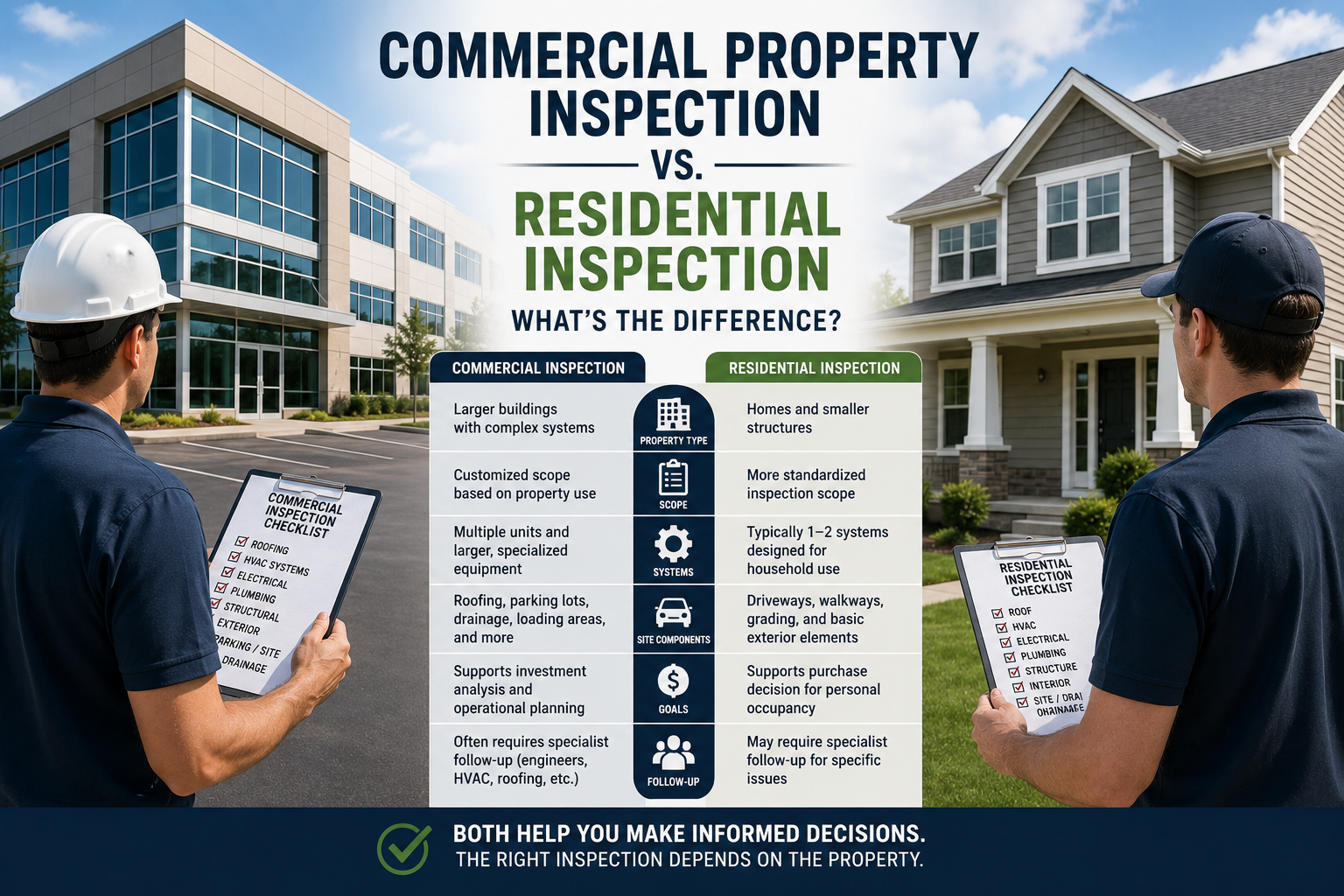
Property inspections play an important role in real estate transactions, but commercial and residential inspections are not the same. A home inspection is generally focused on the condition of a residence and how its major systems serve a household. A commercial property inspection, by contrast, may involve larger buildings, more complex systems, different operational priorities, and a broader range of risks.
For buyers and investors, understanding these differences can help them choose the right inspection service and set realistic expectations before closing. A professional commercial inspection houston service typically evaluates accessible commercial building components within an agreed scope and documents observable conditions that may influence maintenance, operations, or further due diligence.
Both types of inspections are valuable, but they serve different kinds of properties, clients, and decisions.
The Property Type Is the Biggest Difference
Residential inspections generally apply to houses, townhomes, condos, and similar living spaces. The inspection is centered on how the property functions as a home and whether major accessible systems show visible deficiencies.
Commercial inspections can apply to a much wider range of properties, including office buildings, warehouses, retail centers, restaurants, medical offices, and owner-occupied business facilities.
These properties may have large roof areas, multiple HVAC units, extensive parking lots, more complex electrical systems, loading areas, commercial plumbing, and other features that are not typically found in a standard home.
The building’s intended use also matters. A warehouse and a restaurant may both be commercial properties, but their systems and operational requirements can be very different.
Commercial Inspections Often Require a Customized Scope
Residential inspections tend to follow a relatively consistent structure because many homes contain similar basic systems.
Commercial properties vary much more in size, age, layout, occupancy, and use. Because of that, the inspection scope often needs to be customized.
A small office building may require attention to HVAC, electrical, plumbing, roofing, common areas, and parking. A warehouse may place greater emphasis on roofing, structural components, concrete floors, loading areas, and site drainage.
A restaurant property may involve additional concerns related to plumbing, ventilation, electrical demand, and mechanical systems.
This makes the initial scope discussion especially important for commercial buyers. The inspector should understand the property type, approximate size, intended use, and any specific concerns before the inspection begins.
Building Systems Can Be More Complex
One of the clearest differences between residential and commercial inspection is the scale and complexity of major building systems.
A house may have one or two HVAC systems, while a commercial office building may contain several rooftop units serving different areas. A warehouse may have specialized electrical requirements, while a retail property may include multiple tenant systems.
Commercial plumbing can also vary significantly depending on the property's use.
The larger and more complex the systems are, the more important it becomes to understand the limits of a general inspection. Some components may require additional evaluation by HVAC professionals, electricians, plumbers, engineers, or other specialists.
The commercial inspector helps identify observable conditions and determine where further expertise may be appropriate.
Roofing Has Greater Financial Significance
Roofing is important in both residential and commercial inspections, but the scale can be very different.
A commercial building may have a large low-slope or flat roof covering thousands of square feet. Repairs or replacement can therefore represent a substantial capital expense.
Commercial roofs may also contain multiple penetrations, drains, flashing details, and mechanical equipment. Ponding water and drainage performance can become especially important.
Residential roofs are generally smaller and may use pitched roofing systems that are easier to understand during a typical inspection.
For commercial buyers, roof condition is often closely tied to financial planning. Inspection findings may lead to further evaluation, repair estimates, or review of warranties and maintenance records.
HVAC Systems Are Evaluated Differently
Heating and cooling are major considerations in both property types, but commercial systems can be more extensive and operationally critical.
A home may rely on a relatively straightforward central HVAC system. A commercial property may have multiple rooftop units, split systems, mechanical rooms, or other equipment serving separate tenant spaces.
In commercial buildings, HVAC performance can affect employees, customers, tenants, inventory, or specialized operations.
In Houston's warm climate, cooling systems may also operate for long periods, increasing the importance of maintenance history and observable equipment condition.
A commercial inspection may identify visible deterioration or operating concerns, but detailed performance testing or system design analysis can require specialist evaluation.
Electrical Systems May Have Different Demands
Residential electrical systems are designed around household needs. Commercial systems may need to support office technology, refrigeration, machinery, specialized equipment, extensive lighting, or multiple tenant spaces.
This difference makes intended use particularly important.
A commercial property may have an electrical system that worked well for the previous occupant but still be unsuitable for the new buyer's plans.
For example, a warehouse that was used only for storage may need significant electrical upgrades if the new owner plans to install manufacturing equipment.
A general commercial inspection can identify observable electrical conditions, while a qualified electrical professional may be needed to evaluate capacity and proposed modifications.
Plumbing Requirements Can Vary Widely
Residential plumbing is usually designed around kitchens, bathrooms, laundry areas, and household water use.
Commercial plumbing requirements can be much broader.
An office building may have multiple restrooms and break rooms. A restaurant may depend heavily on plumbing for food preparation and cleaning. Medical facilities, salons, and other businesses can have specialized water and drainage needs.
Commercial buyers therefore need to think beyond whether fixtures simply appear to function.
They should consider whether the system is suitable for the intended use and whether visible conditions suggest that further evaluation is necessary.
Commercial Properties Include More Site Components
A residential inspection may include driveways, walkways, grading, and exterior drainage, but commercial sites can be much larger and more complex.
Parking lots, curbs, sidewalks, loading areas, exterior lighting, drainage systems, and extensive paved surfaces can all create maintenance responsibilities.
These areas can also influence customers, employees, tenants, and vehicle access.
For investors, large parking or exterior areas may represent significant future capital expenses if they are deteriorated.
Commercial inspections therefore often consider the site as an important part of the property rather than focusing only on the building itself.
The Client’s Goals Are Different
Residential buyers are usually evaluating whether a house is suitable for personal occupancy and what repairs may be necessary.
Commercial buyers often have broader financial and operational goals.
An investor may want to understand maintenance needs and potential capital expenditures. A business owner may be concerned about whether the building can support future operations. A tenant may want to understand physical conditions before signing a long-term lease.
These different goals influence how inspection findings are used.
In a commercial transaction, the report can support financial planning, specialist evaluations, repair estimates, and broader property due diligence.
Documentation Can Play a Bigger Role
Commercial buyers may have access to maintenance records, service agreements, roof warranties, HVAC histories, renovation documentation, and other property records.
These records can provide valuable context when combined with inspection findings.
For example, an older HVAC unit may be easier to evaluate when detailed service history is available. A roof repair noted during inspection may be better understood when warranty and repair documents can also be reviewed.
Residential buyers may also benefit from maintenance records, but commercial properties often have a more formal maintenance history because they are managed as business assets.
Commercial Inspections Often Lead to More Specialist Follow-Up
Both residential and commercial inspections can identify conditions that require additional expertise.
However, commercial properties may involve more specialized systems and higher-value components, making follow-up evaluations particularly important.
A structural concern may require an engineer. Roofing issues may justify consultation with a commercial roofing professional. Electrical, HVAC, plumbing, environmental, or other concerns may require specialists.
The inspection should help buyers determine where these additional evaluations may be worthwhile.
This is especially important during a commercial due diligence period, when buyers may still have time to investigate significant findings before closing.
Neither Inspection Is a Guarantee
Residential and commercial inspections share one important limitation: neither can reveal every concealed defect or predict every future repair.
Both are generally visual and non-destructive evaluations of accessible components.
Inspectors cannot see through walls, predict exactly when equipment will fail, or guarantee that a property will remain free from future problems.
Commercial buyers may also need separate services involving environmental assessments, engineering, code compliance, accessibility, zoning, or other specialized concerns.
Understanding these limitations helps clients use inspection findings correctly—as a source of valuable information, not as a guarantee.
Choosing the Right Inspection for the Property
The right inspection depends on the property being evaluated.
A residential buyer purchasing a home should choose an inspection suited to residential construction and household systems.
A buyer, investor, owner, or tenant evaluating an office, warehouse, retail property, restaurant, or other business facility should choose an inspection scope appropriate for commercial real estate.
The commercial process may require more coordination, a customized scope, and additional specialist involvement because the properties themselves are more diverse and complex.
Different Properties Require Different Due Diligence
Commercial and residential inspections share the same basic goal: helping clients better understand the observable physical condition of a property.
The difference lies in scale, complexity, use, and financial context.
Commercial properties may involve larger roofing systems, multiple HVAC units, higher electrical demands, more complex plumbing, extensive exterior areas, and specialized operational requirements. Commercial buyers also tend to use inspection findings as part of a broader financial, legal, and operational due diligence process.
Residential inspections remain essential for homebuyers, but commercial inspection requires a different perspective.
Understanding that difference helps buyers choose an appropriate inspection, ask better questions, and make decisions based on the type of property they are actually purchasing.
Patrocinados
Publicaciones
Publicaciones
Publicaciones
Categorías
Read More
The Asia-Pacific region is rapidly emerging as the fastest-growing market for Supersonic and Hypersonic Weapons, driven by increasing military expenditures and escalating regional tensions. As per Market Research Future, the region accounts for approximately 10% of the global market but is witnessing unprecedented growth fueled by strategic rivalries and a focus on technological...

Crude oil futures drop after Trump promises an Iran deal will be signed Friday Crude oil futures drop after Trump promises an Iran deal will be signed Friday Audio will be available later today. The price of crude oil dropped shortly after President Trump announced that the U.S. and Iran have agreed to a deal that, when signed...

Password manager Dashlane says hackers stole some customers’ password vaults Password manager maker Dashlane says hackers have obtained at least a dozen encrypted vaults used for storing customer passwords during a weekend cyberattack. The company said on its website that hackers brute-forced the company’s two-factor authentication system, granting the hackers access to about 20 customer...

Online entertainment has become a popular choice for people who enjoy interactive activities, exciting challenges, and digital experiences. Among the many platforms available today, ea88 com stands out as an online entertainment platform designed to provide users with a simple, enjoyable, and smooth card game experience. With its user-friendly design, stable performance, and attractive...

A Seiko watch has earned worldwide recognition for delivering precision, durability, and timeless style. Since its founding in Japan, Seiko has consistently introduced innovative technologies while maintaining the craftsmanship that watch enthusiasts admire. Whether you are searching for an elegant dress watch, a reliable sports model, or a dependable everyday timepiece, Seiko offers an...