White Label Real Estate Tokenization vs Traditional Real Estate Crowdfunding: What’s Different?
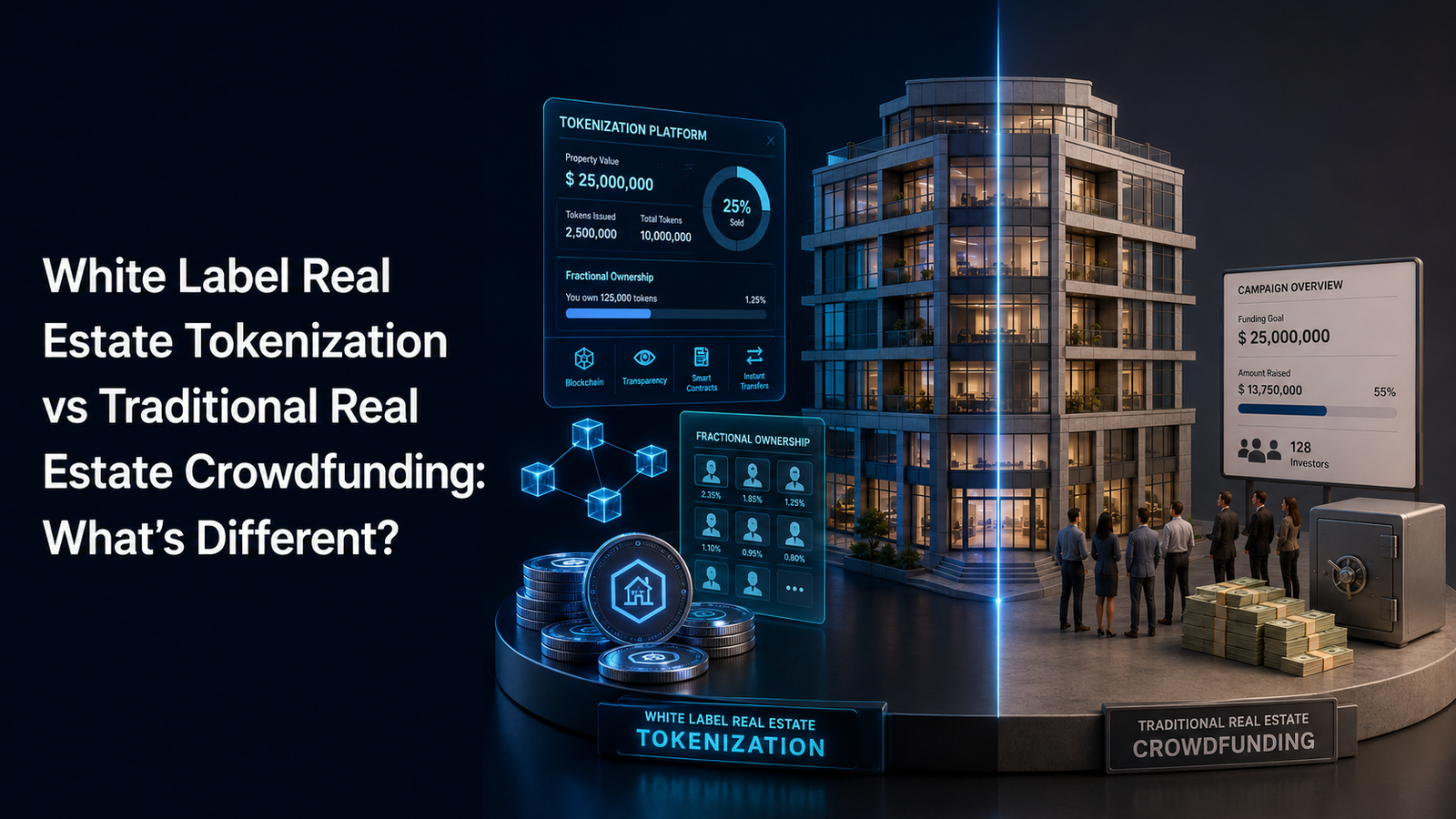
Real estate investment has traditionally required significant capital, lengthy paperwork, and participation through established investment structures. Real estate crowdfunding changed that model by allowing multiple investors to participate in property projects with smaller amounts of money. More recently, blockchain-based property ownership models have introduced another approach through tokenized real estate.
White Label Real Estate Tokenization gives businesses a way to launch a property tokenization platform using an existing technology framework under their own brand. Instead of developing every component from the beginning, a company can use a ready-made infrastructure for token issuance, investor management, property listings, compliance workflows, and secondary trading features.
Traditional real estate crowdfunding and tokenization may look similar because both can divide investment opportunities among multiple participants. However, their underlying structures, investor records, asset representation, trading processes, and technology requirements are different. Understanding these differences can help businesses decide which model fits their intended real estate investment service.
1. How the Investment Structure Works
Traditional real estate crowdfunding generally works through a crowdfunding platform that connects property sponsors with investors. A project is listed on the platform, investors review its financial information, and eligible participants contribute funds. The investor usually receives an ownership interest, debt position, or another contractual claim connected to the project.
With White Label Real Estate Tokenization, the property interest can be represented through blockchain-based tokens. Depending on the legal structure, a token may represent an ownership interest in an entity holding the property, a share of economic rights, or another legally defined claim. The exact rights depend on the jurisdiction, offering structure, and legal documentation.
The difference is therefore not simply about using blockchain instead of a website. It concerns how investment rights are represented and managed throughout the asset lifecycle.
2. Ownership Representation
Crowdfunding platforms generally maintain ownership records through databases, contracts, investor agreements, and legal entities. When an investor participates in a project, their rights are recorded through the platform and associated legal documents.
Tokenization introduces a blockchain record alongside the legal framework. A digital token can represent the investor's defined interest in a property-related structure. Transfers can then be recorded on a blockchain according to the rules programmed into the token system.
A White Label Tokenization Platform can therefore provide businesses with an infrastructure where token ownership, wallet information, transaction records, and investor activity are managed through connected blockchain components. Legal ownership still depends on the structure behind the token, so blockchain records do not replace legal agreements.
3. Investor Entry Requirements
Real estate crowdfunding platforms often establish minimum investment amounts for individual projects. Investors may need to complete identity verification, suitability checks, accreditation checks where applicable, and other onboarding procedures.
Tokenized real estate can follow similar investor screening procedures. The major difference is that the platform can combine investor onboarding with blockchain wallet management and token allocation.
White Label Real Estate Tokenization Services may include modules for KYC and AML procedures, investor registration, wallet connection, token distribution, transaction monitoring, and reporting. The business can select which functions it needs based on its market and regulatory structure.
4. Fundraising Process
In crowdfunding, a property sponsor normally creates a campaign with details about the property, expected returns, investment structure, risks, and funding target. Investors commit money through the platform until the campaign reaches its required amount or closes according to predefined terms.
A tokenized model can use a similar fundraising process while adding token issuance. Once the legal and compliance conditions are satisfied, eligible investors may receive tokens corresponding to their investment.
The token issuance process can be connected with subscription records, payment processing, investor verification, and allocation rules. This creates a more technology-driven investment workflow compared with a conventional crowdfunding database.
5. Secondary Market Possibilities
One of the notable differences concerns what happens after the initial investment.
Traditional crowdfunding investments can be difficult to resell. Some platforms may offer secondary-market facilities, but these are not universally available. Investors may have to hold their positions until the property is sold, the project reaches maturity, or another liquidity event occurs.
Tokenized real estate can support controlled secondary transfers when the legal structure and applicable regulations permit them. Tokens can potentially be transferred between approved participants through a marketplace or compatible trading system.
This does not mean every tokenized property becomes instantly liquid. Restrictions, investor eligibility, jurisdictional requirements, market demand, and transfer rules still matter. Tokenization provides the technical foundation for transferability, while the legal and commercial structure determines how that capability can actually be used.
6. Platform Technology
A conventional crowdfunding platform usually depends on web applications, databases, payment systems, investor dashboards, property management modules, and administrative software.
A tokenization platform adds blockchain infrastructure to this technology stack. It may include smart contracts, token issuance modules, blockchain wallets, transaction monitoring, blockchain explorers, compliance controls, and token transfer mechanisms.
White Label Real Estate Tokenization Development allows a business to start with existing platform infrastructure instead of developing every blockchain component independently. This can reduce the amount of technical work required for launching a branded tokenization service.
7. Investor Records and Transactions
Crowdfunding platforms commonly maintain investor records within their own databases. Contributions, ownership positions, distributions, and other activities are recorded within the platform's internal system.
Tokenization introduces blockchain transaction records. Token transfers can be publicly or privately recorded depending on the blockchain architecture and platform design. Businesses can also connect off-chain investor information with on-chain token activity.
This creates a dual record environment where legal and investor information may remain within the platform database while token movements are recorded on the blockchain. The exact setup depends on privacy requirements, regulatory considerations, and technical architecture.
8. Automation of Investment Operations
Crowdfunding platforms can automate many activities through traditional software. Investor onboarding, payment confirmations, notifications, reporting, and distribution calculations can be handled through predefined workflows.
Tokenized platforms can add smart contract-based functions to selected processes. For example, transfer restrictions can be incorporated into token contracts, while distribution logic may be connected with defined conditions.
However, not every investment operation should be placed inside a smart contract. Legal agreements, property valuations, tax processes, accounting, and regulatory reporting often require off-chain systems and human oversight.
9. Business Branding and Market Positioning
A traditional crowdfunding platform may require a company to develop its own technology environment or operate through a third-party crowdfunding provider.
A White Label Real Estate Tokenization Platform offers another route. A business can use an existing platform framework and present it under its own brand. The interface, domain, investor experience, property listings, and business workflows can be organized around the company's service model.
For businesses entering the property tokenization market, this approach can reduce the amount of time spent assembling separate technology components. The business can concentrate more on property sourcing, investor acquisition, partnerships, compliance, and operations.
10. Compliance Requirements
Neither model removes regulatory responsibilities.
Traditional real estate crowdfunding must comply with securities, investment, consumer protection, taxation, and financial regulations applicable to its market. Requirements can vary considerably between countries and even between different types of offerings.
Tokenized real estate faces these requirements as well. In some cases, blockchain-based tokens may themselves be treated as securities or financial instruments. Businesses therefore need legal advice before deciding how tokens should represent property interests.
White Label Real Estate Tokenization Development should include compliance considerations from the beginning rather than treating them as a final-stage addition. Investor verification, transaction restrictions, token transfer rules, reporting, record keeping, and jurisdiction controls may all need to be considered.
11. Property Portfolio Expansion
Crowdfunding businesses can list multiple properties and create separate investment campaigns for each project. Investors select opportunities based on property type, location, expected returns, risk profile, and investment terms.
A tokenization platform can use a similar portfolio approach while representing different property interests through separate token structures. Commercial buildings, residential properties, hospitality assets, industrial facilities, and other real estate categories can potentially be represented through different offerings.
A White Label Tokenization Platform can support multiple property listings from a single branded environment. This gives businesses a foundation for managing several investment products without creating a separate website and system for every property.
12. Investor Experience
The investor experience also differs in several ways.
A traditional crowdfunding investor generally creates an account, completes verification, selects a property, deposits funds, and monitors their investment through a dashboard. Statements and project updates are usually provided through the platform.
A tokenized investor may follow a similar process but also interact with a blockchain wallet or custodial wallet system. Their dashboard can display token balances, transaction history, property information, distributions, and other investment data.
The additional blockchain layer can make the experience more technical. For this reason, businesses launching tokenized property services should provide simple wallet management and understandable investment interfaces.
13. Revenue Opportunities for Businesses
Traditional crowdfunding platforms may earn revenue through listing fees, transaction charges, management fees, performance fees, or other commercial arrangements.
Tokenization businesses can use similar revenue models while adding services related to token issuance, asset onboarding, marketplace transactions, custody, platform subscriptions, and administrative services where legally permitted.
White Label Real Estate Tokenization Services can therefore be used by businesses that want to operate a branded property investment platform without maintaining an entirely independent blockchain development operation.
14. Development and Maintenance
Creating a traditional crowdfunding platform requires work across web development, payment processing, databases, security, investor dashboards, and administrative tools.
A tokenization platform requires those components plus blockchain-related development. Smart contracts, wallet infrastructure, token standards, blockchain integrations, custody arrangements, transaction monitoring, and security testing can increase technical requirements.
With White Label Real Estate Tokenization Platform Development, much of the basic infrastructure can come from an existing solution. The business can then focus on configuring the platform around its operational requirements, regulatory model, supported assets, and target investors.
15. Which Model Fits a Real Estate Business?
Traditional crowdfunding may be suitable for businesses that want a familiar investment model based on conventional contracts and platform-managed records. It can work well where secondary trading is not a priority and the business wants a conventional property fundraising structure.
Tokenization may be more suitable for businesses interested in blockchain-based ownership records, digital asset management, controlled token transfers, and potential secondary-market functionality.
The decision should not be based only on technology. Property type, investor location, securities regulations, custody requirements, tax treatment, liquidity expectations, budget, and long-term business plans should all be evaluated before selecting a model.
White Label Real Estate Tokenization vs Traditional Crowdfunding: At a Glance
| Factor | Traditional Real Estate Crowdfunding | White Label Real Estate Tokenization |
|---|---|---|
| Ownership records | Platform databases and legal documents | Blockchain records plus legal documents |
| Investment unit | Shares, debt interests, or contractual rights | Blockchain-based tokens representing defined rights |
| Technology | Web platform and databases | Web platform, blockchain, wallets, and smart contracts |
| Secondary transfers | Limited or platform-dependent | Possible through compliant transfer systems |
| Investor onboarding | Account and verification process | Verification plus wallet/token processes |
| Automation | Traditional software workflows | Software plus selected smart contract functions |
| Branding | Platform-specific or independently developed | Branded white-label platform |
| Development requirements | Conventional fintech/web development | Web, fintech, blockchain, and smart contract development |
| Liquidity | Often limited | Potentially higher, subject to legal and market restrictions |
| Compliance | Depends on jurisdiction and offering | Depends on jurisdiction, token structure, and offering |
Conclusion
Traditional real estate crowdfunding and White Label Real Estate Tokenization both provide ways to connect property opportunities with multiple investors, but they use different technical and investment structures. Crowdfunding generally relies on conventional contracts, databases, and platform-managed ownership records, while tokenization adds blockchain-based digital representations of defined property interests. A White Label Real Estate Tokenization Platform can give businesses an existing technology foundation for launching branded property investment services with token issuance, wallet management, investor dashboards, compliance workflows, and potential secondary transfer functions. The right choice depends on the property model, target investors, legal structure, market, budget, and intended trading environment. Businesses considering White Label Real Estate Tokenization Development should assess both technology and regulatory requirements before selecting their approach. Blockchain App Factory provides White Label Real Estate Tokenization Services for businesses seeking to launch branded tokenized property investment platforms with the infrastructure needed for their planned operating model.
FAQs
1. What is the main difference between real estate crowdfunding and tokenization?
Real estate crowdfunding generally records investor interests through conventional contracts and platform databases. Tokenization represents defined property-related rights through blockchain-based tokens alongside the relevant legal documentation.
2. Is White Label Real Estate Tokenization the same as crowdfunding?
No. Both can support fractional participation in property investments, but tokenization uses blockchain-based digital assets to represent investment interests. Crowdfunding does not necessarily use blockchain.
3. Can tokenized real estate be traded after purchase?
It can be possible when the offering structure, jurisdiction, investor eligibility rules, and platform infrastructure permit secondary transfers. Tokenization does not automatically guarantee liquidity.
4. What does a White Label Tokenization Platform provide?
A White Label Tokenization Platform can provide functions such as token issuance, property listings, investor onboarding, wallet management, dashboards, compliance workflows, transaction records, and administrative controls, depending on the selected solution.
5. Is tokenization legally different from traditional crowdfunding?
Potentially. The legal treatment depends on what the token represents, where the offering takes place, who can invest, and the applicable financial regulations. Legal and compliance advice should be obtained before launch.
6. Why do businesses choose White Label Real Estate Tokenization Development?
Businesses may choose this route to avoid developing every platform component from the beginning. A white-label model can provide an existing technology foundation that can be configured around the company's brand, property model, investor workflow, and market requirements.
7. Does tokenization remove the need for real estate legal documentation?
No. Blockchain records do not replace legal ownership structures, contracts, securities documentation, property agreements, or regulatory obligations. The token's rights need to be legally defined.
8. Can one platform support multiple properties?
Yes. A properly structured White Label Real Estate Tokenization Platform can support multiple property offerings, with separate token structures and investor records for different assets.
9. What are White Label Real Estate Tokenization Services?
These services can cover platform setup, token issuance infrastructure, smart contract integration, investor dashboards, wallet functionality, compliance modules, property onboarding, and related technical services required for a tokenized real estate platform.
10. Which is better, crowdfunding or real estate tokenization?
Neither model is universally better. Crowdfunding may suit businesses seeking a conventional property investment structure, while tokenization may suit businesses that require blockchain-based asset representation and controlled digital transfers. The decision should be based on legal, financial, technical, and business requirements.
Commandité
Annonces
Annonces
Annonces
Catégories
Lire la suite
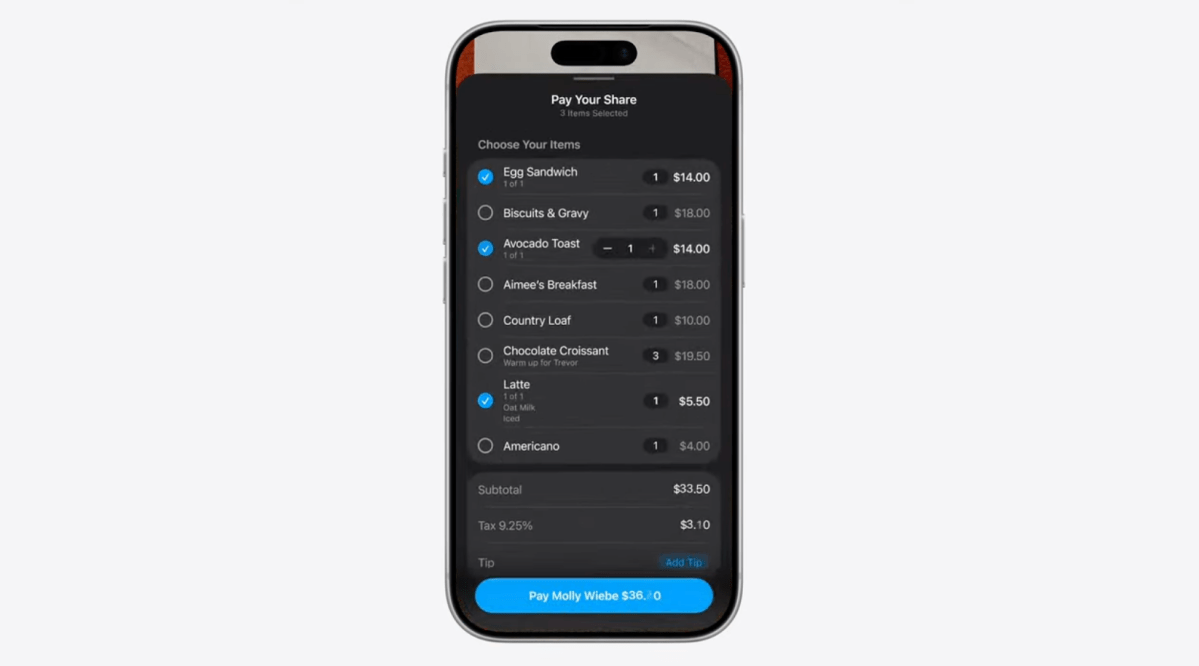
Apple is fixing the headache of splitting the bill with its new Siri in Camera feature Image Credits:Apple 11:23 AM PDT · June 8, 2026 There’s nothing worse than going to a dinner with a big group of friends, opting out of drinking to save money, but then still having to pay for your friends’ espresso martinis when the group decides to split the bill evenly....
Anthropic launches Opus 5 On Friday, Anthropic launched its Opus 5 model, the newest version of its long-standing heavyweight model. While smaller than Fable 5, the model will be both cheaper and less restrictive than Fable, likely making it preferable in most use cases. Notably, Opus 5 actually outperforms Fable 5 on a number of benchmarks included in the announcement. Opus 5 is...

Air India crash investigation on-going, officials sayInvestigation into cause of Air India crash ongoing, officials sayEPAThe crash killed all but one person on board, and 19 further people on the groundThe investigation into the Air India crash which left 260 people dead is ongoing with the final report to be "released upon [its] completion", India's Aircraft Accident Investigation Bureau...

Meta reportedly considering layoffs that could affect 20% of the company In Brief Posted: 9:28 AM PDT · March 14, 2026 Image Credits:Jonathan Raa/NurPhoto / Getty Images Meta is considering major layoffs that could affect 20% or more of the company’s workforce, according to Reuters. These layoffs could help the Facebook parent company...
Try Before You Buy: MacOS 27 Golden Gate Lets You Give a Touchscreen MacBook a Go With expanded touch support in Sidecar, you can, for the first time, navigate MacOS via touch. Matt Elliott Senior Editor Matt Elliott is a senior editor at CNET with a focus on laptops and streaming services. Matt has more than 20 years of experience testing and reviewing laptops. He has worked...