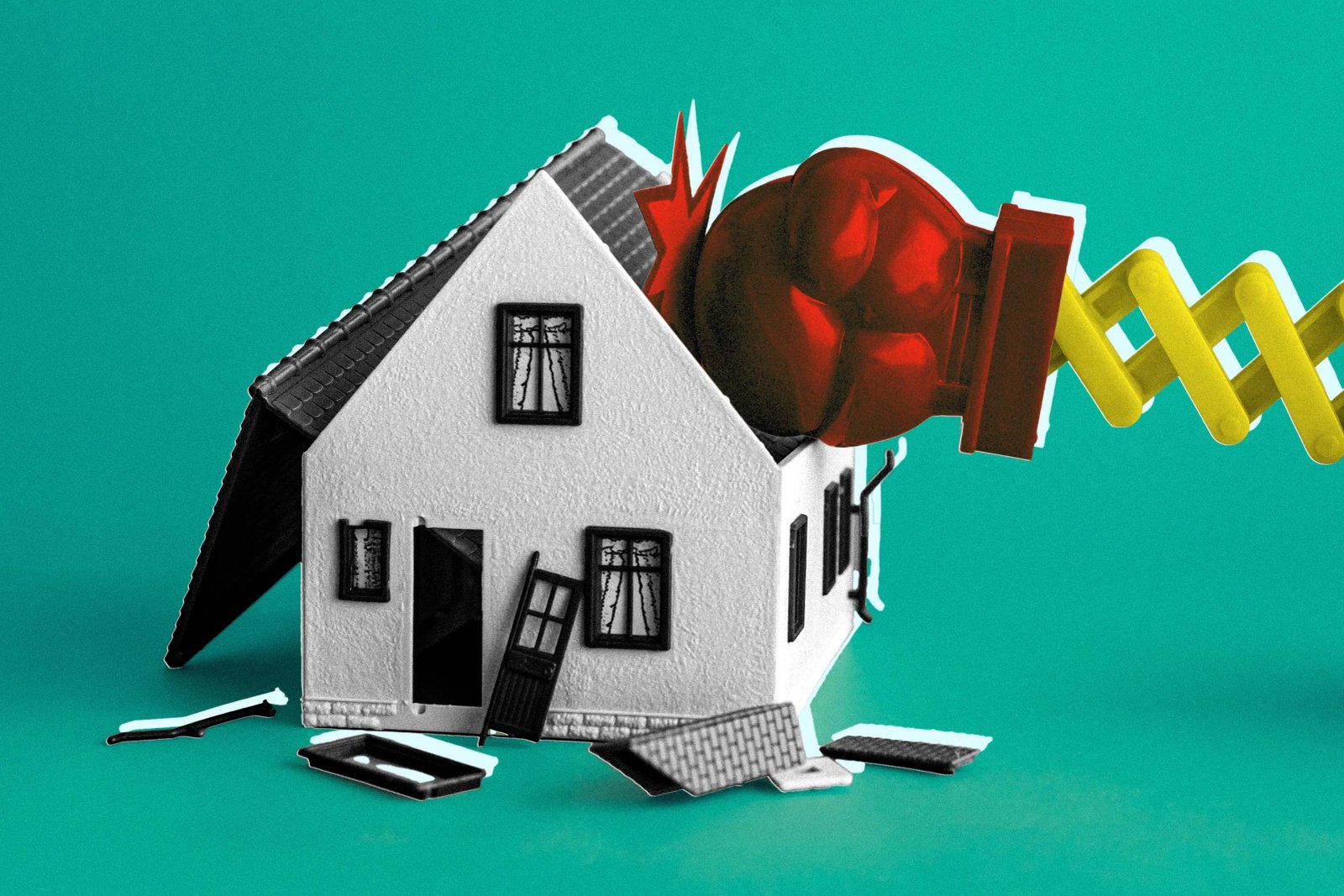

If you're already struggling with the high cost of homeowners insurance, we've got bad news: Premiums are set to climb even higher this year.
A new report from insurance marketplace Insurify projects that homeowners will see a 4% increase in premiums by the end of 2026, bringing the average annual cost from $2,948 to $3,057 — with some states seeing even larger jumps. This is the fifth consecutive year of premium hikes: Since 2021, insurance costs have increased by 46%, three times faster than inflation during the same period.
Matt Brannon, senior economic analyst at Insurify, says the key reasons for the rapid rise are the increased intensity and frequency of extreme weather events, as well as higher home-building costs.
Ads by Money. We may be compensated if you click this ad.Ad
"Severe storms, which bring strong winds, hail and even tornadoes, are causing more destruction than in years past," Brannon tells Money in an email. "These events are driving up insurer losses, and they often respond by seeking higher premiums."
Extreme weather has caused nearly $3 trillion in damages across the United States since 1980, with most of the losses resulting from flooding, windstorms, heavy snow, tornadoes and wildfires. According to Brannon, the costs related to weather events in the U.S. now average about $150 billion annually, more than double the $63 billion incurred just 10 years ago. In 2025, fires in Los Angeles County alone led to $62 billion in insured losses.
But higher premiums are just one aspect of how homeowners insurance costs are changing. In the report, Insurify points out that insurers operating in states with an increased risk of severe weather often structure their policies so that homeowners bear a greater share of repair costs.
In states where tropical storms and hurricanes are common, for example, insurance providers may impose a deductible equal to 5% of a policy's coverage amount, resulting in thousands of dollars in out-of-pocket homeowner expenses. More than half the premiums in Colorado are earmarked for potential hail damage, while homeowners in "Tornado Alley" — a section of the U.S., usually in the Southern Plains, where there is a high risk of tornadoes forming — may be required to pay a percentage of their policy's coverage as a separate wind or hail deductible.
States that are at high risk of experiencing a damaging storm, regardless of whether it's caused by wind, rain or fire, are also the most likely to have the highest premiums already. Those higher premiums aren't limited to states that have experienced a significant storm, either. Every time a major disaster hits, insurance costs also rise in states not directly impacted by the event.
As coverage costs continue to skyrocket, many homeowners are looking for ways to save. Some will seek to lower expenses by increasing their deductibles. Some make the even riskier choice of skipping insurance coverage, if circumstances permit.
All mortgage lenders, for example, require homeowners insurance in order to approve the loan, so dropping coverage is not an option for those who don't own their property outright. Homeowners associations and condo bylaws also typically require home insurance.
On the bright side, Brannon says, insurance providers often offer discounts to homeowners who take steps to minimize their home's risk exposure, such as making weather-resistant upgrades. Insurers will also offer lower rates for signing up for automatic payment and paperless billing, or for bundling several policies together.
States where homeowners insurance premiums are projected to rise the most in 2026
The increasing severity of severe weather and the rising cost of repairing or replacing damaged properties are likely to cause more economic pain for American homeowners this year. Insurance premiums are expected to increase once again, with these states seeing the largest hikes:
- California: 16% increase (+$388 on average)
- Nebraska: 13% increase (+$532)
- New Mexico: 11% increase (+$246)
- Georgia: 10% increase (+$288)
- South Carolina: 9% increase (+$278)
- Arkansas: 7% increase (+$216)
- Missouri: 7% increase (+$209)
- Oregon: 6% increase (+$86)
- Oklahoma: 5% increase (+$243)
- Illinois: 5% increase (+$179)
Ads by Money. We may be compensated if you click this ad.Ad
More from Money:
The Unexpected Factor That Could Be Driving Up Your Homeowners Insurance Rates
Which Types of Storm Damage Are — and Aren't — Covered by Your Homeowners Insurance
12 Factors That May Be Driving Up Your Homeowners Insurance Premium